





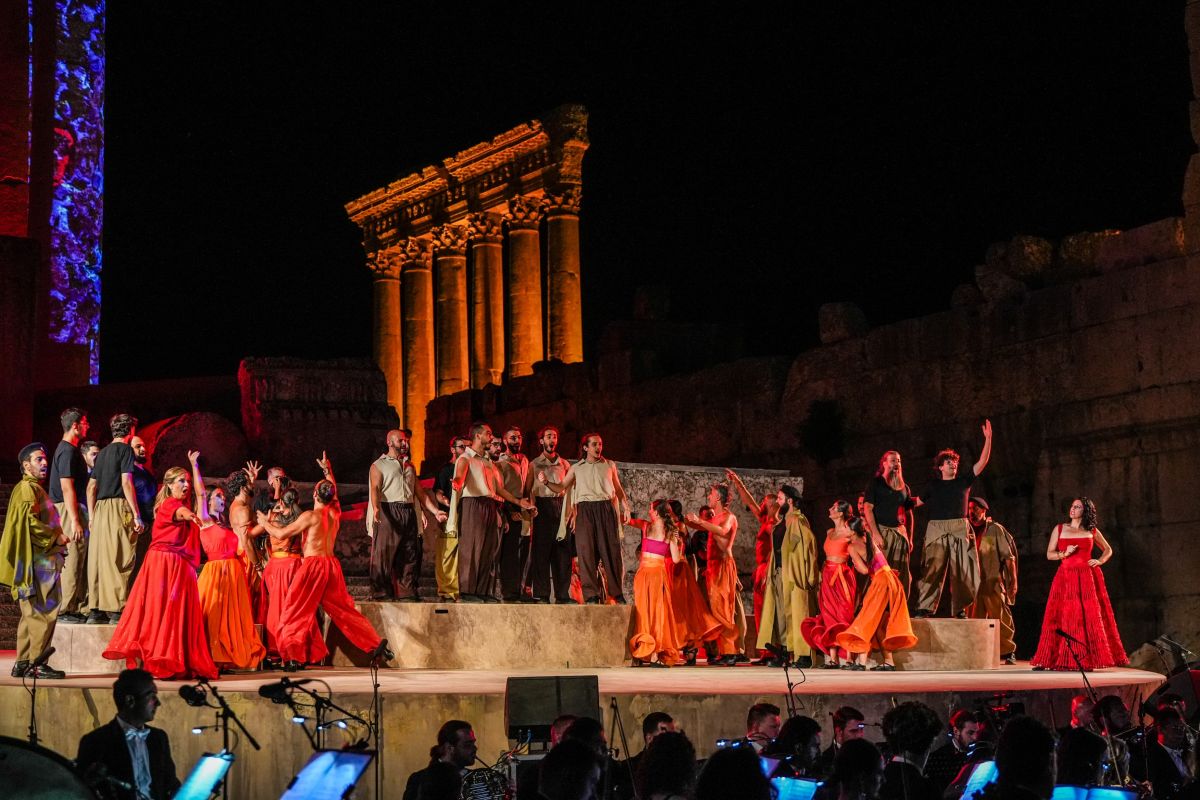
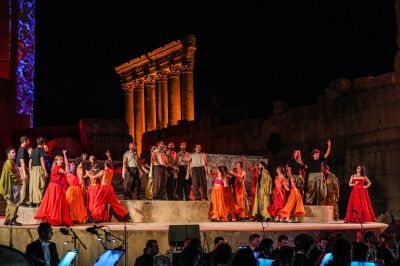
The cast of Carmen performing at the temples of Baalbeck. (Photo: Mohammad Yassin/L'Orient Today)






Premiered Thursday evening in a screening room at Grand Cinemas ABC Ashrafieh, Carmen at Baalbeck, the documentary by Jihad Mikhael, does more than reveal the inner workings of the first opera produced by the Baalbeck Festival to international standards.
Above all, the film embraces the story of a shared momentum — a passion, a tenacity, an almost ingenuous drive – that brought together over 250 local and international artists, determined to sing, dance and create in the name of freedom amidst the ancient temples of the City of the Sun. These monuments, built by successive civilizations and listed as UNESCO World Heritage sites, nearly fell victim during the last Israeli war against Hezbollah.
Shot a week before the Lebanese adaptation of Bizet’s opera premiered on July 25, 2025 — at a time when drones and Israeli strikes targeted villages in the Baalbeck-Hermel district despite the cease-fire that took effect on Nov. 27, 2024 — the film captures the electric atmosphere of rehearsals, the voices and stories of Lebanese, European and South American artists, as well as festival committee members.
All evoke this “aura,” this “magic” — or perhaps, this assumed madness — that brought them together for a production sending a message of refusal: refusal of fear, refusal of resignation, refusal of cultural erasure. A work renowned for its technical demands, staged at one of the most delicate times in the country’s recent history.
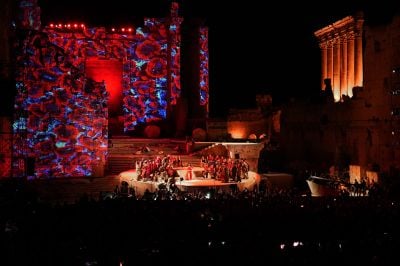
The testimonials follow: international director Jorge Takla, returning to offer “a gift” to his country and the site where he grew up; Father Toufic Maatouk, in musical direction; designer Rabih Keyrouz, responsible for costumes; artist Nabil Nahas, whose paintings were projected onto the columns; committee members; Brazilian choreographer Anselmo Zolla; and the musicians of the Romanian Radio Orchestra, the choir of the Antonine University and the four French soloists — Marie Gautrot (as Carmen), Julien Behr (as Don José), Jerome Boutillier (as Escamillo) and Vannina Santoni (as Micaela).
All recount their intimate encounter with Baalbeck, their awe before the Temple of Bacchus — a place for celebration par excellence — and how they mobilized every ounce of creativity to bring a festive breath to a traumatized city.
A profession of faith
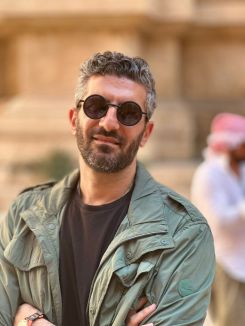
The story of the filming itself is a profession of faith. The young director, now based in the United Arab Emirates, simply asks for permission to film the rehearsals. Nothing forecast that his self-produced documentary, with support from Fasila and REDTV, would so sensitively capture the human dimension of the project: its dizzying risks, its universal dream, its distinctly Lebanese identity. His interviews — discreetly precise — prioritize the artists’ inner experience, their relationship with the place, the land, memory and the desire to create a “worldwide” artistic gesture without forsaking local roots.
At the screening, the emotion was unanimous: artists, technical crew, festival committee, all discovered a film that condensed collective love, discipline, humility and self-sacrifice from a tightly-knit team, from the most modest stagehands to the most celebrated names.
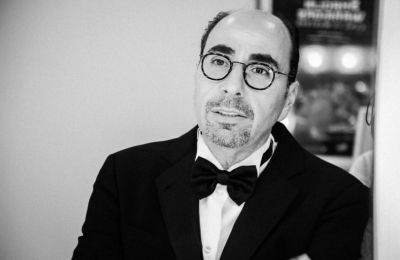
For Mikhael, this first film goes beyond merely documenting backstage: it becomes a manifesto. A gesture addressed to emerging creators and established artists alike. A reminder that theater, music and opera can still emerge — with panache — even when the sky is streaked by drones.
Afterwards, the audience — 4,500 for a production staged in the middle of war — felt as though they had witnessed a form of cultural resistance: the claim that art remains a space for sharing, able to stand up to violence and isolation. The documentary now begins a second life: it will be broadcast Sunday, Nov. 16 at 8:30 p.m. on RED TV (in French) and Sunday, Nov. 23 at 8:30 p.m. in Arabic, continuing its message to a wider audience.
This collective adventure, this almost primal energy running through the film, rekindles the old magnetism of Baalbeck, that temple-city that once fascinated gods, kings and armies. And it reverberates with the poetry of Talal Haidar, celebrating the love and excess of the “City of the Sun”:
“Baal, the one your heart loved, wants a gift for the sun: build her Baalbeck…
We came down, and we want to stay here…
Change your course, oh eagle: only gods cross Baalbeck.”
This article appeared originally in French in L'Orient-Le Jour.

 7 p.m. recap: Iran warns Egypt, Israeli soldiers vote in south Lebanon, Haret Hreik responds to Kataeb