





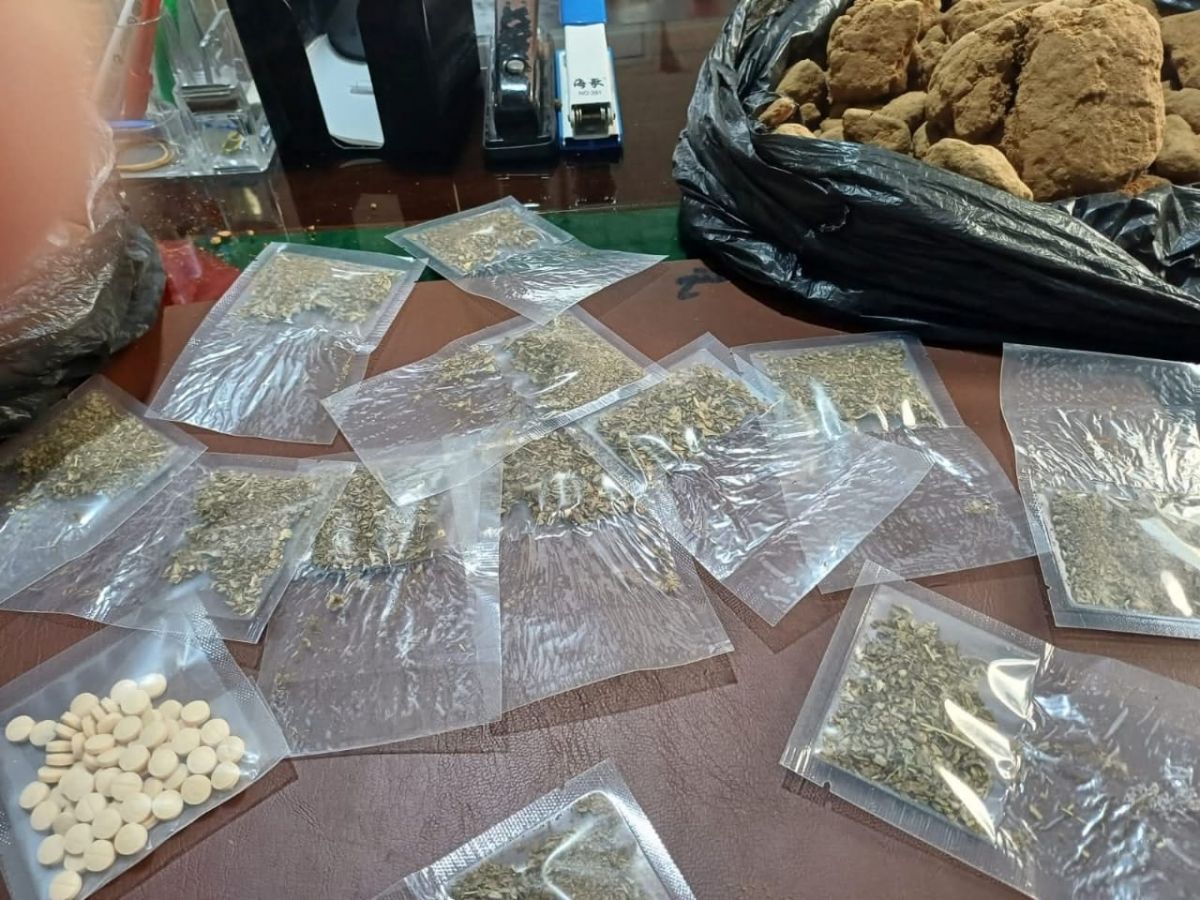
A large quantity of narcotics allegdely surrendered by a drug dealer in Rashidieh camp. (Courtesy of Muntasser Abdallah/L'Orient Today)






BEIRUT — A drug dealer in Rashidieh Palestinian refugee camp, in southern Lebanon, surrendered a large quantity of narcotics and declared his repentance, according to a statement issued by the Palestinian National Security Forces on Sunday.
The statement said the surrender took place on Sunday, following the ongoing military operation in Beirut's Shatila camp, which security officials indicated would expand to other Palestinian refugee camps as part of a wider effort to combat drug trafficking.
In Shatila, patrols have been deployed in cooperation with the Lebanese Army as part of recent anti-drug operations and a government plan to confiscate illegal weapons. Last week, a woman was found killed in Shatila in a "drug den" within the camp's borders.
The woman's death came two days after the killing of Lebanese national Elio Abou Hanna by Palestinian gunmen in the same camp.

According to the statement from Rashidieh camp, "the individual expressed his full readiness to cooperate with the National Security Forces and renounced involvement in the drug trade," described in the statement as a “dangerous scourge” that harms both Palestinian society and the national cause.
The forces praised the man’s decision and urged others involved in drug dealing or use to come forward voluntarily and hand over any narcotics in their possession.
“We affirm our willingness to cooperate with everyone in order to protect our people and our community,” the statement said. “We consider every user a patient in need of treatment and are ready to help them recover so that we can rid ourselves of this dangerous affliction.”
In September, the Lebanese Army said it carried out a raid in Shatila camp targeting a drug warehouse, sparking clashes and leading to the arrest of 55 people.

Those incidents come as Lebanese authorities, in parallel with Hezbollah’s disarmament process launched in early August, are also working to disarm Palestinian camps, where armed factions still maintain control of security.
Lebanon has also been under pressure from Gulf states to curb the production and trafficking of narcotics, especially captagon, an illegal synthetic amphetamine that was Syria’s main export before Bashar al-Assad was toppled by a coalition of Islamist rebels on Dec. 8.

 Evening recap: Netanyahu announces West Bank offensive; 7 killed in Jordan church shooting; tents burned in south Lebanon
 US strike on Iran this weekend? ‘Absolutely,’ says Barrack; ‘I have no idea,’ says Trump