





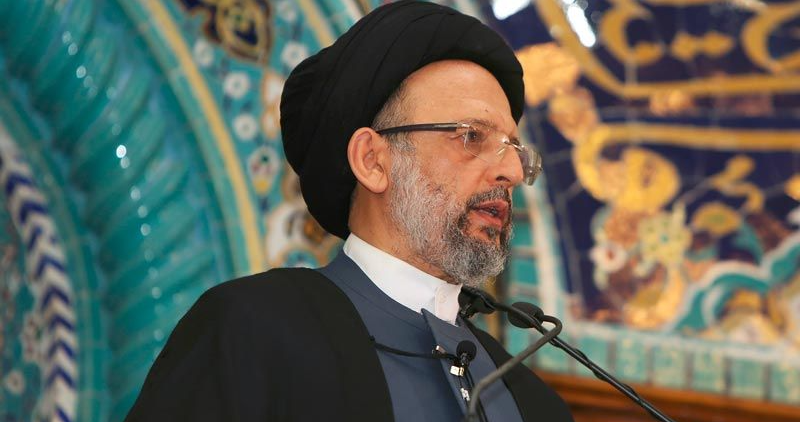
Shiite cleric Ali Fadlallah. (Credit: NNA)






BEIRUT — Shiite cleric Ali Fadlallah announced his support on Friday for President Joseph Aoun's decision the day prior, to call on the army command to retaliate against Israeli incursions, saying that it was a "responsible national position."
Aoun's announcement followed an Israeli attack on the Marjayoun district village of Blida shortly after midnight on Thursday, during which Israeli troops laid siege to a municipality building for three hours and killed an employee who had been sleeping inside. The president's request was also praised by Hezbollah MPs and by Parliament Speaker Nabih Berri.
Aoun's stance "restores the army’s role in protecting the Lebanese people and defending the homeland," Fadlallah said while delivering the Friday sermons from the Imamain al-Hassanayn Mosque in Haret Hreik in the southern suburbs of Beirut.
"We have always affirmed that the army is capable of fulfilling this role if it is provided with the necessary resources, capabilities, and political cover," he added.
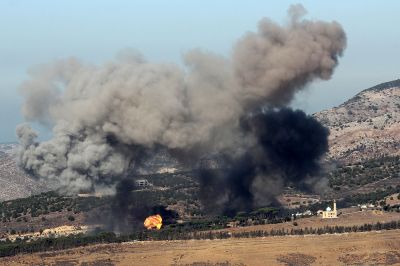
The cleric also called the Lebanese government not to approach the proposal of negotiations with Israel from a position of weakness, but to "remain firm in its stance and pressure the enemy to meet its commitments."
The U.S. is reportedly considering the development of a new "work plan" for Lebanon that includes encouraging direct negotiations with Israel to settle border demarcation and an end to Israeli troop occupation in the South.
Earlier this month, Aoun said that “negotiations with Israel are necessary in the context of regional crisis resolution.” However, figures close to Hezbollah had denounced what they saw as an attempt at “political submission” disguised under the banner of peace.
“It has become clear that the negotiations the government is being called upon to engage in are not intended to end the ongoing state of war and restore stability to this country," Fadlallah said.
"It is evident that this enemy does not seek a solution through negotiations, but rather a means to consolidate and legitimize the current reality, so that it may have the upper hand in Lebanon and obtain security gains, including the imposition of a buffer zone whose boundaries may expand… and whose conditions may also extend to achieving other political and security objectives, some of which have been announced, and others that have not."
He called on the Lebanese state "not to approach the proposal of negotiations from a position of weakness, on the basis that Lebanon has no choice but to surrender to it."
Lebanon must stand firm in its position in the face of foreign pressure to negotiate with Israel, Fadlallah argued, saying that instead the pressure should be on Israel to meet its commitments to the November 2024 cease-fire agreement, to end its near-daily attacks on the country, withdraw its troops from Lebanese territory, and release all Lebanese prisoners.

 7 p.m. recap: Iran warns Egypt, Israeli soldiers vote in south Lebanon, Haret Hreik responds to Kataeb