


President Joseph Aoun speaks during the 80th session of the United Nations General Assembly on Sept. 23, 2025, at the U.N. headquarters in New York. (Credit: Alexi J. Rosenfeld/AFP)






President Joseph Aoun said Monday that negotiations with Israel, the format of which will be determined later, are “necessary” to resolve tensions and disputes between the two countries, as a “peace summit” on Gaza is scheduled for the afternoon, just days after a cease-fire agreement.
Speaking to a delegation from the Association of Economic Journalists, Aoun added that “Israel continues its military and bloody messages to pressure Lebanon,” and stressed that “its military operations must end to open the way for a negotiation process,” according to a statement posted on X by the Lebanese presidency.
“Things are moving toward dialogue and negotiation to establish peace and stability, and results are visible," he said. "Lebanon cannot remain outside the regional dynamic, which is focused on resolving crises, because we can no longer bear more war, destruction, deaths and displacement.”
Asked about the possibility of negotiations with Israel, Aoun noted that “the Lebanese state has already negotiated with Israel under U.S. and U.N. auspices, resulting in the maritime border agreement signed in October 2022. Nothing prevents repeating the same process to resolve other disputes, especially since war has brought nothing. Israel ultimately negotiated with Hamas, having tried everything else through war and destruction.”
On the ongoing Israeli strikes in Lebanon, particularly in the South, Aoun condemned what he called “Israel’s military and bloody messages aimed at pressuring us,” noting that “Lebanon respects the agreement reached last November and has repeatedly requested U.S. and French intervention, without any response.”
On the issue of disarmament, Aoun said that more important than recovering weapons from militias is addressing “the intention to use them,” a task that takes time.
“The army has been carrying out its role south of the Litani River since last November’s agreement: it has lost 12 martyrs, including deminers, and 80 to 85 percent of the land has been cleared, but it is impossible to set a timeline because the area is vast and rugged, and winter is approaching,” he explained.
Aoun added that reconstruction is “a duty of the state toward its people, and despite financial difficulties, we are doing our best,” referring to Parliament Speaker Nabih Berri's demand to include reconstruction in the state budget.
Dive deeper
South Lebanon reconstruction: Israel and Hezbollah play same card against Lebanese state
“The priority is the South: reforms of power plants, transport networks, and water stations are underway. The people of the South are part of the Lebanese nation, and the state cannot ignore them. It is true that funds are not yet available to launch reconstruction, but an international support conference is being prepared,” he said.
Aoun, emphasizing his role in bridging different perspectives, clarified that the debate on the electoral law — at the heart of a controversy over voting procedures for expatriates — “will take place in Parliament,” despite Berri’s refusal to place the issue on the agenda.
“All economic indicators are positive: the economy minister forecasts growth of up to 5 percent by the end of the year, financial inflows could reach $20 billion, and consumption is rising, reflecting an encouraging atmosphere.” He added, “Some want quick solutions, but 40 years of crises and deadlocks cannot be resolved overnight.”
Aoun's statements came on the same day as Israeli Prime Minister Benjamin Netanyahu and U.S. President Donald Trump announced the end of the war in Gaza from the Israeli Parliament.
Netanyahu said, “As Israel’s prime minister, I extend my hand to those who seek peace with us. No one desires peace more than the people of Israel.”
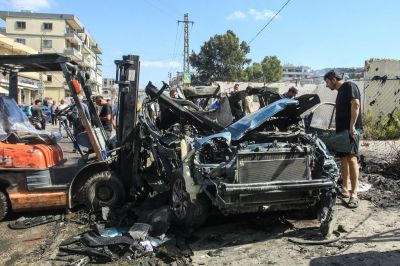
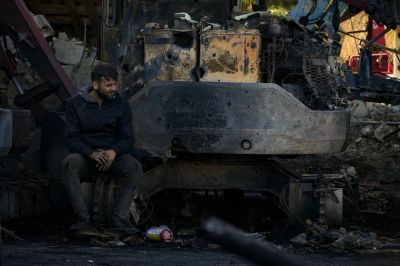
Despite the cease-fire agreement reached in November 2024 after more than 13 months of war between Hezbollah and Israel, the latter continues to bomb Lebanon almost daily and occupies six areas in the south of the country. At dawn Saturday, Israel carried out heavy airstrikes on a site housing construction equipment, drawing widespread condemnation from Lebanese officials.
 Israeli army carries out demolition at Jabal Amel School in Houla as strikes continue