







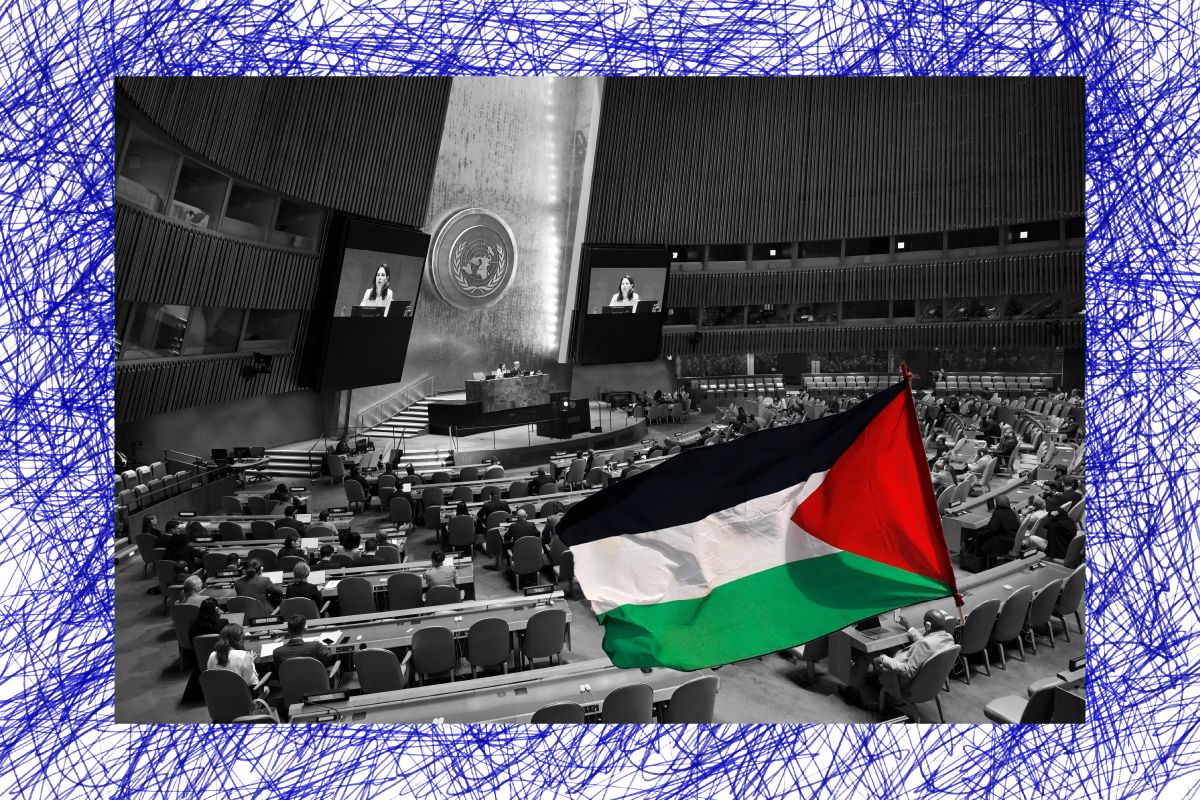
Collage by Nima Salha (Photo credit: AFP)






On Sunday, the U.K., Australia, and Canada formally recognized a Palestinian state, just ahead of the U.N. General Assembly High-Level Week.
This step is significant, especially for the U.K. Why? Because of the British central role in Israel’s creation with the 1917 Balfour Declaration . It is also significant because Britain ruled Palestine from 1922 to 1948 through a League of Nations mandate.
Israeli Prime Minister Benjamin Netanyahu shot back: “It will not happen… A Palestinian state will not be established west of the Jordan.”
By recognizing a Palestinian state, these countries are directly challenging Israel’s efforts — and by extension, the U.S.— to erase the very idea of Palestinian statehood and reduce the conflict to a humanitarian issue.
So, which countries said yes, which said no, and what does it actually change for Israel and for Palestine?
Let’s break it down.

1. Who recognizes/will recognize Palestine?
What’s new is that Western countries, which long maintained that any outcome in this regard should emerge through negotiations with Israel, are now joining the “yes” camp, like the U.K., Canada, Australia and Portugal which formally announced recognizing a Palestinian state on Sunday.
France announced it back in July, rejecting the Israeli narrative that this would play into Hamas’ hands.
Luxembourg and Belgium, as well, said earlier in September that they will join the raft of countries recognizing a Palestinian state at the U.N.

The United States is still firmly against recognition. Washington argues it would reward Hamas while the war in Gaza is ongoing. U.S. Secretary of State Marco Rubio said recently that Hamas would “feel more emboldened” by the international push.
Israel and the U.S. have repeatedly said recognizing Palestinian statehood now would amount to a “reward” for Hamas, which appears to have become the pretext not just against statehood, but against almost any Palestinian step toward rights or recognition, after Oct. 7, 2023.
Still, momentum is building elsewhere. As of this week, 147 out of the U.N.’s 193 members recognize Palestine:
- The Americas: 35 member states — all except the U.S. and Panama.
- Europe: 48 member states, with notable holdouts like Germany, Italy, Greece, Denmark, Finland, Austria, the Netherlands, Switzerland, the Czech Republic, Croatia, Estonia, Lithuania, Latvia and Moldova.
- Middle East: 13 member states.
- Asia: 29 member states — except Japan, Myanmar and Singapore.
- Oceania: 14 member states — with New Zealand still undecided.
- Africa: 54 member states — except Cameroon and Eritrea.

2. What does recognizing a Palestinian State mean?
Today, Palestine is not a fully sovereign state. It exists, but it doesn’t.
The land known as Palestine was under Britain's mandate (from 1922) until 1948. This was the year Israel was created, after Britain withdrew and the U.N. partition.
The twist: The U.N. partition plan called for two states: one Jewish and one Arab (Palestine). While Israel declared independence, the Palestinian state never materialized.
Today, Palestine is a quasi-state that doesn’t control its borders, skies or its claimed capital, East Jerusalem — Israel does.
Recognizing a Palestinian state is not creating one, which would be done through negotiations with Israel.
Recognition, however, would theoretically give Palestinians more diplomatic and political leverage to push for many issues, namely, the settlement expansion, borders and security agreements and the refugee issue, among others.
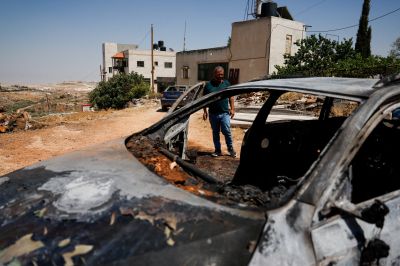
It would allow Palestine to act more like a state at the U.N., push for control over their land and airspace, and bring legal cases against Israel in international courts over the occupation and the war in Gaza. For instance, to go against Israeli checkpoints inside Palestinian territory, which already lack a legal basis under international law, or against settlement expansion in the West Bank — beyond the 1967 borders — likewise considered illegal.
It also gives Palestinians a stronger footing to demand access to resources, freedom of movement, reconstruction in war-torn areas and international aid. Even if Israel ignores it, recognition would raise the political cost of denying those rights and keep them higher on the global agenda.
In reality, however, things are far more complicated. Israel continues to reject recognition and has pledged to expand settlements.
But on what basis would this recognition take place? This brings us to the two-state solution.
The idea is that the land should be split into two countries: Israel and Palestine.
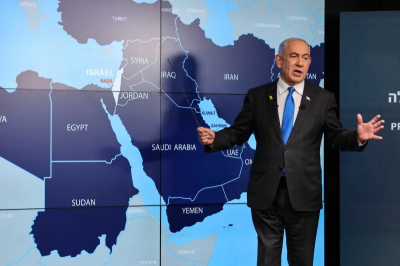
It means establishing a Palestinian state in the West Bank and Gaza Strip, roughly based on the borders that existed before the 1967 Arab-Israeli war, with East Jerusalem — under Israeli occupation since that war — as its capital.
Both states would exist side by side, each recognized internationally.
French President Emmanuel Macron said on social media on Sunday that this solution would only work if hostages are released, Hamas is pushed out of power, and the two states can “live in peace, side by side.”

3. What does recognizing a Palestinian state mean for Israel?
Recognition doesn’t change the situation on the ground overnight. Israel still controls the West Bank, Gaza’s borders and East Jerusalem.
But diplomatically, legally, and symbolically, it matters. In theory, if enough powerful countries treat Palestine as a state, it forces the bigger questions — negotiations (for final borders, security arrangements, refugees, settlements, etc.), and mainly the status of Jerusalem — back onto the global agenda.
For Israel, every new recognition is a blow on three fronts:
- Diplomatic pressure: It leaves Israel looking more isolated as even its traditional allies (like the U.K. and Canada) move toward recognizing Palestine.
- Legal exposure: Recognition strengthens support brought to Palestine in order to bring cases against Israel in international courts such as the International Criminal Court (ICC) and the International Court of Justice (ICJ). While rulings would not compel Israel to comply, they increase the legal and reputational costs of settlement expansion, military operations and the occupation itself, at least on the international stage.
- Symbolic loss: Israel has argued for a long time that Palestine isn’t ready or legitimate as a state. Each recognition chips away at that argument, at least symbolically, making it harder for Israel to convince the world that Palestinian statehood is premature or unrealistic.