






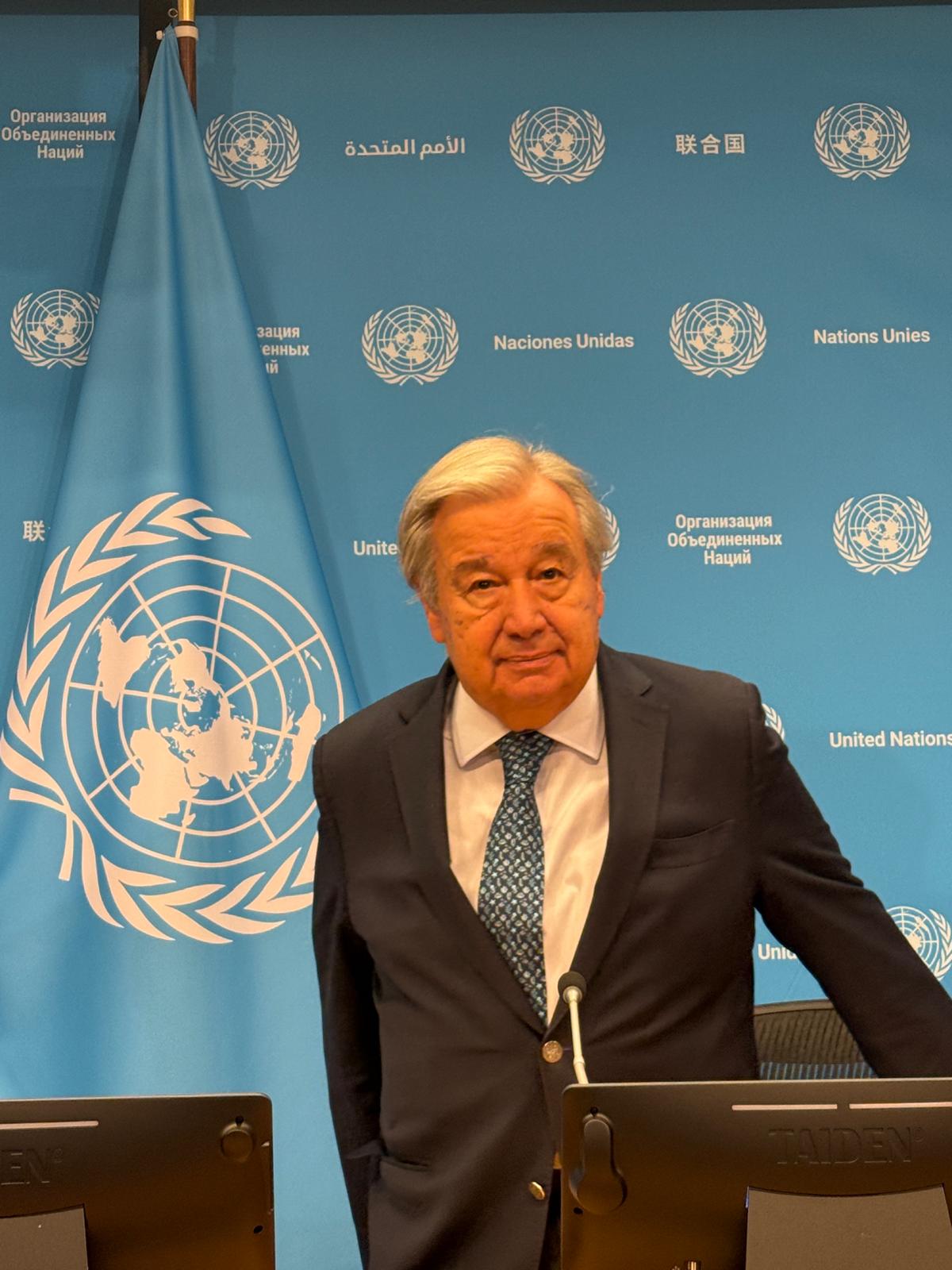
António Guterres, at the United Nations. (Credit: Sylviane Zehil)






The United Nations diplomatic season began Tuesday in New York amid a tense atmosphere. On the eve of the arrival of more than a hundred heads of state and government for the 80th session of the General Assembly, António Guterres issued a warning: "This week must be a week of solutions. People are not waiting for posturing or promises, but for concrete actions."
The stage was set. In front of a room full of journalists from around the world, the secretary-general painted a picture of a world adrift "in turbulent, uncharted waters," where geopolitical fragmentation, wars, climate disruption, and the uncontrolled rise of technology threaten to shatter the already fragile structure of international cooperation.
"Some call this the World Cup of diplomacy," he quipped. "But this cannot be about scoring points. It must be about solving problems. There is too much at stake."
Spiral of violations
While the press conference was meant to tackle major global issues — from Gaza to Ukraine, to the governance of artificial intelligence and U.N. system reform — a series of questions from L’Orient-Le Jour brought Lebanon back to the forefront.
The issue: the recent Security Council decision to end UNIFIL's mandate in 2027 and hand over full security responsibility to the Lebanese Army. On the ground, doubts persist: Can the army handle this mission alone, faced with an armed Hezbollah and repeated Israeli violations of the Blue Line?
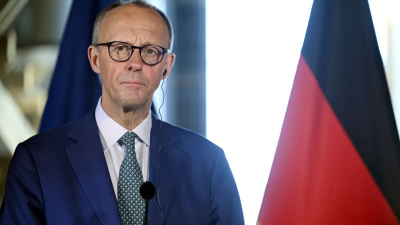
In a firm response to L'Orient-Le Jour, Guterres laid out the lines of division:
"At the most difficult moment in the conflict, I was there, visiting the United Nations Interim Force in Lebanon at the border. I am truly proud of the work this international force has accomplished and continues to accomplish in Lebanon. But the reality is obvious: Israel systematically violates the agreement by maintaining positions inside Lebanon and launching occasional attacks. Hezbollah takes advantage of this situation to justify its existence as an armed force. And Israel takes advantage of Hezbollah's existence as an armed force to maintain its violations of the cease-fire."
This vicious cycle, according to the U.N. chief, feeds the deadlock and perpetuates an explosive status quo. "That's why it is absolutely essential to support the Lebanese government, which wants to ensure the monopoly of force is in the hands of the army, and it is equally essential that Israel respect the cease-fire and withdraw from its positions inside Lebanon," he stressed.
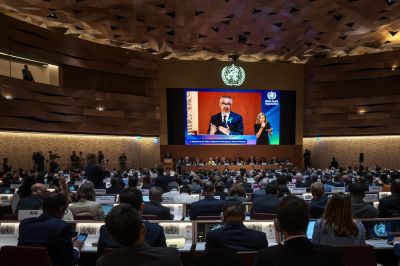
Guterres placed the South's crisis in a broader context: that of a shattered international order, where diplomacy struggles to contain violence. "These times demand more than promises," he concluded. "They demand results."
Busy agenda
The opening General Assembly is shaping up to be one of the most packed and perilous in recent U.N. history. Nearly 150 heads of state and government are expected in New York. Guterres alone has planned more than 150 bilateral meetings, including one with Lebanese President Joseph Aoun, aiming to defuse crises, lower the risk of escalation and push for tangible solutions.
On the agenda: the war in Gaza, the war in Ukraine, chaos in Sudan, fractures in multilateralism, as well as the fight against global warming, governance of artificial intelligence and U.N. reform. An unprecedented biennial summit will also bring together leaders and international financial institutions to accelerate funding for the Sustainable Development Goals (SDGs), which are dramatically behind schedule.
"The United Nations is the place. Next week is the time. Leaders must get serious and deliver," Guterres insisted.
This article was translated from L'Orient-Le Jour.
