





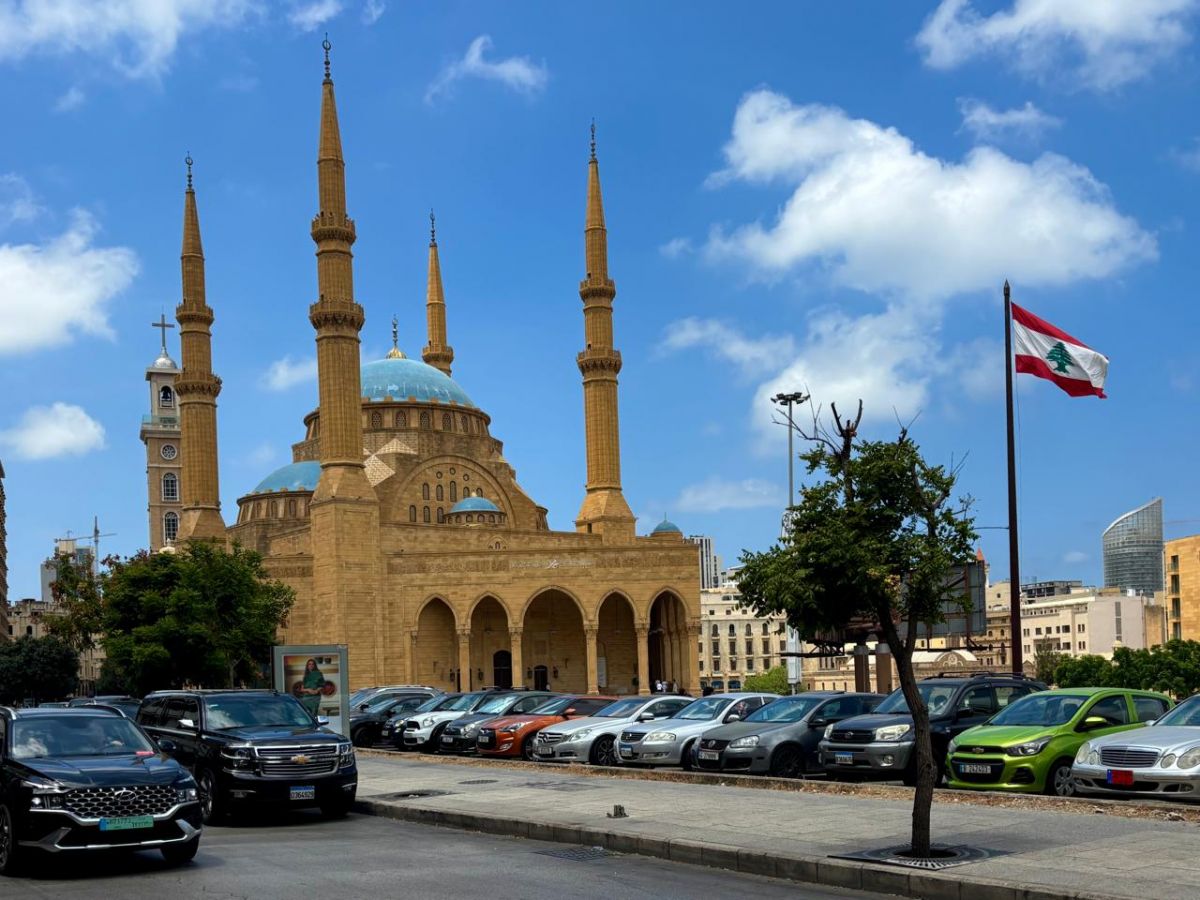
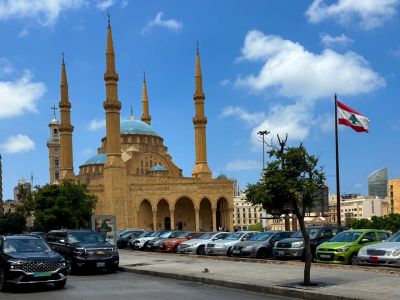
The Mohammad Al-Amin Mosque in downtown Beirut, just a few meters from the Grand Serail, on Aug. 7, 2025. (Credit: Philippe Hage Boutros/L'Orient-Le Jour)






The draft budget for 2026, which the government will begin reviewing Thursday, holds no major surprises and follows in the footsteps of previous ones.
It is an adjustment budget that reflects the country’s limited room to maneuver amid financial and security crises and postpones major reform projects.

In the report submitted to the Cabinet along with the draft budget, a copy of which L’Orient-Le Jour reviewed, the Finance Ministry said it had done everything possible to encourage other ministries and agencies to meet the deadlines and comply with the substantive and formal requirements of the public accounting law in submitting their needs.
The ministry acknowledged, however, that much work remains to be done in this regard, with spending justifications rare or nonexistent and few ministries, agencies or public institutions having met the required deadlines.
In addition to technical assistance provided through METAC, the International Monetary Fund (IMF)’s regional center, a training program has also been launched to familiarize the relevant administrations with this new methodology.
The European Union (EU), through the Sigma program and with the support of several French experts, assisted in the process. Six pilot ministries — Industry, Energy and Water, Economy, Environment, Health and Social Affairs — were selected.
In its report, the ministry also identified a series of issues the government will need to address in future budgets. These include the final settlement of state arrears, reform of the management of public enterprises, streamlining spending on public schools and rents for public buildings, the need to stop incurring expenses that cannot be covered by existing credits, eliminating double salaries for civil servants holding multiple positions and freezing public-sector hiring until a structural reform is launched.
Spending on the rise
Overall spending in the current draft budget is up nearly 20 percent from the previous finance law, reaching $5.65 billion at the current exchange rate of LL89,500 to the dollar.
Behind this increase, the guiding principle appears to be containing expenditures to avoid tax hikes or the introduction of new fiscal measures.
Public-sector compensation — salaries and various allowances, including end-of-service benefits — accounts for nearly 80 percent of the total. No across-the-board salary increase has been proposed.
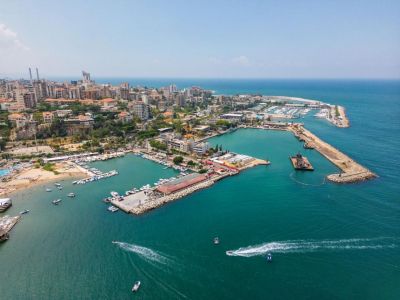
Investment projects are once again virtually absent this year, except for work at the port of Jounieh, which reopened Tuesday, and a state land subdivision project costing just over $100,000.
The project to complete the highway section linking Tripoli to the Syrian border has been postponed.
Other trends stand out. Expected revenue from the corporate income tax has plunged 62 percent to $140.2 million. At the same time, anticipated revenue from the tax on salaries shows a spectacular increase of 137.7 percent to $225.4 million.
These divergent trajectories are all the more surprising given that, according to a source familiar with the matter, the Finance Ministry only recently incorporated into its digital system two years’ worth of overdue income tax returns, which should have boosted the expected revenue from the former tax as well.
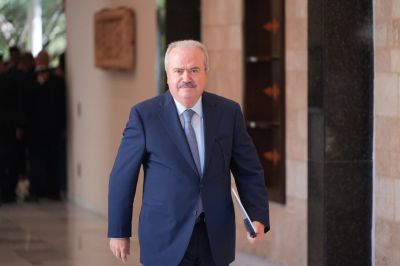
Contacted, Finance Minister Yassine Jaber was not available to comment.
An overestimated GDP?
In its report, the Finance Ministry projects GDP of $32.78 billion in 2025 with inflation estimated at 15 percent, rising to $36.3 billion the following year, when the budget will be implemented, with inflation at 3.5 percent. Such a trajectory would imply real growth of 7.5 percent, which appears highly optimistic.

According to the most recent data from the IMF, Lebanon’s GDP in constant prices stood at $28.28 billion in 2024, with no projection for 2025 due to the high degree of uncertainty. The World Bank, for its part, forecasts growth of 4.7 percent in 2025 but has not issued estimates for 2026. The most plausible explanation at this stage is that the ministry took the IMF’s GDP figure and applied its own assumptions for 2025 and 2026.
Lebanon’s Central Administration of Statistics has yet to update national accounts beyond 2021.
This article was originally published in French in L'Orient-Le Jour and was translated by Sahar Ghoussoub.

 7 p.m. recap: Iran warns Egypt, Israeli soldiers vote in south Lebanon, Haret Hreik responds to Kataeb