





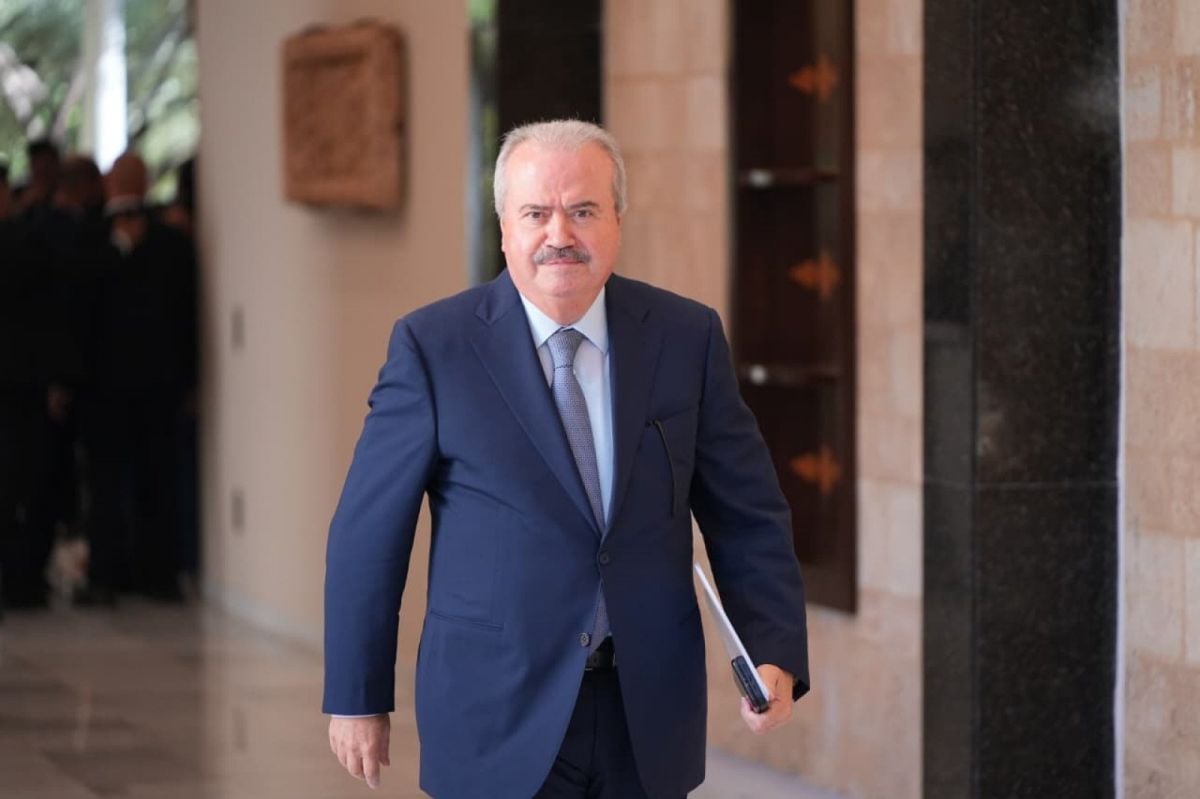
Finance Minister Yassin Jaber in Baabda's presidential palace, Sept. 5, 2025. (Credit: Mohammad Yassin/L'Orient-Le Jour)






After sending the draft state budget for 2026 to the government at the end of August, the Finance Ministry adopted several measures and issued warnings to force taxpayers to settle overdue taxes and fees.
These measures seem intended to bring money into the government treasury to cover urgent expenses, such as the LL14 million in aid (per person every month) and LL12 million for retired personnel to the Lebanese Army — which was supposed to be funded by fuel taxes before the Shura Council suspended it — as well as funds needed to rebuild areas destroyed during the war between Israel and Hezbollah, before and after the November 2024 cease-fire.
One such measure, discussed on Sept. 2 during a meeting with Industry Minister Joe Issa-al-Khoury, involved pressuring companies behind on value-added tax payments by threatening to freeze all their customs clearance operations until they paid their dues. The measure targeted businesses that had failed to pay amounts owed within the required timeframe, that is, by the 20th of the month following the quarter in question, meaning July 20 for the second quarter, the most recent deadline.
Finance Minister Yassin Jaber told L’Orient-Le Jour that the measure proved effective, with many taxpayers contacting the ministry to regularize their situation and transferring millions of dollars to the Lebanese Treasury.
Tax fines and ticket sales
The president of the Association of Lebanese Industrialists, Selim Zeenni, told L’Orient-Le Jour that the ministry adjusted its decision to allow companies to pay part of the overdue amounts and stagger the remainder rather than punish them outright.

“The problem is resolved and the minister has been very understanding with those behind on payments,” he said, praising both the aim of the initial move and its softening.
This was not the only step taken. Jaber issued another decision reducing certain tax fines for code violations across a range of taxes and fees due to date if taxpayers settle them before Sept. 30. The measures cover income tax on nonresident taxpayers, excluding those covered by a bilateral tax treaty, payroll tax, as well as VAT through the second half of 2025.
The fine reductions range from 60 to 85 percent. The decision detailing these reductions was published on Sept. 3 as No. 768/1.
The Finance Ministry’s ability to adjust tax penalties within limits was introduced by Law No. 662 of 2005.
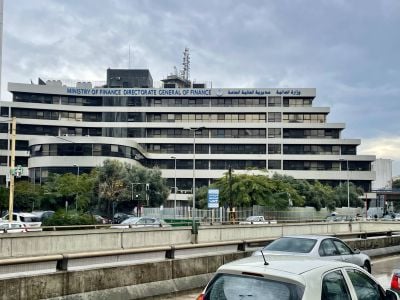
The finance minister also issued two reminders, with a warning tone, to the events sector on Sept. 1 and 5.
In his first message, Jaber reminded the public that fees paid to foreign artists “are subject to income tax for nonresidents” and that “contracting companies or individuals” who hire them must withhold a tax of 8.5 percent on the total amount received. A value-added tax of 11 percent also applies to that sum.
The ministry stressed in the same message that revenues from ticket sales are also subject to the 11 percent VAT, as well as an additional 5 percent tax.
In his second statement, the minister warned the same taxpayers that he “will strictly enforce legal measures to combat tax evasion, including lifting banking secrecy when fraud is proven and applying the criminal penalties provided by current laws.”
He also reminded them that tax evasion falls under the category of financial crimes, alongside money laundering and terrorism financing, as set out in Law No. 44 of 2015, which strengthened Lebanese legislation in this field.
This article was translated from L'Orient-Le Jour by Sahar Ghoussoub.

 7 p.m. recap: Iran warns Egypt, Israeli soldiers vote in south Lebanon, Haret Hreik responds to Kataeb