






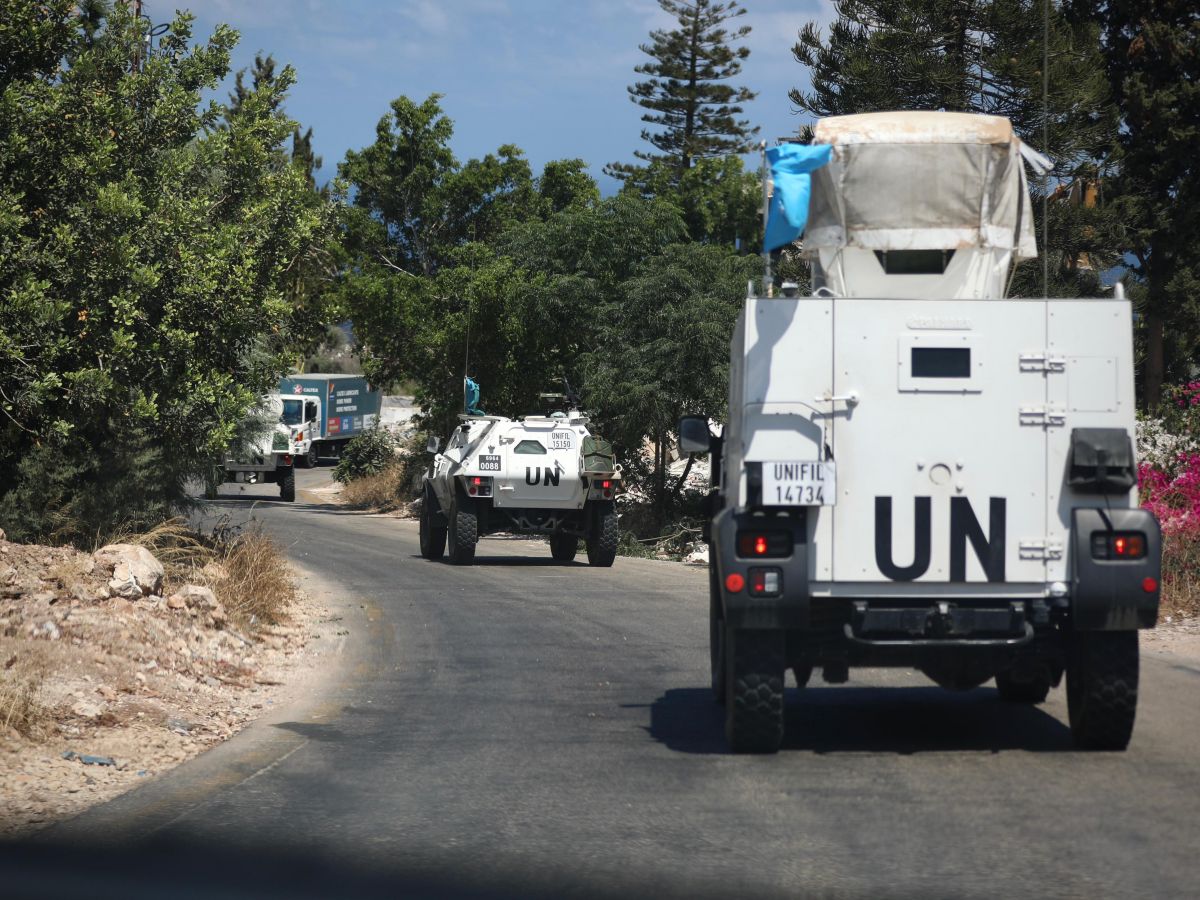
A convoy of the French contingent of UNIFIL, on July 8, 2025, in the Tyre region of southern Lebanon. (Credit: Matthieu Karam/L’Orient Today.)






BEIRUT — The U.N. Security Council continued its discussions on Monday regarding the future of the United Nations Interim Force in southern Lebanon (UNIFIL), as the one-year extension sought by France and Beirut faces opposition from the United States and Israel.
The council's 15 members began discussions last week on a draft resolution prepared by the French, which aims to renew the mandate of some 10,800 peacekeepers — which include troops from Indonesia, India, Italy, Ghana, and Nepal — who have acted as a buffer between Israel and Lebanon since March 1978.
However, the vote, which was originally scheduled for Monday and is supposed to take place before the current mandate expires on Sunday, has been postponed indefinitely as negotiations continue, several diplomatic sources told AFP on Monday.
A draft text, reviewed by AFP, proposes to extend the presence of UNIFIL until Aug. 31, 2026, while also expressing "the intention [of the Council] to work toward a withdrawal of UNIFIL, with the goal that only the Lebanese government will ensure security in the south" of the country.
This vote comes as Beirut has committed to disarming and dismantling the pro-Iranian group Hezbollah by the end of the year, under pressure from Washington and as part of implementing the cease-fire that ended the war with Israel in 2024.
'Stability'
Last Tuesday, Lebanese President Joseph Aoun called for the peacekeepers to remain, arguing that "any limitation of the UNIFIL mandate ... would have a negative impact on the situation, as Israel continues to occupy portions of Lebanese territory."
Indeed, the cease-fire agreement also calls for an Israeli withdrawal from the area, but Israel — whose military has clashed repeatedly with UNIFIL — maintains troops in what it considers strategic border positions and regularly carries out strikes in its northern neighbor.
The country, which is involved in several wars in the region, has even threatened to strike Lebanon again if Hezbollah, now significantly weakened, is not completely disarmed.
The draft resolution "calls on the Israeli government to withdraw its remaining forces north of the Blue Line [United Nations demarcation established in 2000,] including five positions held on Lebanese territory."
While the United States is as hostile to UNIFIL as its Israeli ally, a State Department spokesperson declined to comment on the Security Council's deliberations, where Washington holds veto power.
The spokesperson for U.N. Secretary-General Antonio Guterres, Stephane Dujarric, called the support that UNIFIL provided to the Lebanese army "crucial," noting it has helped with the deployment of 8,300 Lebanese soldiers, as well as logistics, funding, fuel, and training.
"We have always felt that the presence of UNIFIL has brought stability along the Blue Line," the U.N. demarcation line between Lebanon and Israel, he said.