






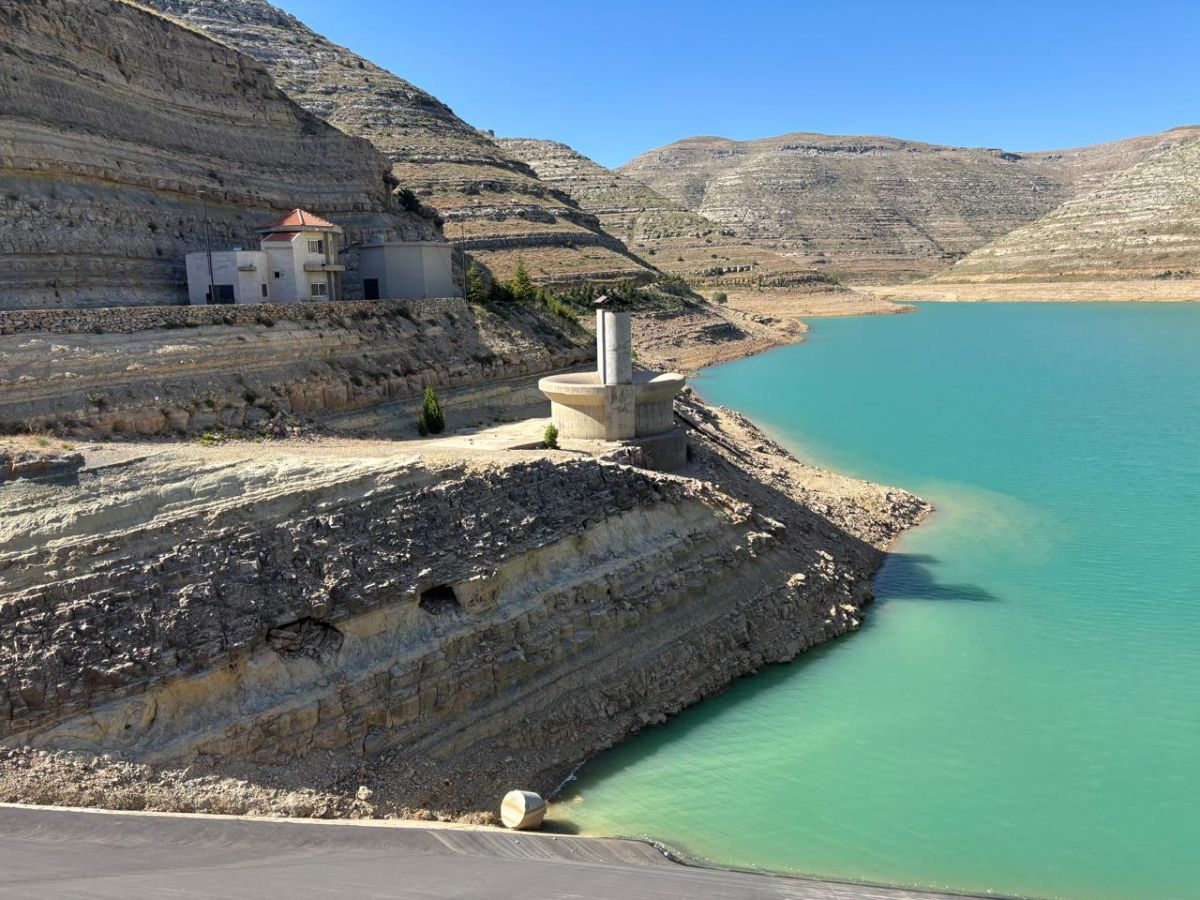
Chabrouh artificial lake, Kesrouan, June 21. (Credit: Philippe Hage Boutros/L’Orient Le-Jour)






All access and activities within the Chabrouh Dam area (Kesrouan) are now prohibited to protect water quality, the Ministry of Energy and Water announced in a statement on Saturday.
Minister Joe Saddi said the decision was taken to safeguard the quality of drinking water consumed by residents of Mount Lebanon, prevent any form of pollution, protect the dam, and, in the event of an accident involving visitors or people engaging in activities nearby, to absolve the ministry of any responsibility.
Minister Joe Saddi also relied on an international specialized body that produced a scientific study assessing the risks posed by activities at Chabrouh Dam. The report, published on Aug. 6, 2025, recommended suspending all non-essential use, identifying it as a national priority to ensure the continuity of drinking water resources during periods of drought or acute water crises. It warned against mechanical activities such as jet-skiing or motorized water skiing, which could pollute the water and disrupt the ecological balance (including oil pollution, noise, disturbing water turbulence and sediment resuspension), and called for their exclusion from drinking water zones or heavily regulated areas.
Although the report mentioned the possibility of permitting low-impact activities such as rowing, kayaking, or supervised swimming — with continuous water quality monitoring and enforcement of control measures currently absent in Lebanese dams — it stressed that these activities must not take place during drought periods.
The minister also drew on several earlier reports whose recommendations had not been implemented. A July 2024 report by the Technical Research and Facilities Service, which evaluated the authorization granted to the “Kesrouan” association to organize activities and developments within the dam, concluded that these activities “would lead to water pollution and damage the site” and that “the resulting pollution would increase the treatment required for potable water.” The report also noted that the Chabrouh Dam “is not equipped to ensure public safety” and emphasized that “any work on public property must comply with administrative, legal, and financial regulations.” It further stated that “since the site and lake are public property, no occupation can occur without legal basis or fees” and that “the dam lacks the necessary facilities for such activities (toilets, sanitary facilities, waste containers, etc.).”
A April 16, 2025 report by interim head of the Technical Research and Facilities Service, engineer Georges Rizk, documented “recent and temporary installations within the dam area, the presence of pedal boats in the control room and on the lake, and the opening of a dirt path along the left bank near the waterline during filling periods, without any plans submitted to the ministry.”
As early as 2013, a report by Liban Consult AGM noted that “speedboats operating for about a month significantly contributed to the increase and dispersion of light sediments due to waves impacting the lake shores.”
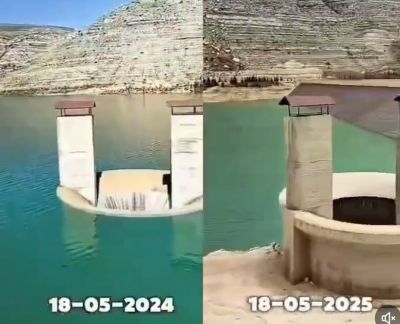
The ministry added that “contacts are underway with donors to fund studies on ways to develop the site for tourism purposes, while giving absolute priority to the preservation of drinking water and public health,” amid a particularly dry 2024–2025 winter in Lebanon. In Beirut, rainfall this season totaled 382.1 millimeters, compared with 1,051.3 mm the previous year and a 30-year average of 822 mm, according to Meteo-Liban. This year, Chabrouh Dam has stored only 30 percent of its capacity.
 At Sissi’s request, Egyptian parliament to hold extraordinary session on Sunday to discuss defense of Saudi Arabia