





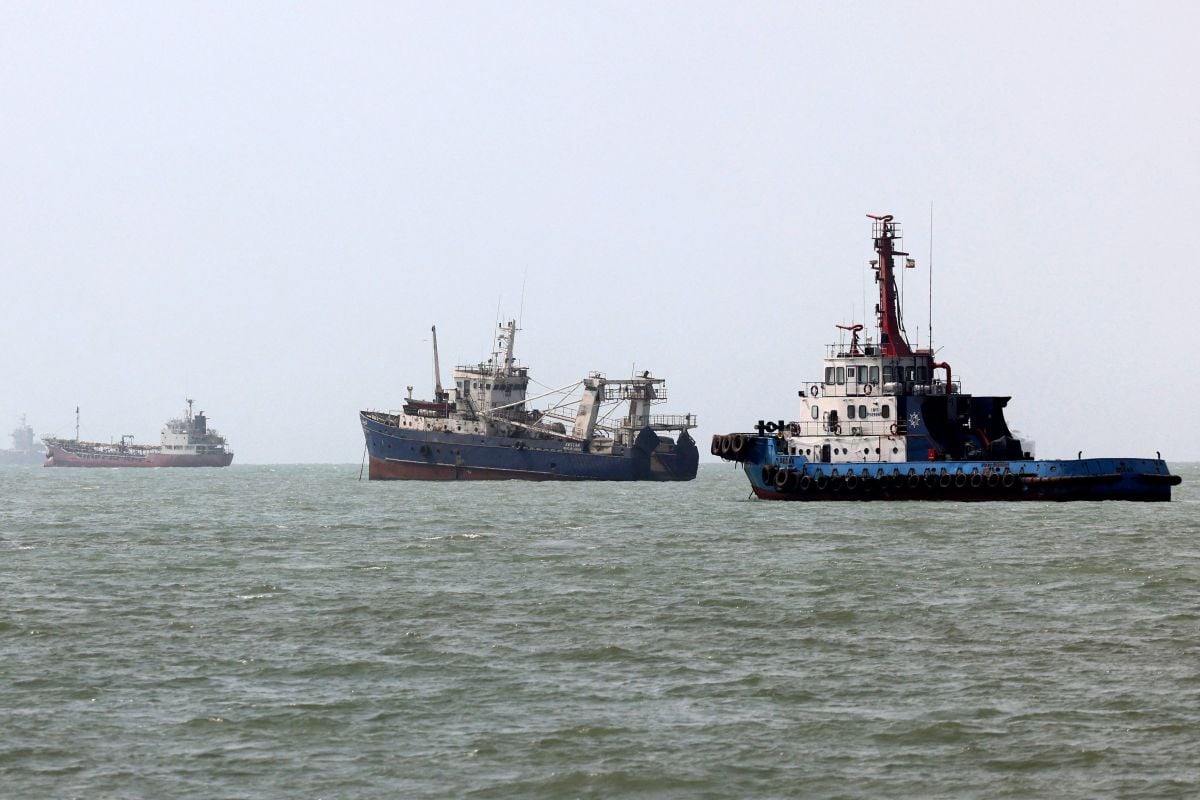
Ships crossing the Strait of Hormuz off Bandar Abbas, in southern Iran, on Aug. 10, 2026. (Credit: Atta Kenare/AFP)






An approach that reveals the difficulties Washington faces in determining Iran’s true position. In the midst of talks with Tehran in mid-May, following the April 8 cease-fire agreement, the Trump administration opened a direct secret channel with the Islamic Revolutionary Guard Corps to verify that Iranian negotiators, Parliament Speaker Mohammad Bagher Ghalibaf and chief diplomat Abbas Araghchi, were in fact speaking on behalf of the IRGC.
The information was revealed Sunday by U.S. news outlet Axios, which cited several sources "with direct knowledge of the matter." The channel was established through Nechirvan Barzani, president of the Iraqi Kurdistan region, who is trusted by both the United States and the IRGC.
The Guard's grip on power in Iran has grown significantly since the assassination of Supreme Leader Ali Khamenei and other top political officials on Feb. 28, just after the Israeli-American war against Iran began. Their influence increased due to the absence from public life of the new Iranian leader, Mojtaba Khamenei, whose health status remains unknown after he was wounded in the strike that killed his father.
Resolving the crisis through negotiation
According to Axios, the White House negotiators began to believe in mid-May that their Iranian counterparts "did not have the necessary authority to conclude an agreement and that their decisions were being overruled by the IRGC," after Iran delayed its response by 10 days to an agreement that had seemed within reach. The White House then "understood that it needed a parallel communication channel with the Revolutionary Guard leadership," the U.S. outlet reports.
Around May 10, then-Director of National Intelligence Tulsi Gabbard called Nechirvan Barzani. According to sources with direct knowledge of the call, she explained to him that the administration thought he could help get in touch with IRGC Commander Gen. Ahmad Vahidi.
Axios notes that during the Iran-Iraq War (1980-1988), Barzani lived in Iran and studied at the University of Tehran. He speaks fluent Persian and has personal relationships with many top officials of the Iranian regime, including IRGC leaders. "Nechirvan Barzani is a pragmatic person who knows how to solve problems. He is respected throughout the region. He knows almost everyone in both Tehran and Washington. He’s the person you call in a delicate situation," Brett McGurk, who has advised four U.S. presidents on Middle East policy, said in an interview, according to Axios.
According to the source, Gabbard made it clear to Barzani that she was making the call with the approval of President Donald Trump and Vice President JD Vance.
She explained that the White House wanted to know whether Vahidi and the IRGC leadership approved of what Mohammad Bagher Ghalibaf and Abbas Araghchi had negotiated, or if they had other proposals or demands, according to the same Axios source. The intelligence director specified that intermediaries had been unable to reach Vahidi for clarification.
After requesting a direct meeting with Vahidi, Barzani on May 14 hosted in his office in Erbil, the capital of Iraqi Kurdistan, an IRGC official who brought a secure encrypted phone to establish secure communication, Axios learned. Barzani asked Vahidi whether he was in agreement with the Iranian negotiators. "I fully support them and that is also the position of the IRGC. We prefer to resolve this crisis through negotiation," Vahidi said, according to a source with direct knowledge of the exchange.
The United States then wanted Barzani to host secret talks in Erbil between high-ranking American and Iranian negotiators, but these talks never took place. The Iranians, while not rejecting the idea outright, "expressed concerns about their safety." They believed that "Israeli intelligence services had many agents or assets in Iraqi Kurdistan and feared the Israelis might attempt to assassinate them in Erbil or on their way to and from the city," Axios reports.
The main sticking point for a war-exit agreement between Iran and the United States, which has been ongoing for more than five months and has caused thousands of deaths, is currently centered on the Strait of Hormuz, a crucial maritime route for global oil transport. Tehran reaffirmed Saturday that the strait "will remain Iranian," after U.S. President Donald Trump claimed that this strategic passage would become part of American territory once Iran is "defeated."

 7 p.m. recap: Iran warns Egypt, Israeli soldiers vote in south Lebanon, Haret Hreik responds to Kataeb