






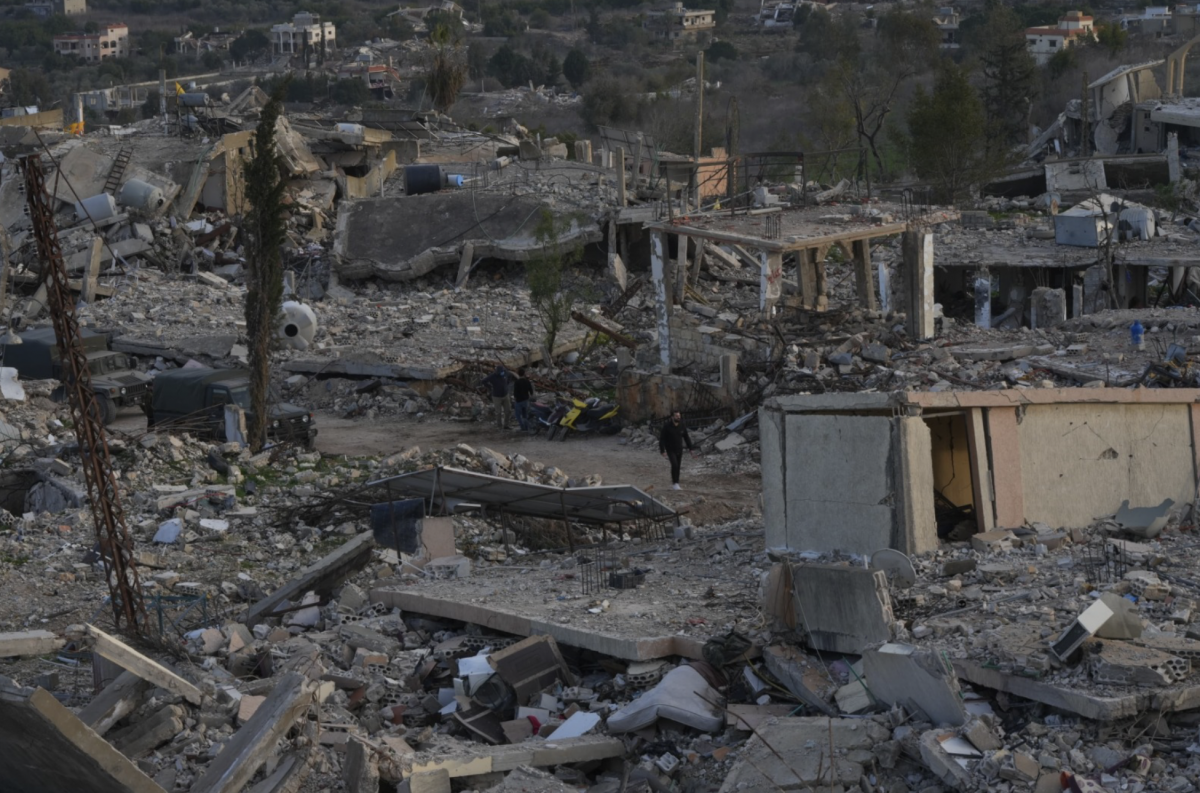
The destruction in Aita al-Shaab on Jan. 28, 2025. (Credit: Mohammad Yassine/L’Orient-Le Jour)






A "coalition of residents of the southern border villages" formed on Sunday held a press conference at 11 a.m. in Kfar Jouz (Nabatieh) to call on the Lebanese state and "concerned parties" for the reconstruction of damaged areas, as well as a series of compensations and aid for families.
This announcement comes as Hezbollah is expected to have evacuated the region south of the Litani River under the cease-fire agreement from last November, and as the state pledged to disarm the party throughout Lebanese territory by the end of the year.
Presenting itself as "neither affiliated with nor opposed to any political party," although it stems from an area largely supportive of Hezbollah, the "coalition" first wanted to reject "all rumors about buffer zones emptied of their residents, because this land has owners who will not abandon it."
Israel is accused of seeking to create a buffer zone in southern Lebanon to ensure its security along its northern border, after having largely destroyed border villages during the last war against Hezbollah, which began on Oct. 8, 2023, and as it continues to carry out almost daily attacks on various vital infrastructures. It remains at five positions it deems strategic on Lebanese hills near the border, in violation of the cease-fire agreement that went into effect on Nov. 27, 2024.
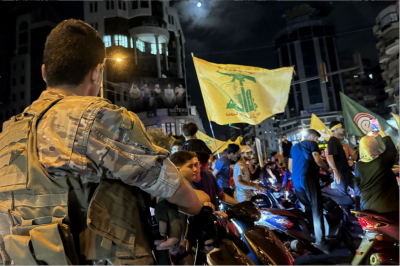
"As for the 'five points,' these are not points, but thousands of kilometers drenched in our blood, our tears, and our sweat ... Among them, entire villages are still occupied, such as Hunin, which had been rebuilt on the remains of Hunin destroyed and occupied in 1948, and today finds itself occupied and destroyed a second time," the coalition's statement said.
'The return rate does not exceed 10 percent'
Denouncing the fact that "tens of thousands of displaced people are still scattered throughout the country, some still taking refuge in schools," and that "the rate of return does not exceed 10 percent of the prewar population," the coalition sent 14 demands to the Lebanese state "and all concerned parties," including the reconstruction of destroyed areas, payment of compensation to victims, medical care and free education, the release of frozen bank deposits, and the payment of at least $300 per family per month as a housing allowance.
"We will knock on every door and use every possible and available form of mobilization, in a democratic, legal, positive and peaceful manner," the statement said.
Since the cease-fire, Hezbollah has repeatedly called on the Lebanese state to fund the reconstruction of destroyed areas, as the party's supply sources have largely dried up, notably following the fall of the Assad regime in Syria in December 2024, overthrown by an Islamist coalition hostile to Hezbollah, which cut the land supply routes from Iran, and the gradual reassertion of control by the Lebanese state over the country's port and airport.
This appeal from the villagers comes as the international conference on aid for the reconstruction of destroyed areas in Lebanon, which the state is unable to handle because of its exorbitant cost, is only scheduled for the final stage of Hezbollah's disarmament, which is set to be completed by the end of December, according to the roadmap adopted in the Cabinet meeting last Aug. 5.