






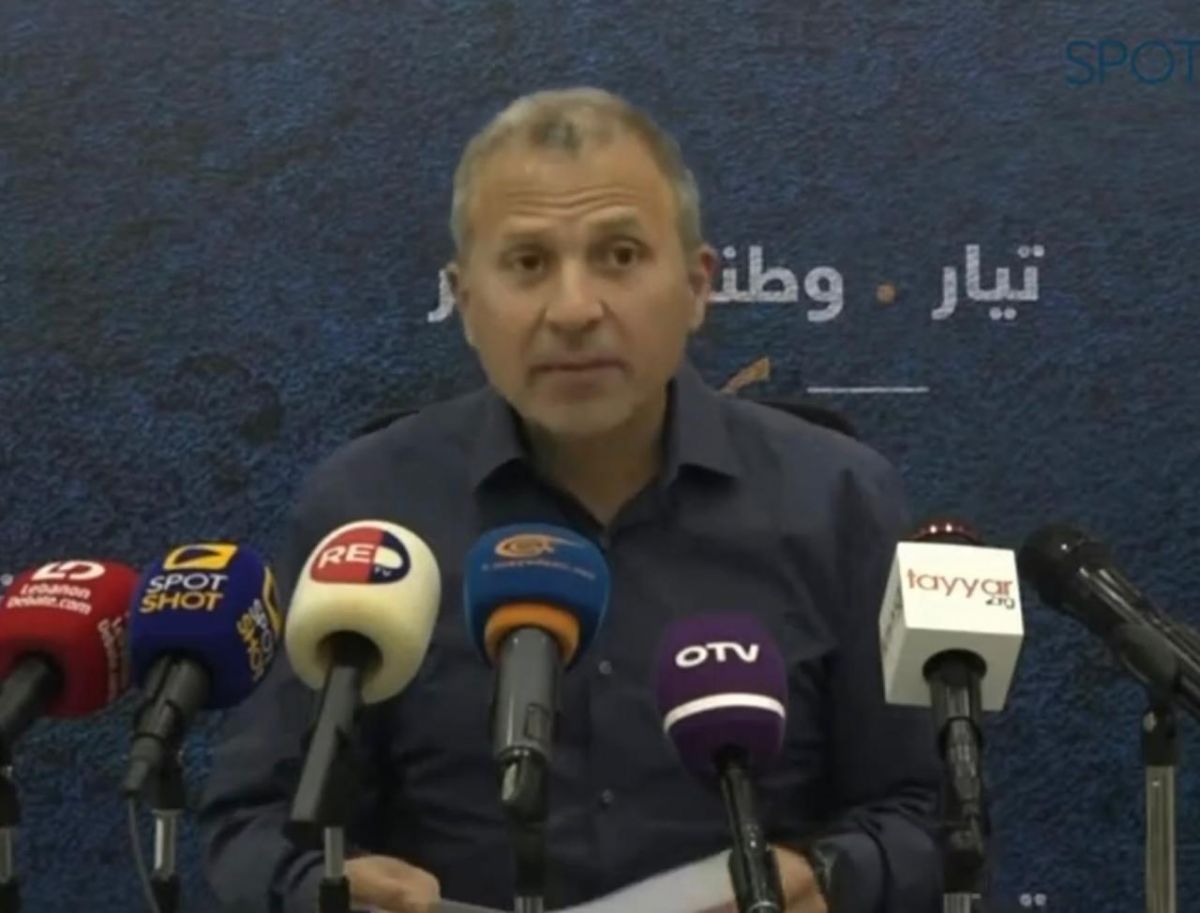
The head of the FPM, Gebran Bassil, during his press conference. Screenshot from the live broadcast of the conference.






At the end of a meeting of the Free Patriotic Movement's (FPM) parliamentary group at its headquarters in Mirna Chalouhi, the party's leader Gebran Bassil stated that the deterrent function of Hezbollah's arsenal had "collapsed" since the party had unilaterally decided to open a support front for Gaza in South Lebanon, given the results this yielded on the ground. The Batroun MP added that it was imperative to place these weapons under the exclusive authority of the state.
This issue is at the center of divisions between Hezbollah and Nawaf Salam's government. Last week, the latter adopted the U.S. roadmap for Hezbollah's disarmament and Israeli withdrawal from South Lebanon. The plan aims to make permanent the cease-fire agreement reached at the end of last November between Hezbollah and Israel, following more than a year of conflict.
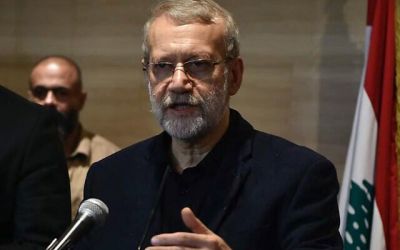
While the U.S. welcomed the Cabinet's decision, Iran strongly criticized it, drawing backlash from Lebanese diplomats. Against this backdrop, the secretary-general of Iran's Supreme National Security Council, Ali Larijani, is expected Wednesday in Beirut for an official visit.
Jab at Hezbollah
"The FPM adopts a clear position, affirming the absolute necessity of reserving weapons and their command solely and indivisibly for the state," said Bassil. "This position stems from the principle of state sovereignty and the unity of security and military decision-making. According to this principle, the possession and use of weapons must be exclusively in the hands of legitimate institutions," he added. He also justified this stance by referencing the Taif Accords, which ended the 1975-1990 Civil War, as well as international resolutions, particularly U.N. Security Council Resolution 1701, both of which call for the disarmament of militias.
"The deterrent function of Hezbollah’s weapons has collapsed because of the consequences of its unilateral participation in the support war. It has lost its deterrent capacity following the latest war, even if it retains a limited defensive ability in the event of an attempted Israeli occupation of Lebanon," Bassil also stated.
"The involvement of these weapons in regional and international equations beyond Lebanon’s capacity led them to lose their purely Lebanese identity, which we had managed to establish in the 2006 memorandum of understanding by restricting them to the defense of the country within the framework of a defense strategy devised by the state," he continued.
The FPM leader finally took a jab at his former ally on the political scene by highlighting "Hezbollah’s non-compliance with its commitment to state-building, which constituted a break from the 2006 memorandum of understanding and a missed opportunity, under Michel Aoun’s presidency, to build a strong state, both politically and economically."
