






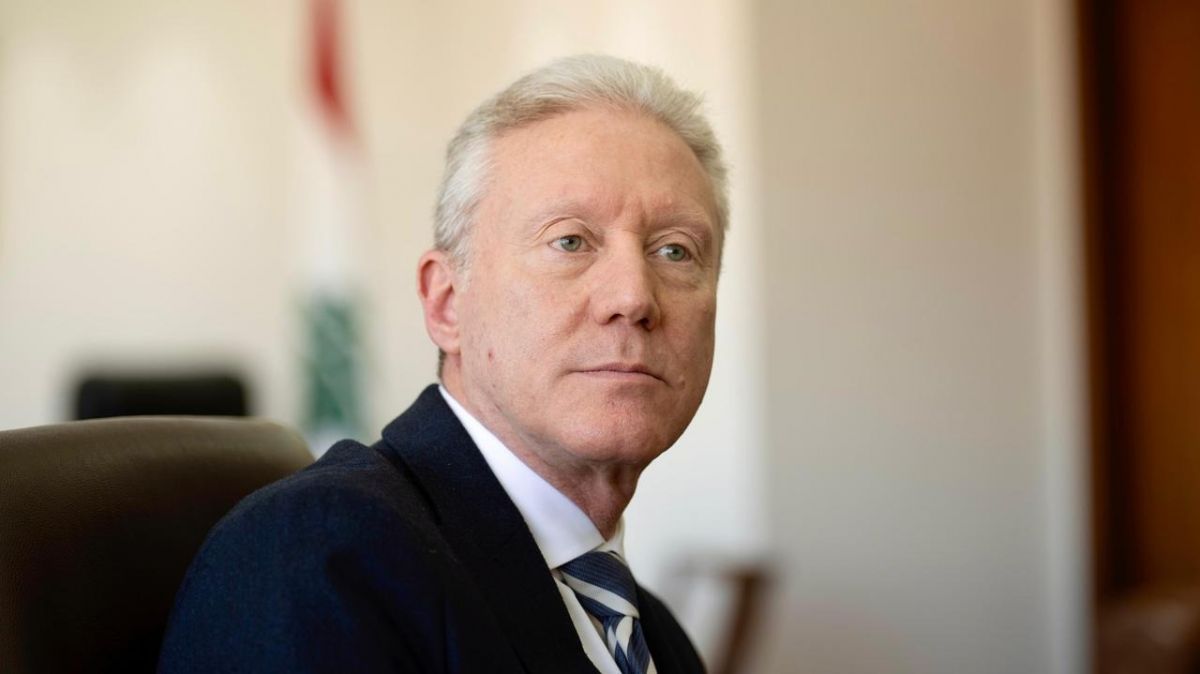
Lebanese Minister of Foreign Affairs, Joe Rajji. Photo provided by the ministry's press office.






Lebanese Foreign Minister Joe Rajji said Friday that the United States is considering halting its funding for UNIFIL and revising the mission's scope, as the peacekeeping force’s mandate in southern Lebanon is set to expire at the end of August. The move comes amid growing tensions tied to the domestic Lebanese situation and discussions around Hezbollah’s disarmament.
"It is now clear that the United States will stop funding the international emergency forces. They also want to change their missions. On the other hand, we are working with France, Britain and Algeria, all three members of the Security Council, to resolve the UNIFIL funding question while preserving its mission without modification, which is what Lebanon wants," he said in an interview with the Arabic-language publication Nidaa al-Watan.
Rajji also pointed to what he called UNIFIL’s “paradoxical situation” since its deployment in Lebanon following the adoption of U.N. Resolution 425 in 1978, which placed it between two hostile sides. With an annual budget of half a billion dollars, the mission has over the years created a profitable economic ecosystem in the South, benefiting local communities who, he noted, are “friendly toward UNIFIL, until incidents arise with Hezbollah, at which point they abandon it.” UNIFIL, for its part, has never directly blamed Hezbollah for the recurrent attacks it faces in southern Lebanon, referring instead in its statements to “locals.”
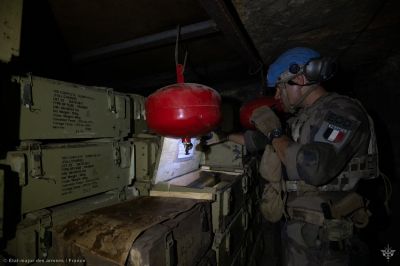
UNIFIL, which comprises around 10,000 peacekeepers, has been deployed since 1978 to serve as a buffer between Lebanon and Israel. U.N. Resolution 1701, adopted in 2006, calls for the full withdrawal of Israeli forces from Lebanese territory and the disarmament of Hezbollah. It forms the basis of the cease-fire agreement that came into effect on November 27, 2024, between the party and Israel after 13 months of war — a truce that is now violated almost daily by Israeli strikes and shelling. Hezbollah, for its part, has refused to disarm. On Wednesday, the Amal-Hezbollah alliance denounced the Cabinet’s decision to set a deadline for disarmament as a “grave sin.”
While the United States has already cut funding to numerous international institutions and U.N. bodies since Donald Trump’s return to office in January, reports suggest both Israel and the U.S. are now seeking not to renew UNIFIL’s mandate.
Monopoly on weapons
Commenting on the Cabinet’s decision during its Tuesday and Thursday sessions to grant the state exclusive control over weapons, the foreign minister noted that this move comes many decades after Lebanon’s international recognition in 1943.
“In 2025, the state is still struggling to assert its authority by reclaiming its monopoly on arms,” he said, adding that his own role in this decision amounted to “a 1 percent contribution.” Regarding the formulation of the decision, Mr. Rajji— who is aligned with the Lebanese Forces party — admitted he would have preferred a reference to “the handover of weapons” to the state. The foreign minister also considered it a "historic, decisive and final decision, with no possibility of going back."
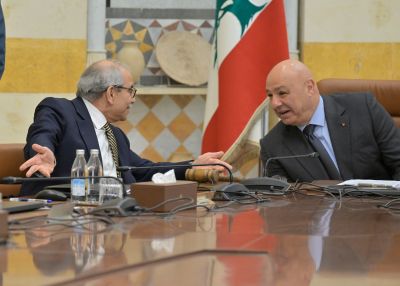
On the deadline set for resolving the arms issue, Rajji noted that ministers refused to "leave the deadline open, which could mean years, and would make the decision difficult to implement." He also recalled the international pressure — particularly from the U.S. and France, along with imminent threats from Israel — that preceded the decision.
Following the government's decision, the Lebanese Army must now prepare an implementation plan and present it to the Cabinet by the end of the month. "As the United States has promised, Lebanon hopes to obtain aid for the army to start implementing the decision to seize weapons throughout the territory," Mr. Rajji observed.
Finally, when asked about his own views, the Lebanese foreign minister reignited the debate on peace between Lebanon and Israel. "People always say Lebanon will be the last country to make peace with Israel. Fine — but why should that be imposed on Lebanon if it has interests beyond that?" he asked.
