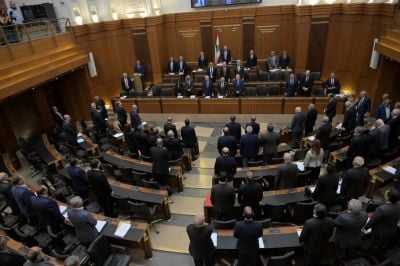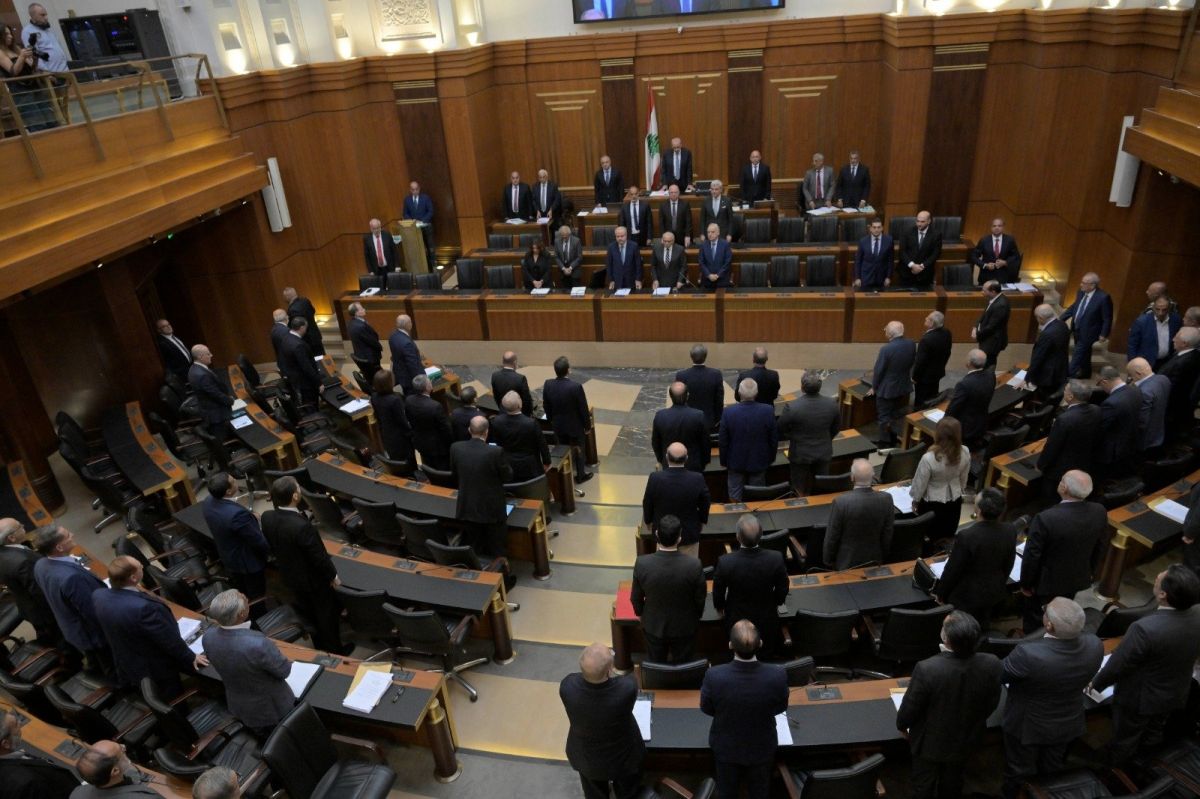
Lebanese Parliament meeting on July 31, 2025. (Credit: Nabil Ismail)






Having just been passed by Parliament on June 12 and approved by the Constitutional Council on July 22, which rejected an appeal to overturn it, the law on old nonresidential rents was amended on July 31.
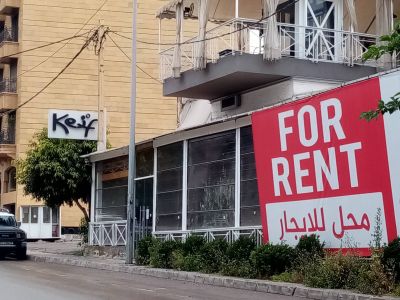
The final legislation, which applies to rents for shops, offices, factories, pharmacies, schools and other properties leased before 1992, is the result of a complex legislative process.
It reflects a long-standing dispute between property owners, who argue that rent freezes over several decades have violated their property rights, and tenants, who see the liberalization of such rents as a threat to economic stability.
The amended law extends the timeline for liberalizing rents to between five and eight years. The initial version, passed just 40 days earlier, had set a fixed period of four years. That version also allowed for a gradual increase in rents up to 8 percent of the property’s rental value over that period. The new law caps the increase at 5 percent.
The earlier law had also included a clause allowing landlords to reduce the tenant’s eviction period to two years if they gave up the right to gradual rent increases. That option has been eliminated in the new version.
The new system
Under the new system, tenants are divided into four categories:
- For properties rented before 1992 with no entry fee paid, rents will be maintained for five years. During this time, rent increases will follow a gradual scale: 30 percent of the reference rental value in the first year, 40 percent in the second, 50 percent in the third, and 100 percent in the fourth and fifth years.
- Tenants who paid an entry fee before 2015, in addition to annual rent, are granted a six-year extension. For the first three years, they will pay gradual increases of 30 percent, 40 percent and 50 percent of the reference rent. For the remaining three years, they will pay the rent applicable to properties leased after 1992.
- Those who paid an entry fee after 2015 will have their rents extended for seven years. They will pay 30 percent, 40 percent, 50 percent and 60 percent over the first four years, followed by market rent for the next three years.
- Rents on properties exceeding 500 square meters, as well as those where tenants covered expenses which landlords should normally cover (such as structural repairs or reconstruction), and leases linked to public institutions or commercial entities operating under legally regulated liberal professions, will be extended for eight years. Rent increases will follow the same progression as for tenants in the third category.
A source close to the Administration and Justice Committee, chaired by Lebanese Forces (LF) MP George Adwan, who initiated the recent amendments, justified the extension of rents to up to eight years on the grounds of public interest.
These rents often involve public schools, whose sudden closure would affect several thousand students. Extending the period would give authorities sufficient time to find alternative premises, the source said.
The same source added that the extension, which could ultimately lead to eviction, is also justified in the case of liberal professions such as pharmacists, lawyers and doctors, for whom the location of their premises plays a key role in maintaining their clientele.
Criticism
Speaking to L’Orient-Le Jour, attorney Adib Zakhour, head of the Jurists Association to Appeal and Amend the Rent Law, offered a more qualified interpretation. He said that the eight-year extension in reality applies only to pharmacists. He said that the provision “does not cover other liberal professions,” pointing out that lawyers and doctors do not operate commercial enterprises, a condition required by law to benefit from the maximum extension.
According to Zakhour, “There should be no discrimination among liberal professions, especially since all rely on the stability of their location to retain their clientele.” He also criticized the reference rate used to determine rental value, calling it “excessive” and arguing that “it does not reflect market reality.”
Property owners appear far from satisfied with the new law. In an interview with the website Huna Lubnan, Patrick Rizkallah, head of the real estate owners’ syndicate, said that “reducing the rental value rate from 8 percent to 5 percent is a decision with no economic or real estate justification.”
He asked, “Where is the protection for property owners? Who will compensate those who have lost part of their income for decades? Who supports retirees for whom these properties are their only source of income?”
Regarding the timeline for liberalizing rents, Charbel Cherfan, attorney for the syndicate of property and building owners in Lebanon, found the fact that the six, seven or eight-year extensions for old rents “apply to only 9 percent of contracts” to be positive.
“Out of 92,000 old rental agreements, only 3 percent involve tenants who paid key money and therefore qualify for six or seven-year extensions. Another 6 percent involve public institutions, pharmacies or businesses occupying more than 500 square meters, which qualify for the eight-year extension,” he explained.
He added that 91 percent of tenants would see rent liberalization take effect after five years. Cherfan called for greater legislative stability and expressed hope that this period “will not be extended again” under a future law.
The adopted text marks the final stage in a convoluted legislative journey that began with the law’s initial adoption in December 2023. It was first approved by the Najib Mikati government, which then, just days later, declined to sign it and sent it back to Parliament for reconsideration.
The syndicate of property and building owners appealed to the State Shura Council, which in April 2024 suspended the decree referring the law back to Parliament.
Despite the ongoing legal proceedings, Prime Minister Nawaf Salam published the law in the Official Gazette on April 3, 2025. The Constitutional Council overturned it on May 20 following an appeal filed on April 17 by President Joseph Aoun. The president challenged the constitutionality of the law’s promulgation, arguing it violated the requirement for the head of state’s signature.
President Aoun signed the law on June 5, 2025, and it was published in the Official Gazette on June 12. A group of 13 MPs contested it again on June 23, but their appeal was rejected by the Constitutional Council on July 22.
Meanwhile, Parliament’s Administration and Justice Committee submitted a proposal on June 23 to amend the law’s provisions regarding the timeline for rent liberalization and the terms of rent increases. These amendments were approved in a plenary session on July 31 with the support of 65 MPs.
This article was translated from L'Orient-Le Jour by Sahar Ghossoub.