











In these tense times in the region, many observers have recalled that in a recent speech, Hezbollah Secretary-General Naim Qassem warned of an “existential threat against the resistance, its popular environment, its supporters, as well as against Lebanon and all its components.”
At the time, the statement was widely seen as an attempt by Qassem to amplify the perceived threat to Hezbollah and its support base, as a means of justifying the group’s continued possession of weapons.
But in light of recent events in Sweida, those remarks have taken on new meaning. According to several Shiite figures, the United States is now backing the region’s main community — the Sunnis — at the expense of minorities.
One such figure said Israeli conduct during last year's war with Hezbollah indicates the entire Shiite community, not just Hezbollah supporters, is being targeted. He cited the harassment and targeting of Shiites not only in southern villages and Beirut, but also in Kesrouan, Jbeil, and even Zgharta, arguing that Israel appears intent on pushing the entire Shiite community out of southern Lebanon — not just Hezbollah operatives.
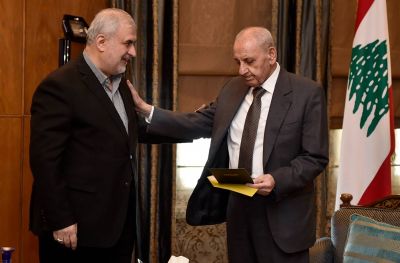
These fears have deepened since regime change in Syria brought to power a president from the Sunni community, particularly its Islamist wing.
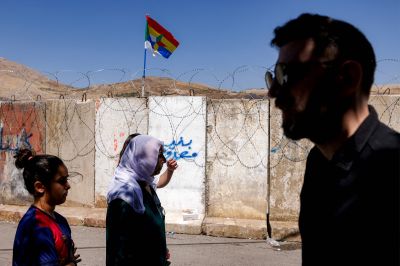
Among the Shiite community in Lebanon — and Hezbollah in particular — there is now a growing sense of persecution when it comes to Syria, especially following sectarian violence against Alawites along Syria’s coast, attacks on Christian holy sites and recent fighting targeting the Druze in Sweida.
While the various developments in Syria may not be directly linked, Shiite figures say they are watching closely the shifts happening in Lebanon’s Sunni community.
In the months after Hamas’ Oct. 7 attack and Hezbollah’s decision to open a support front in southern Lebanon, many Sunnis were reportedly supportive of Hezbollah’s stance. But since Ahmad al-Sharaa came to power in Damascus, this mood has shifted, and many Sunnis have reverted to a more traditionally hostile stance toward Hezbollah, the source said.
In this context, Saudi Arabia has begun taking a more active role in Lebanon — particularly in support of the Sunni community, which has felt politically abandoned since the de facto political exit of its former leader, Future Movement chief Saad Hariri.
For nearly eight months — since just before the Jan. 9, 2025, presidential election — Saudi Arabia has sent multiple delegations to Lebanon, including a special envoy, Prince Yazid bin Farhan. Riyadh also encouraged Grand Mufti Abdellatif Derian to visit Syria at the head of a large delegation and facilitated a meeting between the Lebanese and Syrian defense ministers in Jeddah to address bilateral tensions.
According to the same Shiite figures, these moves are part of a broader American strategy. The U.S., they say, is now placing its bets on the Sunni communities in Lebanon, Syria, and possibly even Iraq to shift the regional balance and reduce hostility toward Israel.
They believe Washington has already tried to court the region’s minorities — from Saddam Hussein’s Sunni-led Iraq during the Iran-Iraq War, to the Alawite regime in Syria (with Secretary of State Colin Powell making overtures to Bashar al-Assad in 2003), to Lebanon’s Christians — without success. Now, the U.S. is once again betting on the Sunnis and is using all tools at its disposal to encourage normalization with Israel.
All of these developments have led some in the Shiite community to fear that they are being collectively targeted. Hezbollah, for its part, remains convinced that the ultimate U.S.-Israeli goal is to bring down the Iranian regime, thereby depriving Shiites of the only state capable of supporting them.
Still, sources close to Hezbollah deny that the party harbors any offensive intentions. On the contrary, they say, Hezbollah is working to reinforce internal peace, primarily to protect its own community, which, in their view, has no choice but to draw closer to other communities in Lebanese society.
The question that remains: Are those other components ready to believe it?

 7 p.m. recap: Iran warns Egypt, Israeli soldiers vote in south Lebanon, Haret Hreik responds to Kataeb