






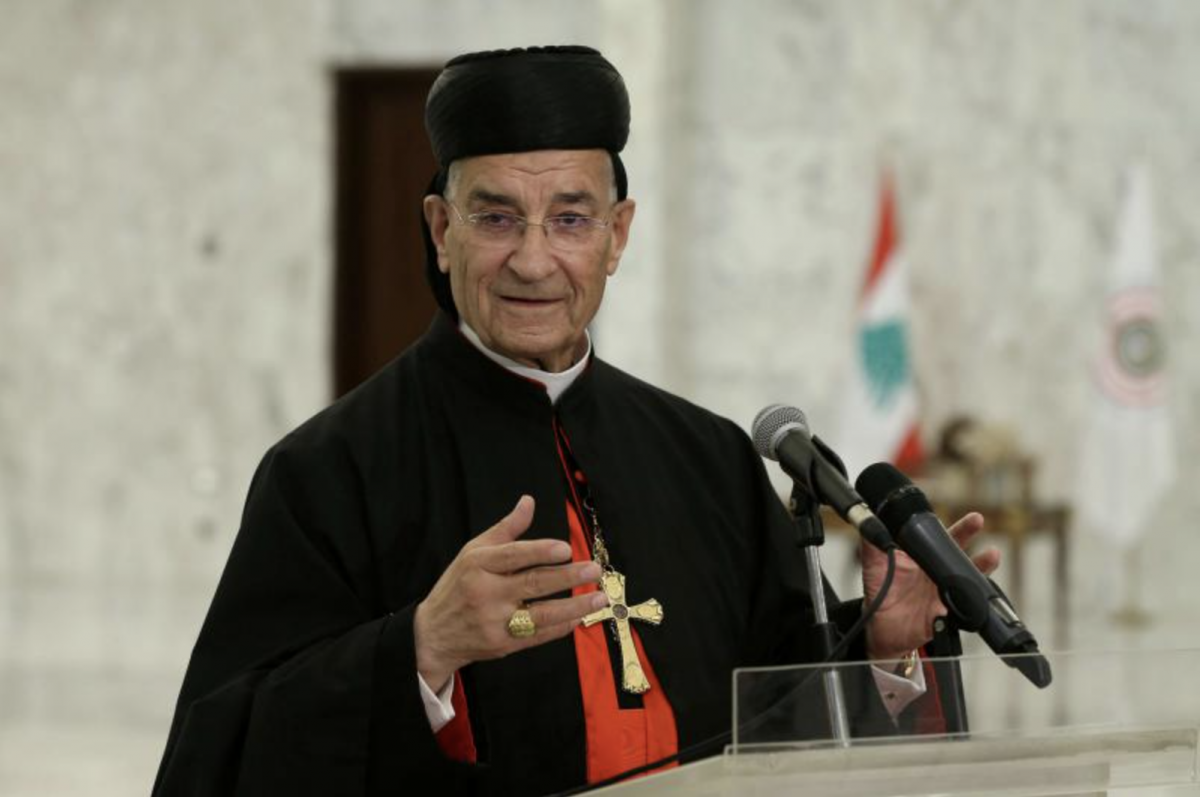
The Lebanese Maronite Patriarch Bechara al-Rai. (Credit: AFP)






Maronite Patriarch Bechara al-Rai took a stand on Sunday during a Mass in Annaya, in the heights of Jbeil, in favor of Lebanese expatriates voting for all 128 members of Parliament, rather than for six additional MPs elected exclusively by the diaspora.
During a Mass celebrating Saints Charbel and Elias, the head of the Maronite Church argued that Article 112 of the electoral law, which provides for these six extra seats, "annuls the right of Lebanese abroad to vote in their original constituencies" and constitutes a "violation of the Constitution and the principle of equality."
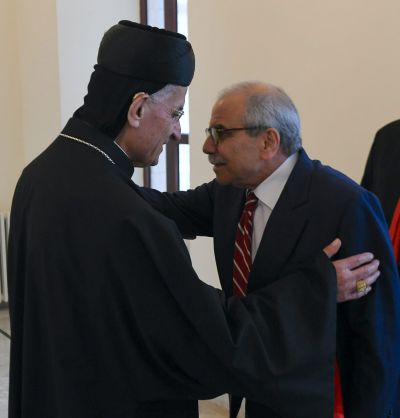
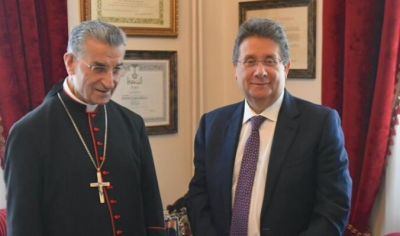
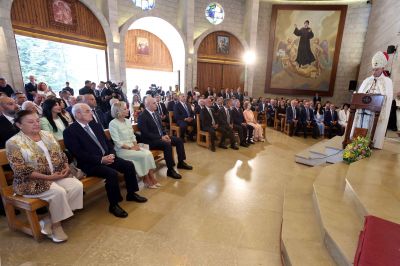
The Mass took place at the Saint Maron Monastery, in the presence of the head of state, Joseph Aoun, his wife Nemat and several political leaders.
Parliament Speaker Nabih Berri blocked on June 30 an amendment to the electoral law that would have allowed the diaspora to elect the 128 MPs in their original constituencies, as was the case in 2018 and 2022, rather than six parliamentarians specifically for emigrants.
Lebanese expatriates had a significant influence on the overall results in the 2022 elections, which saw the election of approximately a dozen MPs from the substantial 2019 protest movement.
'Contrary to equality principle' between Lebanese residents, expatriates
"While Lebanon faces existential threats, we are now witnessing divisions among political leaders concerning Article 112 of the current electoral law, which was suspended in the 2018 and 2022 polls," Rai said in his homily.
He argued that "the creation of six constituencies reserved for expatriates goes against the principle of equality between residents and emigrants, guaranteed by the Constitution."
In Rai’s view, "limiting expatriates to six parliamentary seats undermines their connection with their homeland and their families and deprives them of participating in political life. What we see in Article 112 is a form of exclusion." He called for "Lebanese from the diaspora to be able to vote freely based on their original constituencies," thus urging the abolition of Article 112.
'Few words, many deeds'
Addressing the president, Rai said that his "visit to the tomb of Saint Charbel is a sign of hope. Lebanon needs leaders like Saints Charbel and Elias: few words, many deeds."
"Your presence today confirms that Lebanon, despite everything, remains built upon two fundamental pillars: God and his saints. We pray that God grants you patience and wisdom to lead Lebanon, which is currently going through a delicate and challenging period, requiring deep reflection to overcome. You believe in it and you work for it," he continued.
Saint Charbel, born Youssef Makhlouf, was a 19th-century Maronite monk and priest. He is celebrated on the third Sunday of July by the Maronite Church and on July 24 by the Latin Church. He is among the most venerated and popular saints in Lebanon. Saint Elias, meanwhile, commemorates the Old Testament prophet Elijah every July 20.
This article was translated from L'Orient-Le Jour.

 8 p.m. recap: Israel again threatens Beirut’s south suburbs; 2 ships hit near Hormuz; Riyadh football matches canceled