











Even after clarifying his remarks, the damage was done. U.S. envoy Tom Barrack dropped a small bombshell on Friday during a press briefing, saying, “If Lebanon doesn’t move, it is going to be to Bilad al-Sham again.”
If his aim was to provoke the anger of the Lebanese and rekindle their fears about the future of their relationship with a country that occupied them for (at least) 15 years — and that has always viewed Lebanon the way Russia views Ukraine — he could hardly have done better.
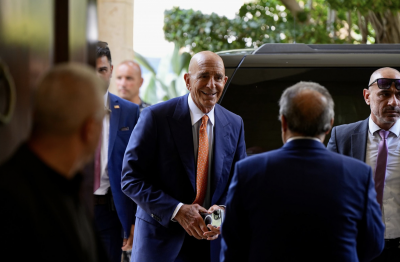
The fall of Bashar al-Assad was meant to offer a historic opportunity to reinvent ties between Beirut and Damascus. But for now — even if Lebanon is showing more willingness than its neighbor — nothing is taking hold. The two sides remain locked in a standoff. The issues are numerous, but almost secondary. The past is far from being behind them, and it weighs so heavily. It overshadows everything else.
No one knows what lies ahead for Ahmad al-Sharaa’s Syria. The lifting of U.S. sanctions has given the regime a breath of relief and a glimmer of hope for stabilization. But the situation remains extremely fragile. The government, painfully short on resources, must survive not only internal turmoil but also a fierce struggle for external influence on its soil.
Under these conditions, the idea that Syria might soon annex all or part of Lebanon is pure fantasy, if not outright a “cartoon”, to borrow Barrack’s description.
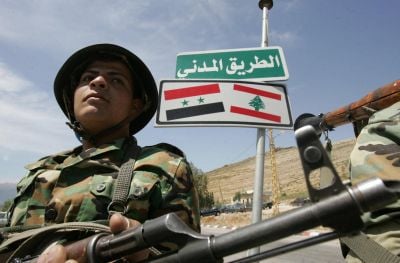
As provocative as it was, the American envoy’s remark had the merit of hitting a raw nerve. It should be read in full to grasp its implications: “You have Israel on one side, Iran on the other, and now you have Syria manifesting itself so quickly…”
In other words, if Lebanon’s fate is no longer being decided in Tehran, it is now — perhaps increasingly — being played out between Damascus and Tel Aviv. The region is shifting, and Lebanon is being left behind, drawing little more than apathy from some and hunger from others.
Barrack ultimately said two things that many in Lebanon still refuse to admit, or even to grasp.
First, if Hezbollah does not give up its weapons through negotiation, and if the Lebanese state does nothing to disarm it, then Israel will take matters into its own hands.
Israel can bomb the group’s infrastructure for years, whenever and wherever it chooses, without facing any significant retaliation or condemnation from the international community. The world will look the other way as long as the Iran-backed party keeps playing a dangerous game and the state remains powerless.
Israel could also choose, once the “Barrack interlude” is over, to launch a broader offensive against the party, even if that path carries greater risks for itself.

In either scenario, all of Lebanon would suffer, albeit to varying degrees, from a state of chronic instability that would bury any hope of starting fresh.
The second truth Barrack pointed to is that Sharaa’s Syria is already — and will remain, no matter what — a player in Lebanon’s political equation. The regional winds have shifted. The Iranian axis is down. Sunni powers are making a comeback, though it remains to be seen whether it will be led by Turkey or the Gulf states. And the strongman of the new Syria is its clearest expression.
To believe that Lebanon — more closely tied to Syria than to any other country — could escape being shaken by this geopolitical upheaval is wishful thinking. Beirut is likely to feel the impact all the more, given that the new regime in Damascus has a strong aversion to Hezbollah and makes no secret of its desire to normalize ties with Tel Aviv.
Syria is already at the table, albeit less visibly than Israel, in the resolution of Lebanon’s two most critical issues: the disarmament of Hezbollah and the future of the Lebanese power-sharing system.
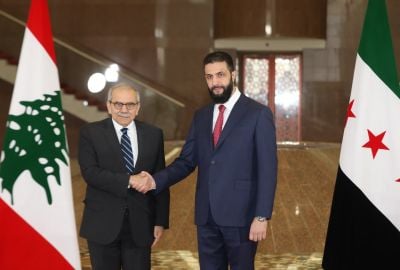
In this context, all Lebanese would do well to take Barrack’s “warning” very seriously, and Hezbollah more than anyone, as it underscores just how isolated and even surrounded the group has become. But the state, too, should draw a few lessons.
For one, Lebanon is no longer the West’s “darling” in the region and could stand to lose a great deal if it misses the “Syrian train.” For another, if the situation remains stagnant and Damascus achieves stability, the notion of Syria once again donning the mantle of regional patron may start gaining traction in several diplomatic capitals.
Finally, if the issues of Hezbollah’s weapons and the future of Lebanon’s power-sharing system — which should not be linked — are not addressed internally and without delay, it is the very question of Greater Lebanon’s survival, in a rapidly shifting regional landscape, that may once again come to the fore.
This article was originally published in French in L'Orient-Le Jour and was translated by Sahar Ghoussoub.

 Evening recap: Netanyahu announces West Bank offensive; 7 killed in Jordan church shooting; tents burned in south Lebanon
 US strike on Iran this weekend? ‘Absolutely,’ says Barrack; ‘I have no idea,’ says Trump