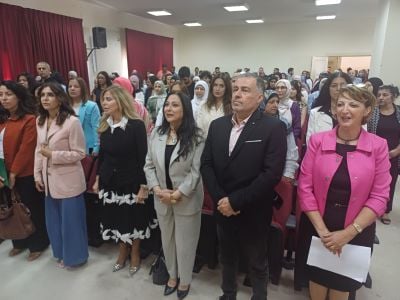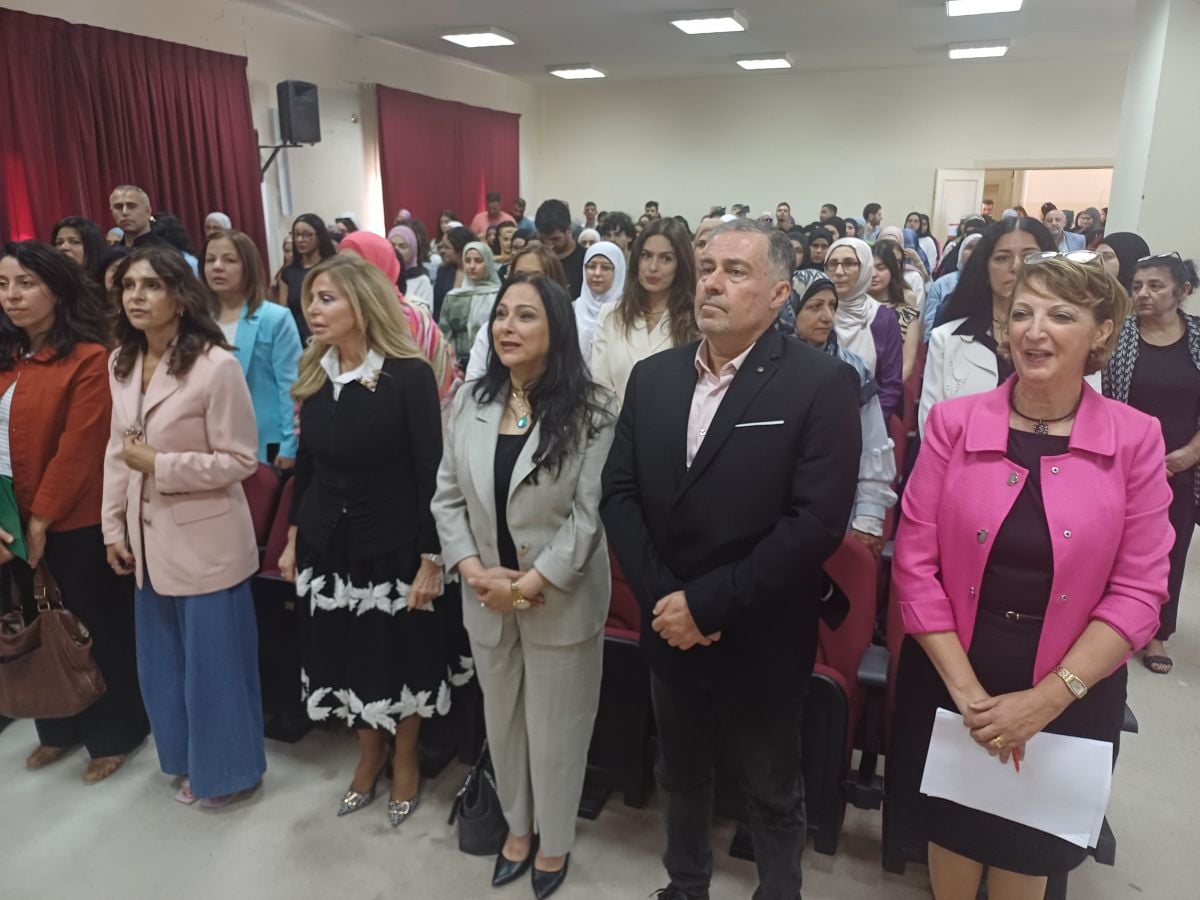






The Faculty of Letters and Human Sciences at the Lebanese University, Section V, brought together researchers, students and experts on May 13 for a conference examining the traumas of war and the essential role the humanities can play in social reconstruction.
Titled “From Destruction to Constructing Hope: How Can the Humanities Understand and Address the Traumas of War?” the event was held in honor of International Day of Peace. It aimed “to highlight the role of the humanities in analyzing post-conflict social dynamics,” said Faten Kobrosli, a professor of Francophone comparative literature and the event’s initiator.
“The humanities provide the conceptual, critical and symbolic tools necessary to think about trauma beyond the symptom,” Kobrosli said. “They allow for the analysis of the underlying causes of violence, the reconstruction of meaningful narratives, and the support of individuals and societies toward new forms of resilience, symbolic justice and social bonding.”
Departments of philosophy, history, archaeology, geography, literature and psychology all participated in organizing the event.
“The Faculty of Letters is a place of living memory and critical thought,” Kobrosli said. “It’s where essential questions are born, where words are woven to name the unspeakable, and where a collective memory capable of connecting the past, present and future is constructed. It’s a fundamental lever in training individuals capable of thinking about the complexity of the world and engaging in dialogue beyond divisions.”
The conference was held under the patronage of Dean Souha el-Samad and Faculty Director Ahmad Nasrallah, with former Dean Wafaa Berry and Bérénice Velez, deputy director of the French Institute of South Lebanon, also attending. It featured 13 speakers, including academics, clinicians, artists and representatives of associations and NGOs.
Two discussion panels anchored the event. The first, titled “War: Psychological Wounds and Social Changes,” brought together specialists in philosophy, history, psychology and literature. Topics included types of trauma stemming from the latest war, challenges of expression in war storytelling, identity in an age of globalization, and the relationship between memory and conflict.
The second panel, “Healing and Reconciliation Strategies,” explored rebuilding trust and collective memory, the role of art and culture in recovery, political reconciliation, and the importance of philosophy and the humanities in fostering social cohesion and long-term resilience.

Student involvement
Students played an active role throughout the initiative.
“They were at the heart of the process. They wrote, translated, acted, filmed, sang, drew. Some spoke for the first time about family wounds tied to war,” Kobrosli said. “Their involvement was liberating. What I observed in them was a form of inner transformation: profound awareness, assumed emotion, liberated speech. By exploring these fragments of history, they did more than represent — they transmitted, understood and sometimes even began to heal.”
The conference included exhibitions, critical readings, theatrical performances on war and peace, and creative readings in multiple languages.
“The diversity of the audience — mostly students from different disciplines, along with professors, journalists, social workers and engaged citizens — enriched the exchanges,” said Kobrosli. “It allowed for real interaction between the academic, professional and civil spheres.”
She added: “It was more than a conference. It was a true moment of sharing, where knowledge met vulnerability. The main goal was to demonstrate that the humanities are not confined to books or theory. They can act in the real world, illuminate invisible wounds and propose paths to healing, both individual and collective.”
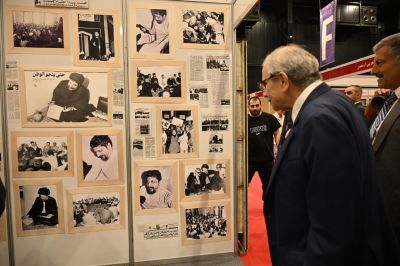
Participants received certificates at the end of the event, which closed with a visit to an exhibition of drawings and handmade works symbolizing peace, South Lebanon and beauty.
Kobrosli described the conference as “a space where words flow freely, where disciplines meet and enlighten each other. It does not erase the wounds of war, but it welcomes them, names them, listens to them in a more inclusive, just and sensitive way. It refuses both oblivion and fatalism. Instead, it offers other stories — softer, more human, more meaningful — that allow pain to be transformed into shared understanding.”
She concluded: “It’s in the meeting of knowledge, emotion and recognition that collective healing can emerge — slow, but real — nourished by listening and carried by hope.”