







The government met on Friday. (Credit: NNA)






The Cabinet, which met on Saturday at the Grand Serail under the chairmanship of Nawaf Salam from 10 a.m. to 2 p.m., adopted the draft law on banking restructuring after three meetings devoted to this subject in one week.
At around 2:20 p.m., Information Minister Paul Morcos held a press conference to announce that the bill had been adopted and would be submitted to Parliament. He stated that this was the second major reform after the banking secrecy bill and that it would be followed by the review of the financial deficit and compensation bill. This law, he said, would ensure fairness among the Lebanese people and prioritize deposits from small depositors as well as those from third-party payers and security institutions.
According to the minister, this legislation fills a long-standing legal gap and would establish a mechanism to more effectively address financial and banking crises. He said it responded to a long-standing demand from both Lebanese legislators and the international community.
Ahead of Saturday's meeting, Labor Minister Mohammed Haidar said that "the bill currently under discussion only concerns the regulation of the situation of banks, and not the compensation of depositors."
Economy Minister Amer Bsat noted that the IMF "is realistic" and recognizes that the banking reform project requires time and political, economic and legal research.
This law is considered crucial concerning the financial reforms that Lebanon must undertake after six years of an exceptionally intense economic and financial crisis, which has prevented depositors from accessing their bank deposits and seen a devaluation of the Lebanese Lira by more than 90 percent against the dollar. Despite this, Lebanon has yet to launch the necessary reforms to clean up its financial sector and restart its economy, despite urgent calls from its foreign partners. The Salam cabinet is striving to accelerate the process.
The International Monetary Fund (IMF), to which the government recently sent a new request for financial assistance, expects Lebanon to adopt this law as soon as possible, defining the framework for the restructuring of the banking sector, in which a majority of actors have been technically insolvent since the onset of the crisis at the end of 2019. The IMF also wishes for Parliament to pass a law, already approved by the executive, aimed at adjusting banking secrecy so that it does not obstruct the sector's restructuring.
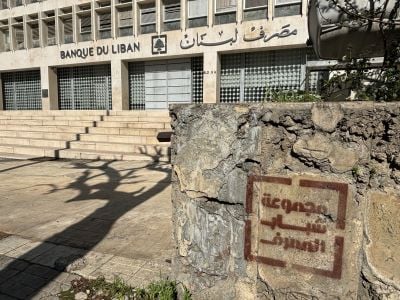
Despite the difficulties, the Salam government seems determined not to disappoint the IMF regarding reforms. This is, in any case, the message sent by Salam and Finance Minister Yassine Jaber on Friday. They both met on that day with officials from the European Bank for Reconstruction and Development (EBRD).
The prime minister said that the government was continuing to implement the reform program and adopting financial bills enabling the country to reach an agreement with the IMF. However, this law presented to the government does not address the highly sensitive and correlated issue of compensating depositors, postponed to a later date.
In anticipation of a heated debate in Parliament
After its adoption in the government, the law will be submitted to Parliament, where it is expected to provoke heated debates. Among the most sensitive points is the creation of a banking authority responsible for overseeing the entire restructuring process. Chaired by the governor of the Central Bank, this body will play a role similar to that of a supreme court, with the power to make final decisions on the implementation of the reform. It will particularly have to determine which banks are viable — and therefore must increase their capital — and which should be liquidated. It will also be in charge of encouraging mergers between struggling institutions.
So far, the principle of entrusting the presidency of this authority to the central bank governor does not raise major objections. But a strong disagreement has emerged in recent days over the composition of the body, and more precisely regarding the role that the president of the Banking Control Commission should play, as well as the methods of appointing other members. The highly technical debate has quickly taken on a sectarian turn, once again revealing the communal divides that run through the country's institutions.
This article was originally published in French in L'Orient-Le Jour.
