





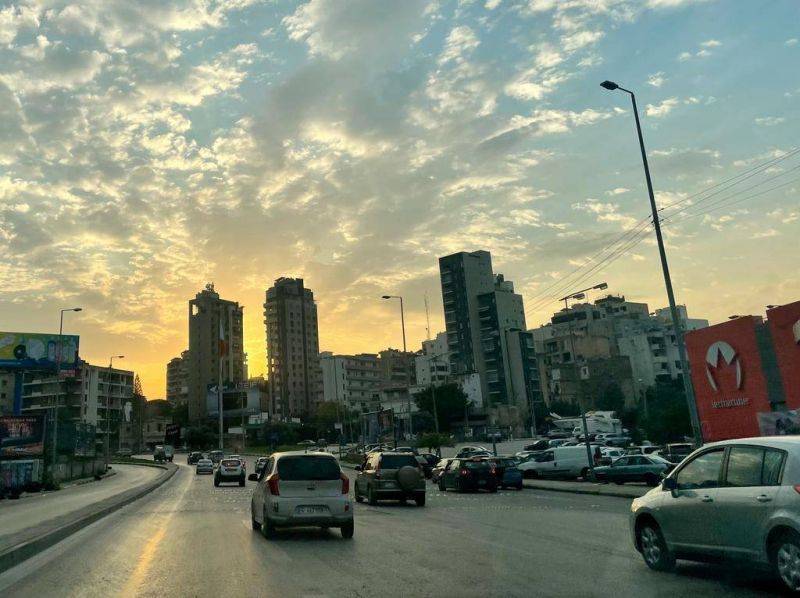
A road axis in the suburbs of Beirut in December 2023. (Credit: PHB)






-The Institute of International Finance (IFI), a global organization representing several hundred of the world’s leading banks, has released its projections for the Lebanese economy in 2024 and 2025 amid the country's escalating war.
The IFI outlines two possible scenarios: In the first, the organization estimates that Lebanon’s GDP will shrink by 7% in 2024 and also anticipates a further 10% contraction in 2025.
-The World Bank (WB) and the International Monetary Fund (IMF) are holding their annual meeting in Washington, with preliminary sessions starting Monday, Oct. 21. Caretaker Governor of the Banque du Liban (BDL) Wassim Mansouri will be attending. In Paris, the Financial Action Task Force (FATF) – the reference organization for banking compliance and combating financial crime – is holding its working meetings from Oct. 20 to 25, culminating in one of its three annual plenary sessions, along with those in February and June.
At the conclusion of this event, the organization is expected to officially place Lebanon back on its “grey list” of countries. It means that the country must address significant deficiencies to comply with FATF requirements and will thus be placed under “enhanced monitoring,'' barring a highly unlikely postponement at this stage.
-For the first time since February 2022 and only the second time since the outbreak of the economic crisis in Lebanon at the end of 2019, the consumer price index (CPI), which calculates price trends in Lebanese pounds, posted a monthly decline in September.
Published by the Central Administration of Statistics (CAS), the index recorded a slight decrease of 0.18% compared with August 2024. On an annual basis, prices rose by 32.92% between August and September, compared with 35% in the previous month, continuing the trend towards a relative slowdown in inflation that began several months ago, in the wake of the stabilization of the Lebanese lira.
- Caretaker Energy Minister Walid Fayyad has assured on Thursday that fuel is available and that ships continue to deliver diesel and fuel on a regular basis so far, while demand for electricity has decreased due to the realities of the war.
-Bank Audi announced on Tuesday that it had reached a definitive agreement with Abu Dhabi-based investment and holding company ADQ, to sell 96 percent of the share capital of Odeabank, its subsidiary in Turkey — for an undisclosed amount.
The transaction marks the latest in a series of acquisitions undertaken by several Lebanese banks, who turned to the sale of subsidiaries abroad to increase their liquidity and focus on domestic markets following Lebanon’s severe economic meltdown at the end of 2019.
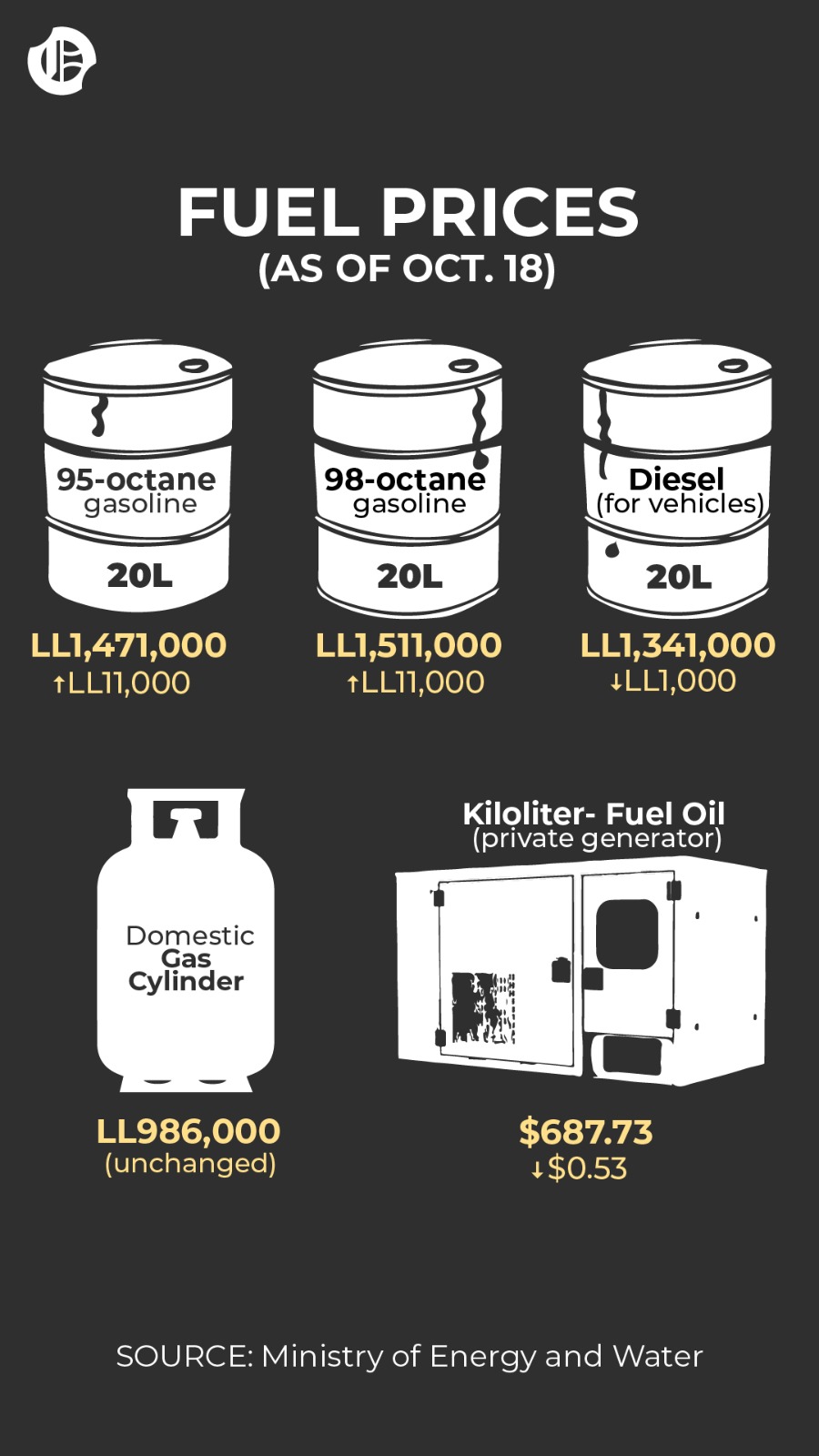
- Gasoline prices increased, while domestic gas prices remained stable on Friday, according to the new price list issued by the Ministry of Energy and Water.
Here are the new rates:
Feature of the week:
Since Sept. 23, the year-long cross-border firing between Hezbollah and Israel has taken an unprecedented turn. Israeli airstrikes have leveled villages in the south, the Bekaa and torn through Beirut’s southern suburbs, leaving over 2,000 dead and millions displaced. Yet, in the midst of the devastation, the Lebanese lira held firm despite deepening instabilities.
Hovering around LL89,500-to-the-dollar, the lira has been stable for over a year now, after what seemed like an endless four-year cycle of fluctuations that accompanied Lebanon’s severe economic crisis. The escalating violence is, however, raising questions as to whether that stability can be eventually shaken. Read more here:


 7 p.m. recap: Iran warns Egypt, Israeli soldiers vote in south Lebanon, Haret Hreik responds to Kataeb