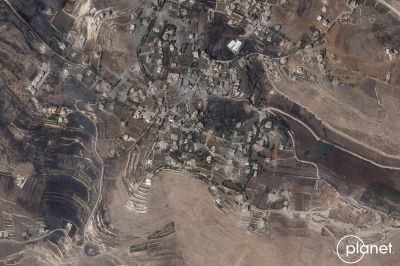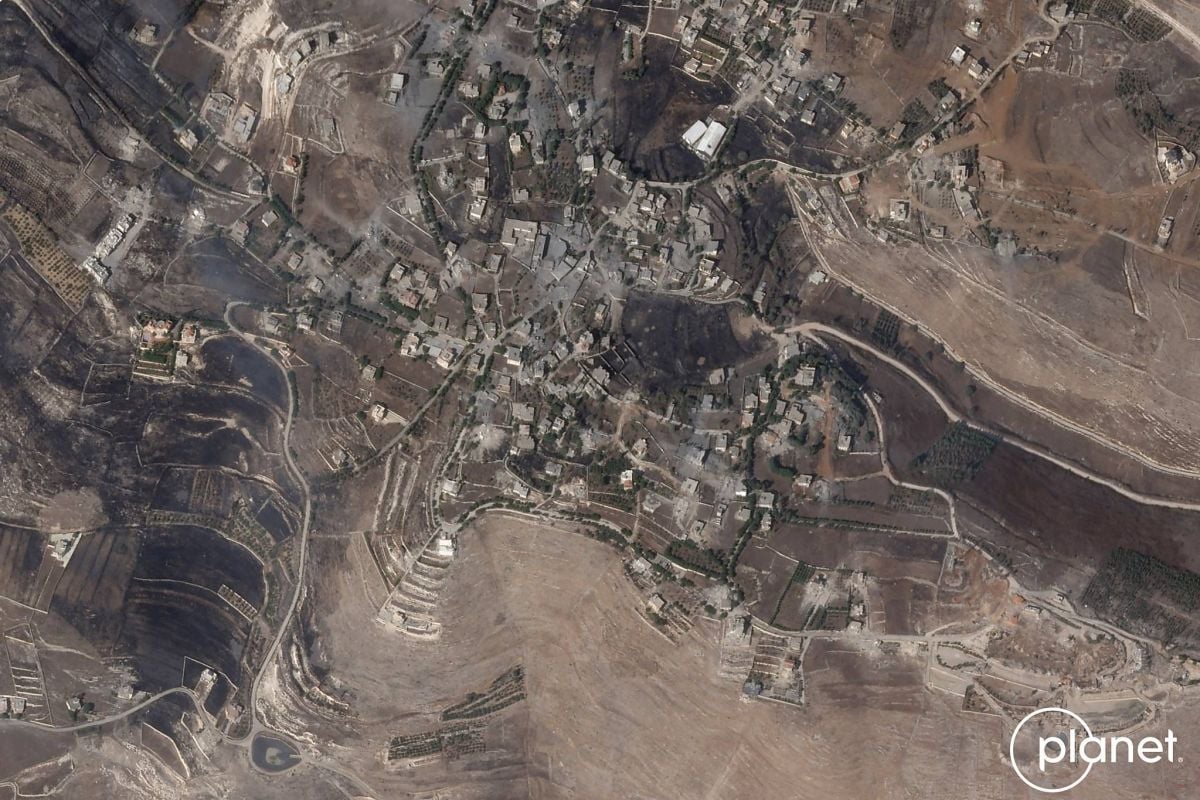
The destroyed and burned areas in the village of Maroun el-Ras, in southern Lebanon. (Credit: Planet Labs PBC/AFP)






Israel announced on Tuesday that it had expanded its ground offensive against Hezbollah in southern Lebanon after deploying additional troops and urging residents to avoid the coastal area. This announcement coincides with the first anniversary of clashes between Israel and Hezbollah in the border area, which has been established as a "support front" for Hamas following the al-Aqsa Flood operation.
According to the Israeli army, the 146th division began on Monday "limited and targeted operations against Hezbollah terrorist infrastructures in southwestern Lebanon," along the Mediterranean coast. This is the fourth division deployed by Israel since the start of its ground offensive in southern Lebanon, which was launched on September 30. In the coastal city of Saida, 40 kilometers south of Beirut, fishing boats left the city’s port at night for areas located north of the mouth of the Awali River, including Rmeili and Jiyeh, according to our correspondent in the region, Mountasser Abdallah.
In the afternoon, according to a video posted on X by the Israeli radio, soldiers raised the Israeli flag in Maroun el-Ras, a Lebanese border village in the Bint Jbeil district. Israeli Energy Minister Eli Cohen wrote that the Israeli army had "occupied" this village and "destroyed the houses from which Hezbollah launched anti-tank missiles at Israeli civilians."
The spokesperson for the United Nations Interim Force in Lebanon (UNIFIL), Andrea Tenenti, told L'Orient-Le Jour that the situation in Maroun el-Ras remained unclear, while reports from some media indicated the withdrawal of Israeli soldiers who had raised a flag above the border village. "We cannot verify this information independently at this time," he specified.
In this context, the Israeli Prime Minister threatened Lebanese people on Tuesday with "destruction" like that in Gaza if they did not "liberate" their country from Hezbollah. "We have killed the successor of Nasrallah and the successor of his successor. I call on the citizens of Lebanon to free themselves from Hezbollah to end the war," he declared. Since an Israeli strike last Friday on the southern suburb of Beirut, the fate of Hachem Safieddine, the presumed successor to Hassan Nasrallah at the head of Hezbollah, remains uncertain.
Earlier in the day, the Israeli army announced that Golani Brigade forces had "seized a suspected Hezbollah complex" in southern Lebanon during a "ground operation," destroying weapons, including a "loaded rocket launcher." It specified that this complex included an olive grove and "underground infrastructures," without indicating in which village the operation took place.
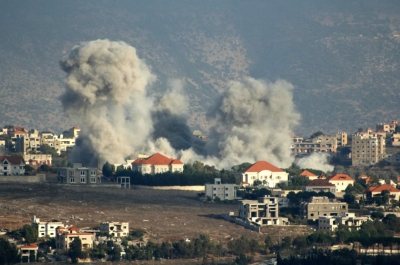
From dawn, strikes were reported in southern Lebanon, hitting localities such as Arabsalim and Ebba (Nabatiyeh), Kfarchouba (Hasbaya), Majdel Selm, Souaneh, and Khiam (Marjeyoun), as well as the outskirts of Hiram Hospital in Sour, Chehabiyeh, and Arzoun (Sour). Other strikes targeted Mlikh (Jezzine), the heights of Ain Boussouar (Iqlim el-Touffah, Nabatiyeh), and Sultaniyeh (Bint Jbeil). In Adloun (Saida), a bombing left three dead and one injured.
By the end of the day, in a statement from its "operations center," Hezbollah claimed that the Israeli army had so far "failed to enter the impregnable villages" of the South and would continue to counter all incursion attempts. It reported "heavy losses" of "more than thirty dead and 200 wounded" among the Israeli ranks. In a belligerent tone, the party further threatened that Haifa "and others" would end "like Kiryat Shmona, Metula, and other Israeli localities located in Northern" Israel that are hit nearly daily. "We are capable of reaching where we want," it declared, asserting that it would not limit itself to "missile or drone" strikes.