






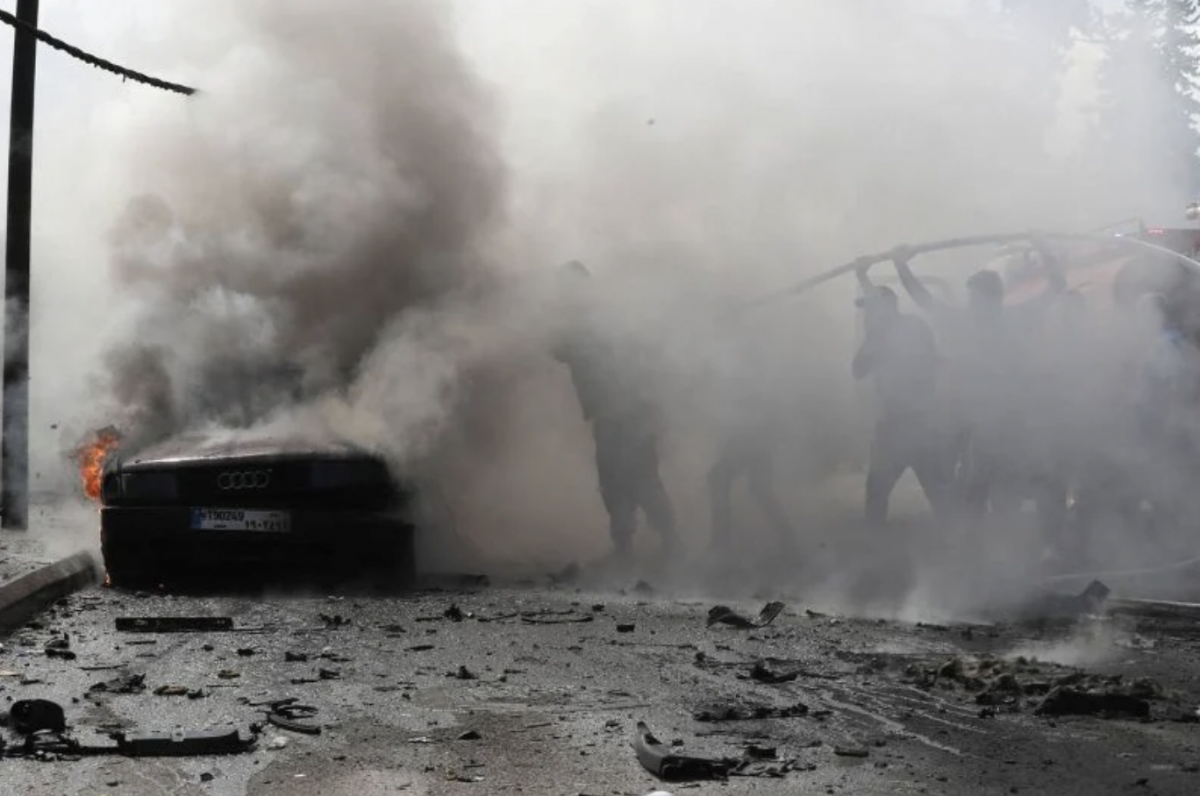
Firefighters put out the fire in a car after an Israeli strike in Saida, Aug. 21, 2024. (Credit: Mahmoud Zayyat/AFP)






The number of internally displaced persons (IDPs) in Lebanon fleeing the conflict between Hezbollah and Israel rose by around 10,000 between mid-July and mid-August, bringing the total number to 110,099, according to a report published on Aug. 15 by the U.N.-affiliated International Organization for Migration (IOM).
The report adds that most of those displaced have left sensitive areas near the Blue Line since Oct. 8, the day after the start of the war in Gaza.
The report does not specify the cause of this recent increase in numbers.
Contacted by L'Orient-Le Jour, the IOM refrained commenting beyond the content of the report.
Beyond the worrying reality of families forced to flee their homes over the past almost 11 months, the recent increase may reflect the new scale of the conflict. Homes in South Lebanon are now being targeted daily by Israeli bombardments, which was not the case at the start of the war.
“Since homes have been targeted by the bombardments, more people have been affected and have decided to flee,” an informed source close to the U.N. said, speaking on condition of anonymity.
At the same time, the Israeli army is targeting deeper into Lebanese territory. “The bombardments now go beyond the border villages and reach inland, even the northern districts of southern Lebanon,” the same source commented.
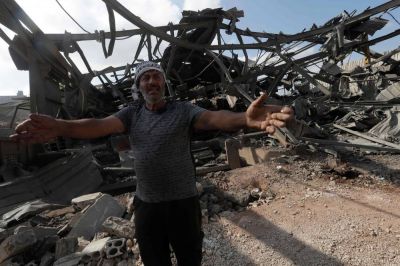
Departures from Bint Jbeil, Marjayoun, Sour
As a result, the number of inhabitants leaving the districts of Bint Jbeil, Marjayoun and Sour, which lie next to each other from the interior to the coast of the country, continues to increase, while the trend is much less pronounced in Hasbaya, which lies to the east of the other three. As of Aug. 13, Bint Jbeil had 75,539 displaced persons, compared with 71,447 in July; Marjayoun 14,949, compared with 12,302 a month earlier; Sour 12,963, compared with 10,963; and Hasbaya 2,940, compared with 2,134.
To obtain and update data on the number of displaced persons in Lebanon, their region of origin and their point of arrival, the IOM has dispatched 44 investigators and uses 3,600 key informants to conduct face-to-face and remote surveys.
“The process begins with the compilation of a list of key contacts, mayors, municipal officials, mukhtars, activists, neighborhood focal points, brokers and religious leaders, with whom assessments are conducted,” the IOM's Dayane Ibrahim explained to OLJ . “For five days, the surveyors collect data on internally displaced people, those who have returned home, and demographic breakdowns by gender and age,” she continued.
Data accuracy is pursued “by the repetition of assessments and the cross-checking of information from three units, the IOM Displacement Monitoring Unit, the Lebanese Red Cross Unit and the Lebanese Disaster Management Unit.”
In the week leading up to Aug. 13, the destinations of newly displaced people were Jbeil (16%), Baalbeck (12%), Beirut (11%), Aley (11%) and Baabda (8%), the IOM reports.
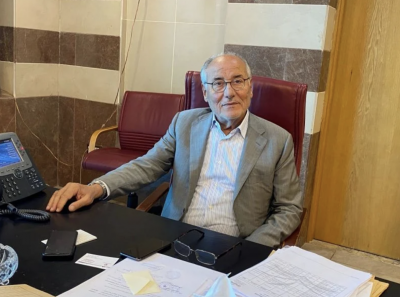
Fouad Shokur's killing
What may have prompted the uptick in displacements over the July-August period was the assassination of top Hezbollah commander Fouad Shokur at the end of July in Haret Hreik, a district in the southern suburbs of Beirut, followed by the assassination a few hours later of the political leader of the Palestinian Hamas movement, Ismail Haniyeh, in Tehran, both attributed to Israel, which fanned fears of reprisals and a local and regional conflagration.
The latest IOM report, shows that, as of Aug. 15, 1,737 displaced persons left the Lebanese capital and 1,449 left the Baabda region in August, compared with just 274 displaced persons from Baabda and none from Beirut a month earlier. “The assassination of a senior Hezbollah official in the middle of Beirut's southern suburbs prompted many residents to leave,” the aforementioned source said.
With the start of the new school year just around the corner, a new reason for leaving could be added to the other three. Education Minister Abbas Halabi told OLJ in an exclusive interview on Aug. 8 that if the war continued, the students affected would be enrolled in other schools. This decision is intended to prevent pupils living on the country's southern border from having to endure online teaching for the second year running, which has proved its limitations.
This article was originally published in French on L'Orient-Le Jour.

