







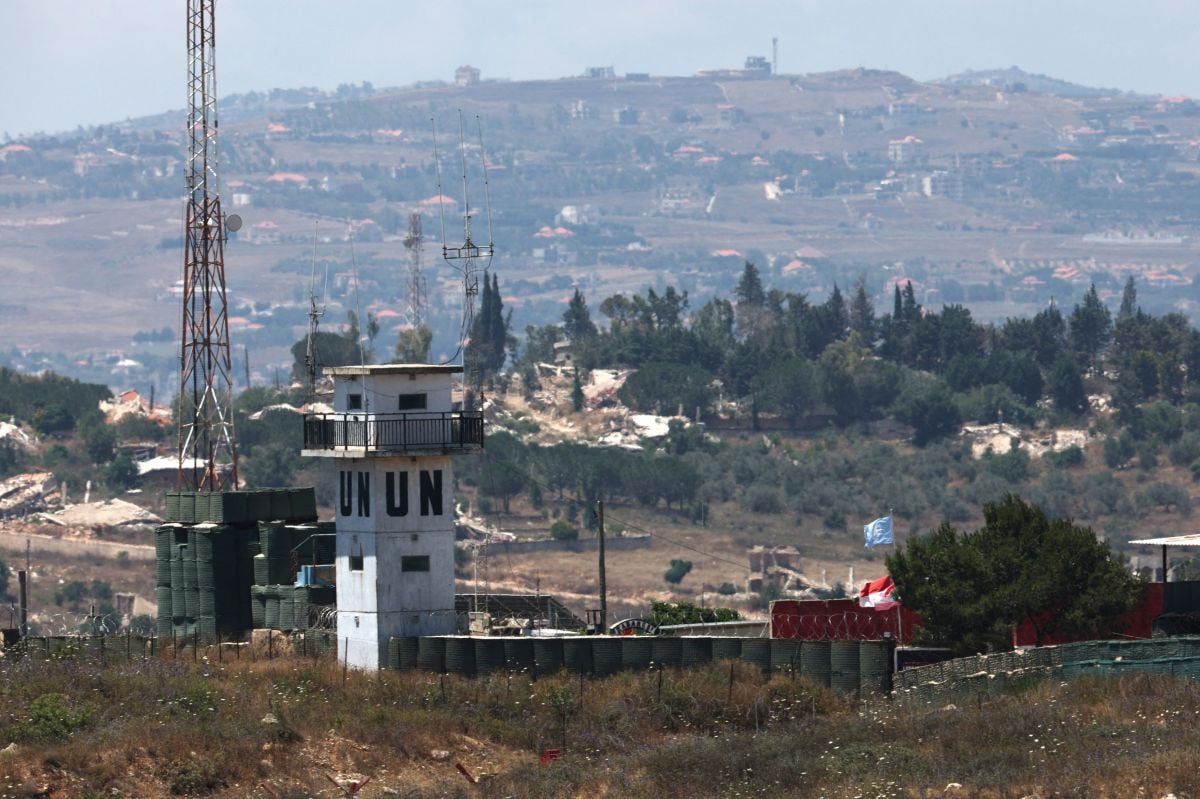
A United Nations base in southern Lebanon, near the border between Israel and Lebanon, on July 1, 2026. (Credit: Jack Guez / AFP)






BEIRUT — Israel continued its attacks in southern Lebanon on Thursday, where it occupies several hundred square kilometers. Although the number of attacks and military operations over the course of the day was relatively low, it follows a night during which Israeli soldiers carried out multiple demolition operations and set fire to buildings in several villages in the Bint Jbeil district. According to our correspondent in southern Lebanon, the detonations could be heard from miles away.
A large-scale sweep operation, involving the use of medium machine guns, occurred in the locality of Majdal Zoun (Sour), and a drone dropped a stun grenade on the village of Mansouri (Sour) and its surrounding areas, our correspondent reported.
Another drone targeted a forest on the strategic Ali Taher hill (Nabatieh) in the middle of the afternoon, while artillery struck the locality of Beit Yahoun (Bint Jbeil) and a person was injured by the explosion of an unidentified object in Majdal Selm (Marjayoun).
On X, the Israeli army said it had killed a Hezbollah member after "identifying him as he exited an access shaft to an underground tunnel network on the ridge of Ali Taher, in the security zone of southern Lebanon where Israeli soldiers operate."
Early in the evening, two drone strikes hit Nabatieh Fawqa, near Ghandour Hospital. Ambulances from Al-Rissala scouts, affiliated with the Shiite Amal movement, were dispatched to the scene, but no casualties were reported. A third strike hit Kfar Tibnit, in the Nabatieh district. Shortly after, an Israeli exploding drone detonated over Yater (Bint Jbeil).
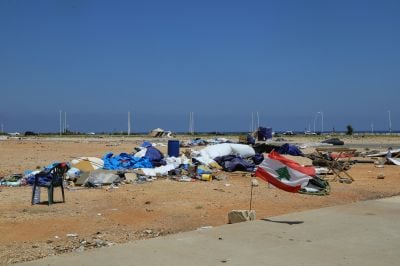
The night from Wednesday to Thursday was much more intense, with major demolitions in Beit Yahoun, Ainata, and Haddatha, in the Bint Jbeil district, where buildings were set on fire.
Around 1 a.m., a large explosion, also caused by a demolition, occurred again in Beit Yahoun. The fire was still not extinguished at dawn and the sound of detonations continued in several border villages until the early hours of the morning. At daybreak, the Israeli army resumed demolitions in the district, especially in Kounin.
Late Thursday, sirens sounded in northern Israel for the first time since before the framework agreement between Israel and Lebanon was signed on June 26, but it was later said to be a false alarm.
Hezbollah, Iran's proxy, had largely stopped its attacks on Israeli territory after the Memorandum of Understanding between the Islamic Republic and the United States was signed, which opened a 60-day truce period intended to negotiate a lasting cessation of hostilities that erupted on Feb. 28.
Damascus open to meeting with Hezbollah
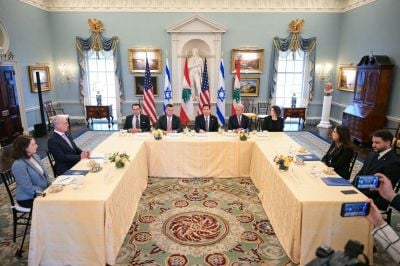
The framework agreement signed on June 26 between Israel and Lebanon was discussed for over an hour during a cabinet meeting where, according to a ministerial source, Shiite Amal-Hezbollah ministers (Rakan Nasreddine, Mohammad Haidar and Tamara Zein) expressed "reservations" about the agreement with Israel.
President Joseph Aoun on Thursday defended the negotiations with Israel, saying he would not yield "a single inch of Lebanese territory," according to the presidency. Israeli Defense Minister Israel Katz said Wednesday that the Israeli army would remain "until further notice" in what it calls "security zones" in Lebanon, Syria and the Gaza Strip.
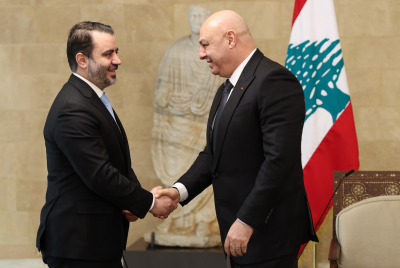
For his part, Syrian Foreign Minister Assaad al-Shaibani said during a visit to Beirut on Thursday that Damascus was open to meeting with Hezbollah "if interests require it," as reported by the state-run National News Agency (NNA).
Latest toll
The Lebanese Ministry of Health reported that Israeli attacks have killed at least 4,298 people — one more since the last count — since March 2, when the war between Hezbollah and Israel resumed. Hezbollah is expected to hold funerals for several of its fighters, with ten to be buried in their village of Touline, Marjayoun, and another in Ainata, Sour.
The municipality of Nabatieh denied "false information circulated on certain social media platforms and WhatsApp groups" claiming that the bodies of four people were buried under the rubble of the Bank of Lebanon (BDL, Central Bank) branch in this locality, which was bombed by the Israeli army on June 20.
On Wednesday evening, the Froun and Zawtar Gharbieh mayors (Bint Jbeil) announced in two simultaneous statements their rejection of reports that they had been included in so-called "buffer zones," a term that appears in the framework agreement negotiated in Washington by Lebanon and Israel, referring to areas from which the Israeli army would withdraw to allow the Lebanese Army to take over.
The two mayors called for "a better description of the situation, and more precise terms with a view to an effective withdrawal of the Israeli army, as well as an end to violations of the truce and demolition of houses."