







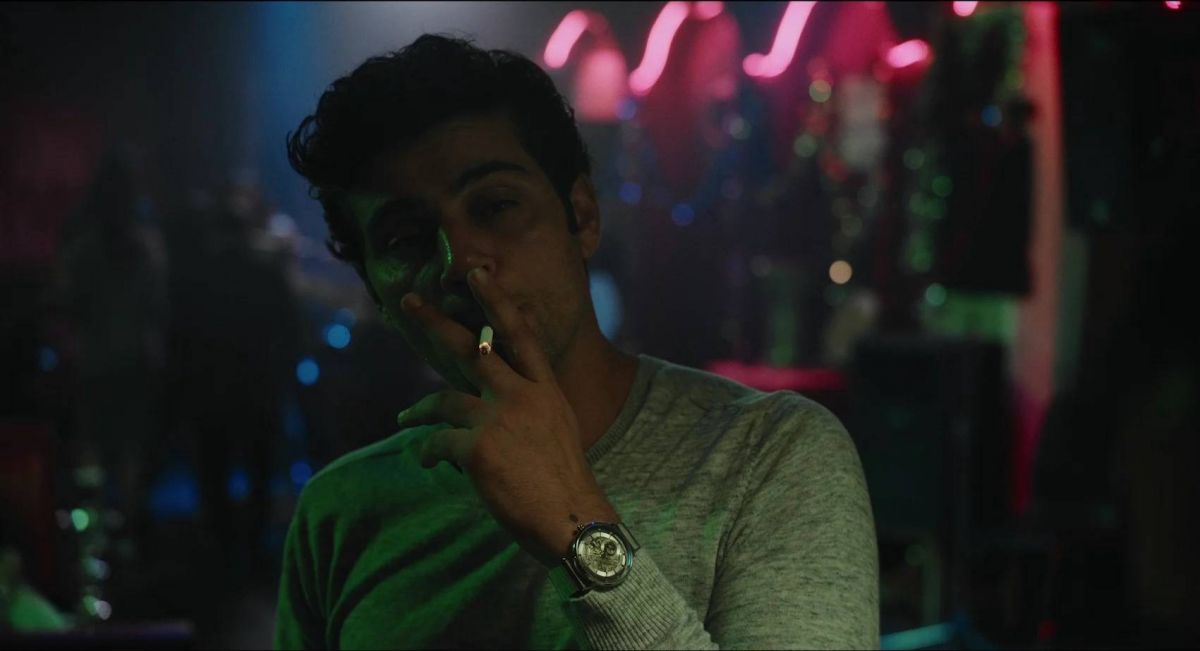
A still from the neo-noir “The Alleys,” by Jordan-born writer-director Bassel Ghandour, screening in the Maskoon Fantastic Film Festival. (Courtesy of: Maskoon)






Want to get the Morning Brief by email? Click here to sign up.
The Lebanese Forces political party has once again declined Parliament Speaker Nabih Berri’s invitation to an inter-parliamentary bloc dialogue hoping to resolve the presidential election deadlock. The party issued a statement on the matter after its leader, Samir Geagea, told Saudi newspaper Oukaz that the Lebanese Forces would participate in the dialogue if Parliament Speaker Nabih Berri keeps parliamentary electoral sessions open and continues voting rounds despite MP walkouts during the meetings — a highly improbable condition for Berri to meet. The tenth and last parliamentary session of the year dedicated to electing a president is scheduled for Thursday after the previous nine attempts failed to fill the presidential vacuum, or even move past a first round of voting. During the first round of voting, candidates need 86 votes, or two-thirds of Parliament’s 128 deputies, to be elected. In subsequent rounds, a candidate can be elected president with only a simple majority of votes. Berri’s previous call for a dialogue failed after the LF, along with the Free Patriotic Movement, rejected the initiative. “If, by the New Year, nothing has changed, I will not stand idly by,” Berri told L’Orient Today.
Caretaker Agriculture Minister Abbas Hajj Hassan yesterday claimed that “Lebanese crops are cholera-free,” announcing the results of tests conducted on samples from across Lebanon. At the start of the outbreak, the Health Ministry revealed that cholera had been detected in crop irrigation water and later warned of the disease’s potential impact on agriculture and exports. Yesterday, Hajj Hassan said 55 samples from Bekaa and South Lebanon and 60 samples from North Lebanon and Mount Lebanon were all uncontaminated. The minister also announced an initiative offering free soil testing to farmers to help them “increase yield and reduce expenses and the use of fertilizers.” As of yesterday, Lebanon had recorded 660 confirmed cholera infections and 23 deaths since the outbreak began in early October. Abiad last week claimed the cholera outbreak is “under control,” announcing additional inoculation efforts after a ministry-led vaccination campaign immunized around half a million people. The same day as Abiad’s announcement, however, the Litani River Authority announced that the disease was still present at several locations.
Tripoli MP Ashraf Rifi yesterday called on security forces to increase their efforts after Monday’s “cold blooded” murder in the city. Footage circulating on social media showed an unknown assailant who, after a traffic dispute, dismounted from his motorcycle, shot the driver, then rode away. Rifi, offering his condolences to the victim’s family, said the incident highlights the lawlessness ensuing from Lebanon’s “economic and political crisis.” General Security chief Abbas Ibrahim on Monday warned that political instability could permeate the security situation, warning of “that the social situation will explode sooner or later.” The shooting coincides with the deployment of heightened security measures in Tripoli, following a Central Security Council decision to implement a “sustainable” security plan after a series of deadly incidents in the area.
The sixth edition of the Maskoon Fantastic Film Festival (MFFF), specializing in genre film, launched Monday at the Cinéma Montaigne at the French Institute of Beirut after a three-year hiatus. The four-day festival began with a screening of Cannes Film Festival Palme d’Or winner Triangle of Sadness, a dark-comedy in which Ruben Östlund “represents a vision of the world today by putting [a group of characters] on a boat and sending them to hell.” The festival program also includes Speak No Evil, by Danish director Christian Tafdrup, Deadstream, a comedy-tinged horror flick by US duo Joseph and Vanessa Winter, and Piggy, the debut feature of Spanish writer-director Carlota Pereda. The festival also features regional productions: Ashkal, a thriller by Tunisian writer-director Youssef Chebbi and The Alleys, the directorial debut of Jordan-born writer-director Bassel Ghandour. Ahead of the screening, an MFFF member said they were happy to see an increase in genre film productions and audience receptiveness in the Middle East and North Africa region, adding that, out of 600 submissions to the festival’s short film competition, only 10 had been selected. “Genre is contributing dynamism and energy to Arab cinema,” festival co-director Myriam Sassine told L’Orient Today.
In case you missed it, here's our must-read story from yesterday: “Why, with each rainstorm, does Lebanon dive into chaos?”
Compiled by Abbas Mahfouz