


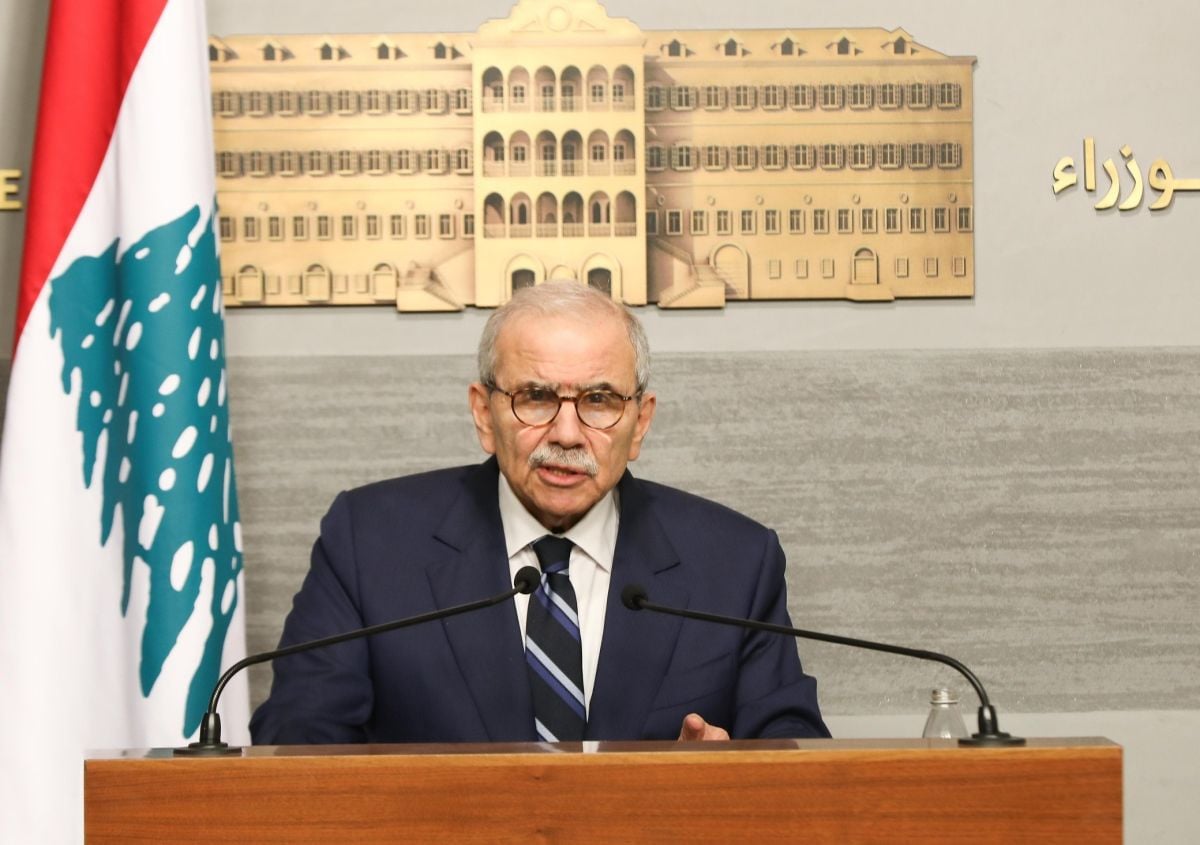
Prime Minister Nawaf Salam during a televised address on Thursday, March 12, 2026. (Photo published on the X account of the Grand Serail/@grandserail)






BEIRUT — Lebanon’s economy is expected to contract by 6.4% this year after its recovery was disrupted by the war, Prime Minister Nawaf Salam said Thursday, as he defended the government’s proposed 2027 budget, saying "it contains no new taxes."
Speaking from the Grand Serail at a press conference, Salam addressed rising living costs, fuel and generator prices, public sector salaries, healthcare and social assistance, while outlining the government’s economic and financial priorities.
"Lebanon’s economy grew by 4.2% last year after years of contraction," Salam said, describing the growth as the beginning of an economic recovery.
"The war imposed on Lebanon stopped this path and pushed the economy backward," he said, in reference to the "Iran solidarity front" opened by Hezbollah against Israel in March 2026.
Salam acknowledged the "pressure facing households, particularly from rising generator subscription bills over the past two months and higher fuel prices," which he said "have forced some families to choose between buying fuel and meeting other household needs. While some factors, including global oil prices, are outside the government’s control," he said this "does not relieve the government of its responsibilities."
He also warned "generators, traders and importers against exploiting higher costs to make unjustified profits, saying that lower import and transportation costs should be reflected in lower prices for goods and services."
The 2027 budget
The proposed 2027 budget amounts to around $7 billion, Salam said. The Cabinet approved the draft budget last Thursday and sent it to Parliament on the same day, with total spending set at about $6.9 billion. The draft maintains a nominally balanced budget while increasing spending on public sector salaries and social measures.
Salam stressed that "the increase does not mean the state has enough money to meet all citizens’ needs." A large share of the additional spending will go toward correcting public sector salaries, which have lost much of their value since 2019. The salary adjustments will cost the state around $1.2 billion.
"Public sector employees, military personnel and teachers have the right to live with dignity and earn enough to cover their basic needs," he said. The Health Ministry’s allocation will increase by around 16% compared with this year, Salam said, with the additional funds intended to cover hospitalization, medicines and healthcare and reduce the burden on households.
The government’s "contribution to the Aman social assistance program will rise to $70 million. With expected World Bank funding, the number of beneficiary families could increase from around 100,000 to 150,000 in 2027," he said.
Aman is Lebanon’s National Poverty Targeting Program (NPTP), a social assistance program that provides financial support to vulnerable and low-income households. It is run by Lebanon’s government, with support from the World Bank, and provides cash assistance to eligible families.
The budget also "includes $20 million for economic empowerment programs, including vocational training and professional qualifications, assistance with purchasing equipment and productive tools, and support for small businesses, craftspeople and farmers."
'We will not spend money we do not have'
Salam said the government was committed to monetary stability and protecting people’s purchasing power. "We will not spend money we do not have," he said, stressing the need to improve the collection and use of state revenues and direct them toward priority areas.
He also pointed to infrastructure projects, saying citizens were beginning to see the work of the Public Works and Transport Ministry across the country, including road paving and rehabilitation and bridge repairs.
Salam rejected claims that the government had introduced new taxes in its 2027 budget proposal.
"The changes concern some fees that are still calculated using outdated exchange rates, as well as fees on yachts and private aircraft," he said. "The Finance Ministry is also pursuing companies that have failed to remit value-added tax to the treasury. The ministry has sent warnings to 107 companies, while additional cases worth an estimated $200 million to $250 million are being examined," Salam said. "Another batch of warnings is expected to be issued."
Salam stressed that "the VAT being pursued is not a new tax. Consumers have already paid the tax when purchasing goods and services, while companies collected the money but failed to transfer it to the treasury. The government will not allow companies to retain funds owed to the state while hospitals, schools and public administrations require financing."
The government has also begun examining corporate profit tax payments, starting with large companies, he added. The files of 64 companies are currently being examined and audited, with the work divided by economic sector.
The budget debate comes as the government continues to face pressure over the cost of living and the state’s ability to provide basic services. Energy Minister Joe Saddi announced Tuesday that he would suspend his participation in Cabinet sessions over the government’s handling of the electricity sector, citing demands including increased power supply, lower fuel costs and the settlement of unpaid bills owed to Electricité du Liban.
