






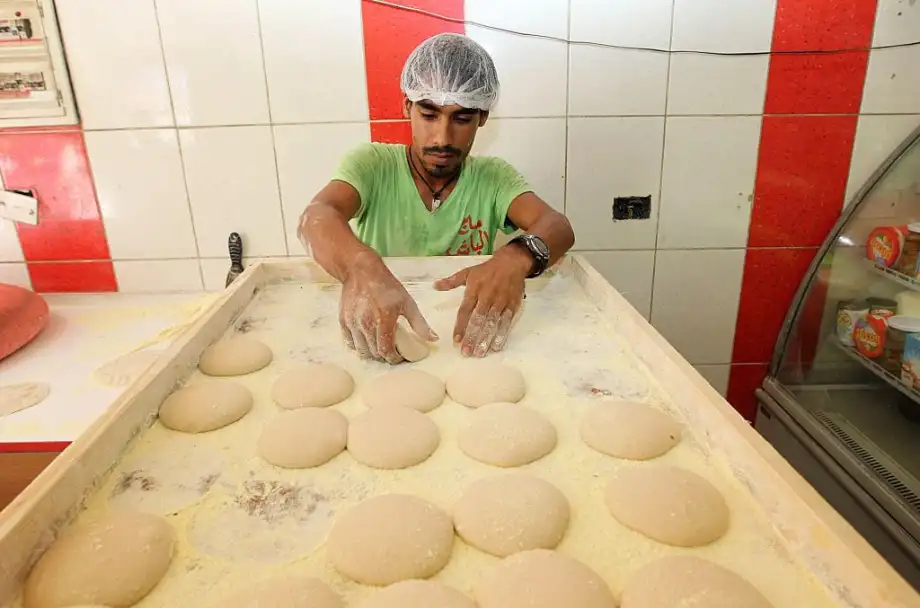
A baker at work in Beirut on July 29, 2015. (Illustrative photo by Anwar Amro/AFP)






The Ministry of Economy announced in a statement a new adjustment to the base price of a packet of white Arabic bread (rabta) in bakeries across the country, which rises from 75,000 LL ($0.84) to 80,000 LL ($0.89). This price applies when bread is sold directly by the baker to the final consumer.
It must be sold to distributors at 77,000 LL ($0.86) and to retail stores at 90,000 LL ($1), which in turn must resell it to their customers at 95,000 LL ($1.1).
The ministry stated that the new bread price was calculated using the same mechanism "applied for years," taking into account "the actual cost of components involved in bread production." The increase mainly reflects "the doubling of diesel prices since the beginning of the crisis, which now accounts for about 22% of bread production costs, as well as the rise in other production expenses," it added.
"The ministry is fully aware of the additional burden that any bread price increase places on citizens, especially under the current harsh living conditions. However, this limited adjustment is now necessary to ensure the continued production and market supply of bread," the ministry justified, assuring that it will lower bread prices as soon as possible.
This is the second consecutive hike, after the one on July 21, which was also 5,000 LL. It comes amid rising fuel prices caused by the regional conflict between Iran and the United States, which has hampered oil exports through the Strait of Hormuz and its spillovers into Yemen, where the Houthis have recently tightened their grip on the Bab al-Mandeb strait at the expense of loyalist forces and pro-Saudi militias.
Diesel up by 90%
In Lebanon, the price of 20 liters of gasoline is approaching the $30 mark and is expected to surpass it by Friday, according to a statement to the press from Georges Brax, president of the syndicate of gas station owners. Gasoline prices are 50% higher than they were before the U.S. and Israel launched their war against Iran on Feb. 28.
For the diesel used by the private generators on which Lebanese people depend, the increase is nearly 90% over the same period. The war and rising fuel prices are also affecting the prices of wheat and fertilizers. At the start of the war, a rabta of bread cost 65,000 LL ($0.72) in bakeries.
Inflation is high in Lebanon, with an annual increase of 17.25% and an average of 16.16% in the first half of the year, according to the latest official figures covering the period up to the end of July.

 8 p.m. recap: Israel again threatens Beirut’s south suburbs; 2 ships hit near Hormuz; Riyadh football matches canceled