






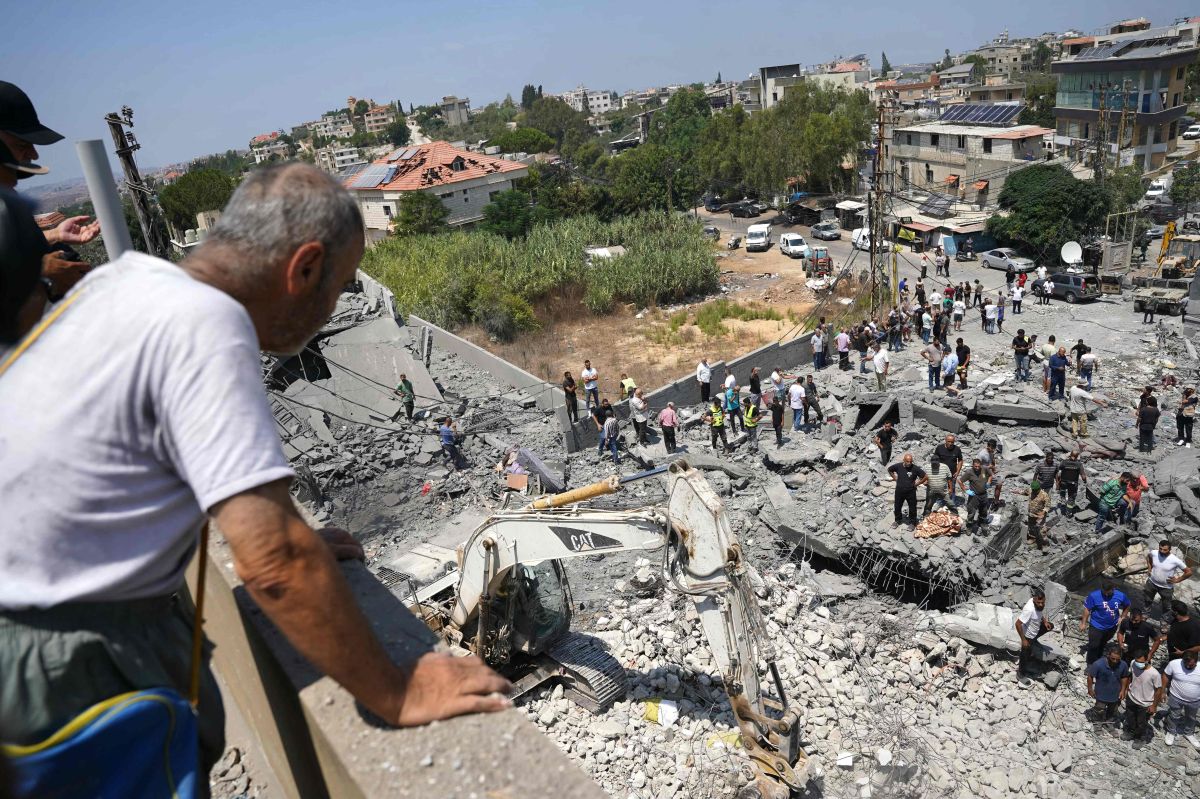
A man watches heavy machinery, rescuers, and locals search the site of an Israeli airstrike that targeted a neighborhood in the village of Deir al-Zahrani, in southern Lebanon, on Aug. 15, 2026. (Credit: Abbas Fakih/AFP)






BEIRUT — Lebanese President Joseph Aoun on Wednesday again defended direct negotiations with Israel and welcomed remarks made Monday by Parliament Speaker Nabih Berri on the occasion of the 48th anniversary of the disappearance of Imam Mussa Sadr. Berri, who had categorically rejected talks with Israel, nonetheless called for preserving civil peace and respecting the Lebanese Army.
"The main objectives of the negotiations have been defined: sparing Lebanon the ravages of war and protecting its sovereignty, stability and national interests," Aoun said, during a meeting with a delegation from the Bekaa. He also welcomed Berri's remarks, "particularly his insistence on the fundamental principles of civil peace, respect for the army, and the Taif Accord, considered red lines— a message addressed to the nation even before being sent to the international community."
On Monday, the parliament speaker spoke about the future of southern Lebanon, Hezbollah’s arsenal, negotiations with Israel and the state’s ability to assert its sovereign choices. While Berri set the Lebanese Army as a red line, rejecting any questioning of the military institution or attempt to diminish its role, he also criticized negotiations with Israel, which he said were being conducted "under fire," implicitly criticizing the president.
"Lebanon's ability to meet the challenges it faces can only be achieved through national unity and internal solidarity," Aoun said. He also stressed his openness to "any option and path likely to contribute to achieving these goals, since the priority is protecting Lebanon and its people." "Lebanon has many opportunities ahead of it, and what's important is not to waste them with narrow calculations, but to learn lessons from the past in order to build a better future," he added.
Maronite bishops call for deployment of a force to replace UNIFIL
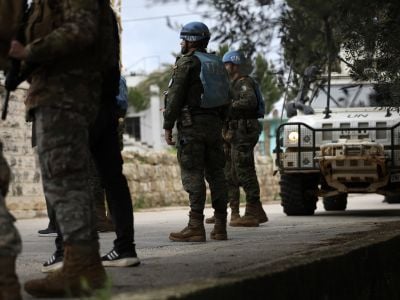
The Maronite bishops, meanwhile, addressed the situation in southern Lebanon on Wednesday during their monthly meeting in Dimane, held in the presence of Patriarch Bechara Rai. The bishops also discussed the gradual withdrawal of the United Nations Interim Force in Lebanon (UNIFIL) from the South.
"They call for agreement on a replacement force, international or multinational, with a strong operational mandate that will allow Lebanon to regain control of its territory up to the international border through its legitimate armed forces," the statement continued.
The UNIFIL mandate expires on Dec. 31, 2026. President Joseph Aoun, has called for extending the mission's presence in Lebanon in light of the continuing Israeli attacks in the South. Failing that, the deployment of an alternative international force could be considered. The issue was also discussed Wednesday between Aoun and Lebanese Foreign Minister Joe Rajji.
The Maronite bishops expressed "their deep regrets and reiterated their condemnation of Israeli military operations targeting villages, towns and cities in southern Lebanon." They called on "the international community to put a definitive end to these operations," while also demanding respect for the "framework agreement," signed by Lebanon and Israel on June 26. The agreement provides for the deployment of the Lebanese Army in “pilot zones” that must be cleared of infrastructure belonging to militias and other armed groups.
