






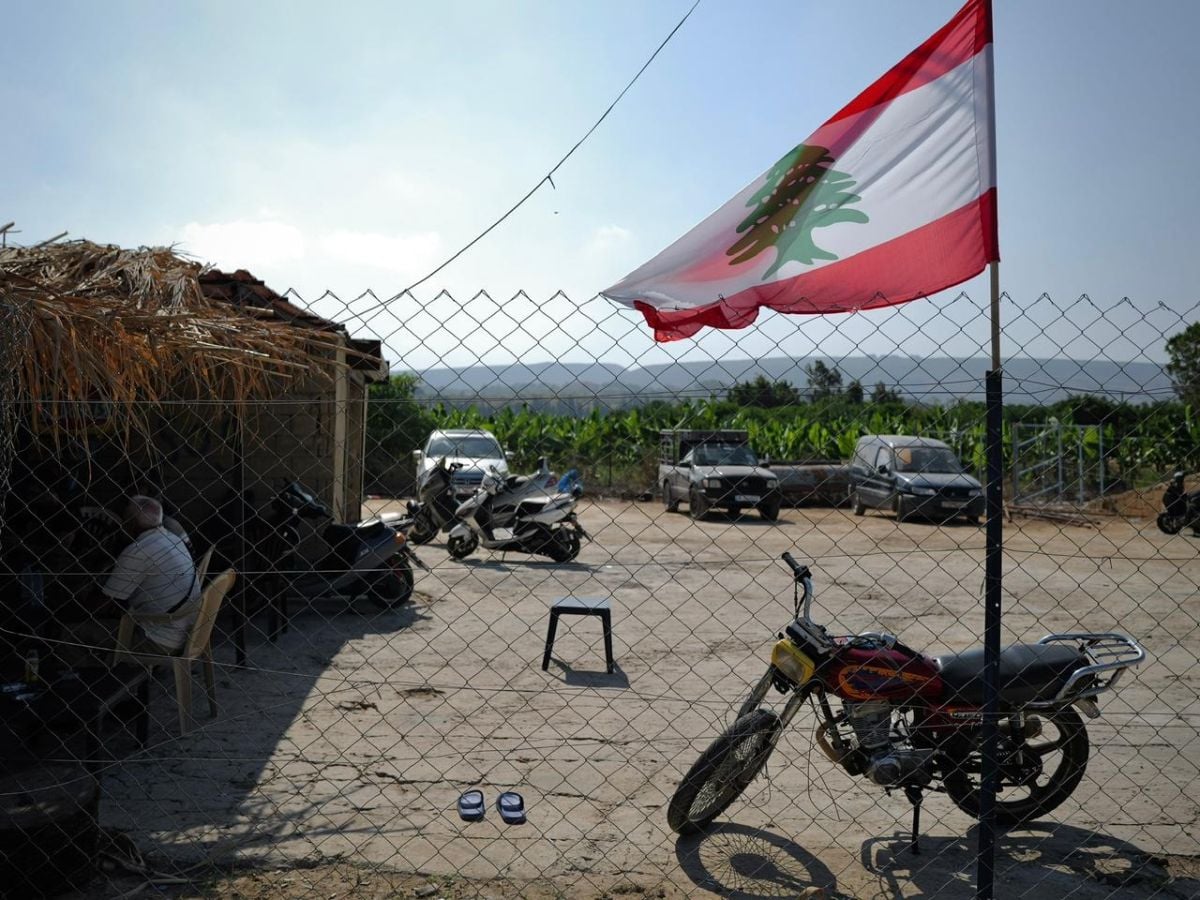
Mansouri residents, in the Sour district, watch their village being bombed by the Israeli army on Aug. 26, 2026, from a cafe in the neighboring coastal village of Qlayleh. (Credit: Matthieu Karam/L’Orient-Le Jour)






U.S. diplomacy sought Saturday night to dispel any ambiguity over who has the authority to negotiate an Israeli withdrawal from south Lebanon and an end to Israeli attacks, insisting that the Lebanese government is the sole channel for such talks. The clarification came after statements from Washington in recent weeks appeared to suggest that the Trump administration could be open to dialogue with Hezbollah.
According to a State Department spokesperson cited by the U.S. Embassy in Beirut, Washington reiterated that it would work to try to bring positions closer once Hezbollah decides it is ready to lay down its arms.
The U.S.-brokered framework agreement between Lebanon and Israel "clearly states that the Lebanese Government is the sole legitimate interlocutor for discussions about the future of Lebanon and on behalf of the Lebanese people," the embassy wrote on X. For Lebanon to be "safe and sovereign," Hezbollah must disarm, the statement read, echoing recent remarks by U.S. Ambassador Michel Issa.
During a tour over the past week, Issa said that Hezbollah must hand over its arsenal before Israeli strikes, which are continuing unabated in the South, can cease, adding that the ball is in Hezbollah’s court.
The statement further added, "When Hizballah decides it is ready to do so, it can talk with the Lebanese state, with whom we are already in dialogue and tell them it is ready to turn in its weapons. Then we could try to bring the views close to each other. But as it stands, Hizballah so far does not want to talk to the Lebanese state, nor talk to us, nor talk to Israel, because it is simply taking orders from Iran. It's time for Hizballah to do what’s best for Lebanon and the Lebanese people."
The framework agreement concluded on June 26 provides, among other things, for the establishment of "pilot zones" for the deployment of the Lebanese Army, tasked with disarming Hezbollah and dismantling its infrastructure there.
In practice, only one of the two zones planned since then — in Zawtar Gharbieh, where Israeli forces made occasional incursions but had no fixed post — has seen Lebanese troops re-establish their positions.
Since then, despite several rounds of talks, notably in Rome over the past two months, negotiations have failed to establish new zones. Disagreements between the Lebanon and Israel arose over what the next pilot zone should be. Additionally, further tension arose against the backdrop of continued Israeli attacks, demolitions, and advances in the South. For its part, Israel criticized what it sees as a lack of willingness by the Lebanese Army to carry out the disarmament, while the various parties remain divided over which countries should make up the force tasked with overseeing it.