






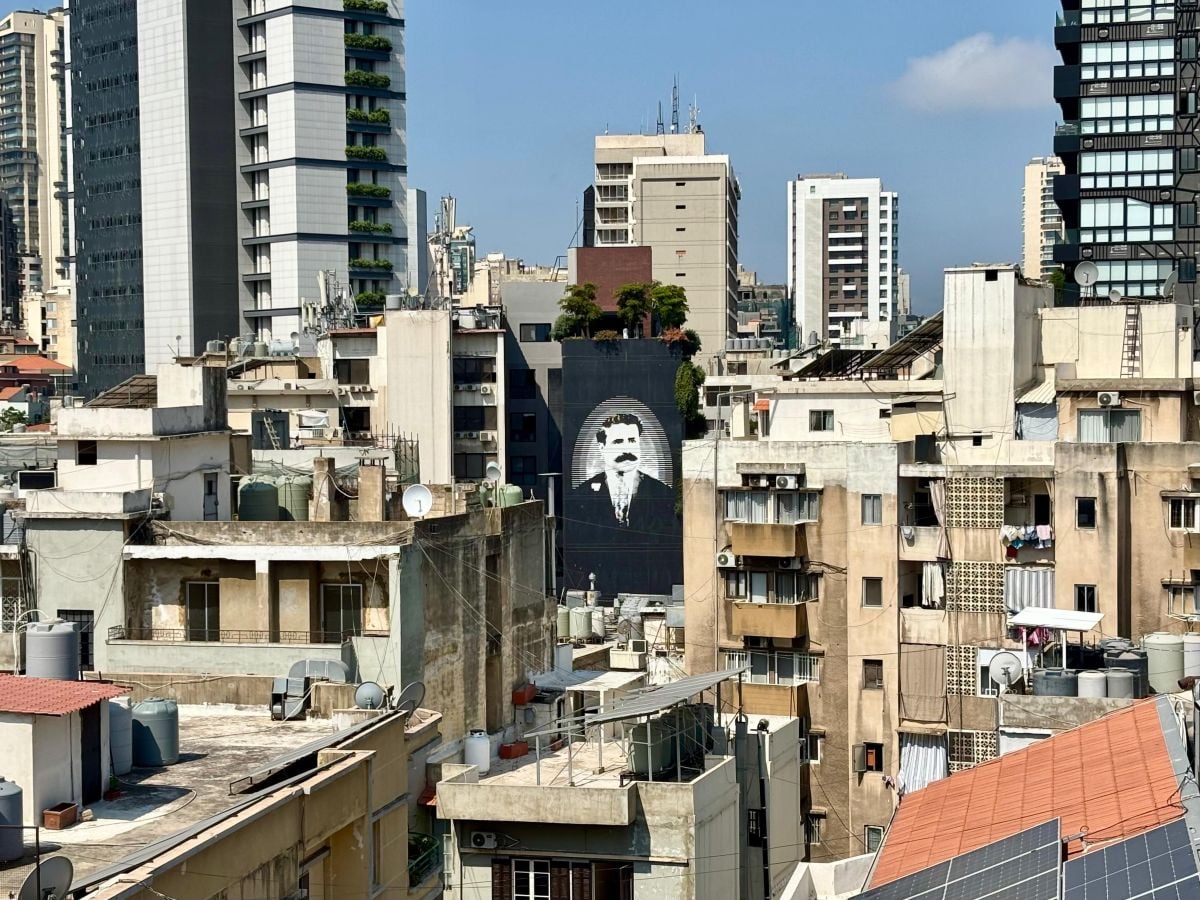
People walk through Beirut's Mar Mikhael neighborhood on July 22, 2026. (Credit: Philippe Hage Boutros/L'Orient-Le Jour)






Lebanon's Purchasing Managers' Index (PMI), which measures private sector activity through a survey of purchasing managers at 400 companies, rose again in July, reaching its highest level in five months, according to data published this week by Blominvest.
At 50.7, however, the index only slightly exceeded the 50-point threshold separating contraction from expansion, pointing to a still-fragile recovery amid the ongoing war between Israel and Hezbollah and Lebanon's unresolved financial crisis.
"The PMI rose to 50.7 in July from 50.3 in June, marking a second consecutive month of expansion and the sharpest improvement in private sector activity since February. This improvement was supported by stronger domestic demand, with new orders reaching their highest level in five months thanks to the return of clients despite a difficult regional environment," Jana Boumatar, a junior analyst at Blom Bank, said.
Exports remain under pressure
The output subindex rose from 50.2 to 50.5, while the new orders subindex increased from 50.2 to 50.4. By contrast, the new export orders subindex fell sharply from 46.5 to 40.4.
"New export orders remained under pressure, with high maritime transport costs and instability in the Middle East continuing to weigh on external demand. Companies also increased their purchases and inventories to guard against possible disruptions in supply chains, but the rise in input costs ... reached its highest level in 40 months," Boumatar said.
The reopening of the Saudi market to Lebanese products in June has yet to produce the expected results.
Prices in Lebanon have continued to rise sharply. Although the country's consumer price index declined in June for the first time this year on a monthly basis, annual inflation remained high at 17.25%, with average inflation reaching 16.16% during the first half of the year, according to the latest official figures published in July.
"Going forward, while resilient domestic demand reflects the Lebanese private sector's capacity to adapt, significant geopolitical uncertainties and ongoing tensions in supply chains should continue to weigh on business confidence and export performance," Boumatar said.
The subindex measuring purchasing managers' expectations for the next 12 months fell from 36.7 in June to 35.6 in July, reflecting continued caution about the outlook.