



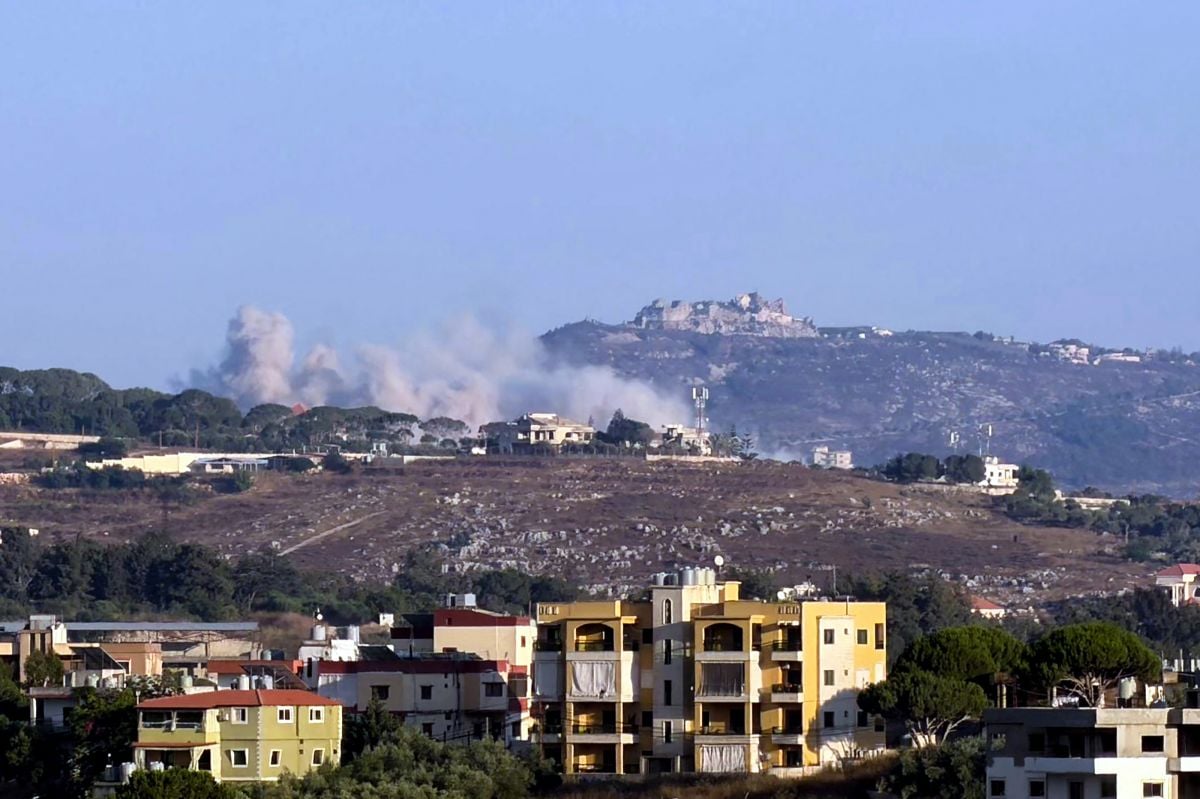
Smoke rising from the village of Kfar Tibnit, Nabatieh, following the Israeli detonation of houses there, with the Beaufort fortress visible in the distance, on July 13, 2026. (Credit: Abbas Fakih/AFP)






SOUTH LEBANON — As a new round of talks between Lebanon and Israel begins in Rome regarding the implementation of the framework agreement signed in June between the two countries, Israeli carried out multiple demolitions and drone strikes around the two “pilot zones” on Tuesday, injuring at least two people.
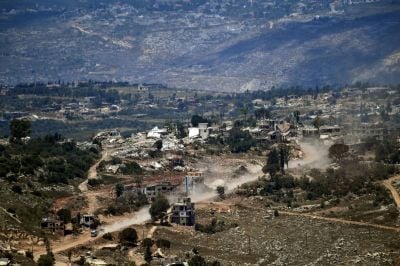
After conducting demolition operations overnight, blowing up houses in Haddatha, Kounin, Tiri (Bint Jbeil), and (Sour), the occupying troops destroyed several homes in Zawtar Gharbieh (Nabatieh) by detonating or setting them on fire, according to information from our correspondent in southern Lebanon. Until now, Israeli military operations had been relatively rare in this village, which, along with its neighbor Zawtar Sharqieh, constitutes the first “pilot zone” from which Israeli forces are supposed to withdraw under the framework agreement and hand over control to the Lebanese Army, which stated Monday it is prepared to take over the area. Not far from there, Israeli troops carried out further demolitions in Nabatieh Fawqa in the early afternoon, after which an Israeli drone launched a strike there, causing no casualties.
‘Moving forward’
Israeli Foreign Minister Gideon Saar said Tuesday that Israel was ready to “move forward” with implementing the provisions of these two “pilot zones” in southern Lebanon, but Israeli troop movements were observed in the Zawtar Gharbieh area, and it was not possible to verify whether a withdrawal from that village north of the Litani River was underway.
A few kilometers to the south, two people were injured when two mines exploded in succession on a road in the village of Ghandourieh (Bint Jbeil), neighboring the village of Froun, which is included in the second “pilot zone” in the central sector. Ambulances had difficulty reaching the scene to evacuate the injured, due to a lack of authorization from the Israeli army stationed nearby on the other side of the Wadi Slouki valley. A fire also broke out at the site as a result of one of the explosions.
Elsewhere, Israeli artillery fire targeted an area between the villages of Deir Siryan and Adsheet al-Qsair (Marjayoun), while Israeli drones conducted strikes and dropped stun grenades on the coastal localities of Mansouri and Byout al-Siyad (Sour).
Berri’s opposition
Amid these security developments, Lebanese Parliament Speaker Nabih Berri, who makes no secret of his strong opposition to the negotiations and to the resulting framework agreement of June 26, once again denounced this “booby-trapped” text. If implemented and if the withdrawal takes place gradually from “pilot zones” where the Lebanese Army will be deployed to disarm Hezbollah alongside the Israeli withdrawal, this process “will take two years,” he estimated.
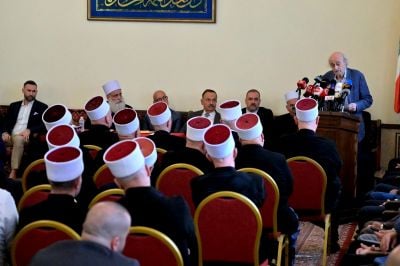
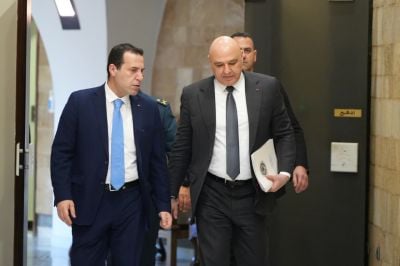
These new criticisms come as the Presidential Palace in Baabda announced Monday night that “the Lebanese delegation has been instructed to demand the immediate start of Israeli forces’ withdrawal from two pilot zones before any other discussion.” According to the parliamentary speaker, the direct negotiations that led to the framework agreement “brought no truly positive results for Lebanon,” though he said he would welcome it “if they manage to secure a withdrawal, the return of displaced Southerners to their villages, the liberation of Lebanese prisoners in Israel, and reconstruction.”
In a statement to the daily al-Joumhouria, citing Lebanon’s main goals for the negotiations, he said, “In the end, what matters to me is to eat the grapes, not to kill the vineyard keeper.” Despite his opposition to the ongoing diplomatic process and to the first direct talks between Beirut and Tel Aviv in decades, Berri is careful not to further strain his relations with President Joseph Aoun and Prime Minister Nawaf Salam, and strives to avoid internal divisions.
The army’s commander-in-chief, General Rodolph Haykal, went Tuesday morning to Baabda Presidential Palace to follow the progress of the talks, which are set to continue until Wednesday at the U.S. Embassy in Rome, Italy.
On the ground, Israel still occupies more than 600 square kilometers in southern Lebanon, and Israeli Defense Minister Israel Katz said Saturday that his army would not withdraw “for a very long time.”
According to the latest official figures from the Health Ministry, Israel has killed 4,324 people and injured 12,223 others in Lebanon since it re-escalated its war on Lebanon on March 2, bringing the total number of casualties to 16,547.