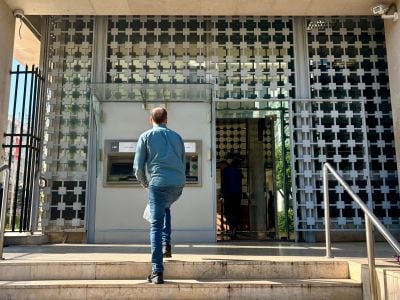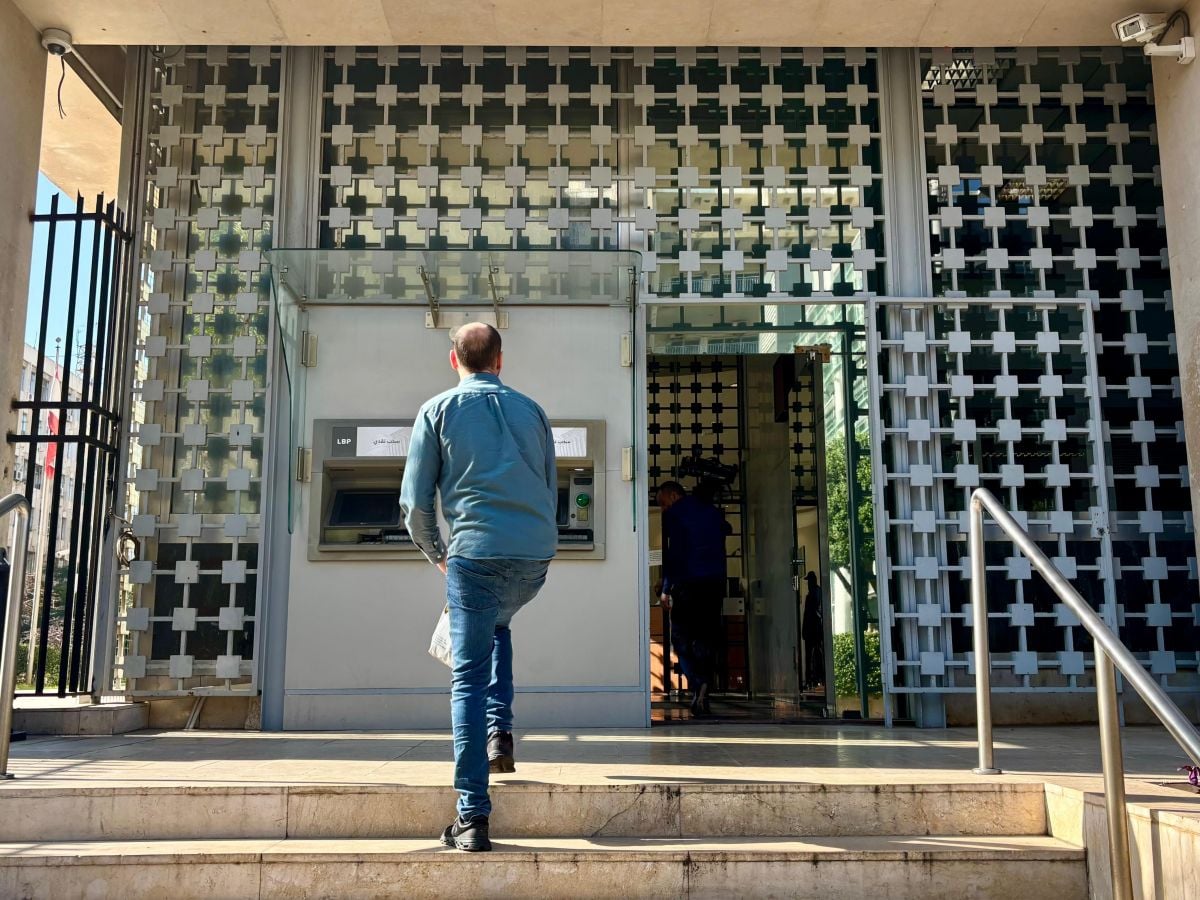
The entrance of the main building of the Banque du Liban, Jan. 8, 2026. (Credit: Philippe Hage Boutros/ L’Orient-Le Jour)






BEIRUT — The secretary-general of the Economic Organizations, Lebanon's main employers' association, on Saturday described a recent State Council ruling as "historic."
On May 21, the State Council rejected a government appeal against a Feb. 6, 2024, decision that annulled a provision of former Prime Minister Najib Mikati's economic recovery plan. The provision would have reclassified certain liabilities of Banque du Liban (BDL, central bank) toward commercial banks.
Speaking on MTV, Nicolas Chammas said "the real significance" of the two rulings is that they demonstrated "the independence of the Lebanese judiciary from political power" and reaffirmed its role in protecting private property, "one of the fundamental pillars of the Lebanese economy."
He added that the decision "put the issue of deposit recovery back on the correct legal track" and strengthened the authority of the administrative courts. According to Chammas, maintaining the disputed provision would have "caused the bankruptcy" of the banking sector.
Article 3 of the recovery plan, approved by the Cabinet in May 2022 but never adopted by Parliament, sought to reduce BDL's balance sheet deficit by allowing the state not to repay part of the foreign currency deposits that commercial banks had placed with the central bank and that BDL had in turn lent to the government.
The Association of Banks in Lebanon (ABL), major depositors and the Economic Organizations were among the strongest opponents of the provision, as well as of any recovery plan that would not place most of the country's accumulated financial losses on the state, and ultimately taxpayers, while leaving open the possibility of privatizing or placing public assets under private management.
Chammas reiterated that position during his MTV interview, urging MPs not to yield to what he described as the International Monetary Fund's "dictates."
The IMF has recommended two measures that remain particularly unpopular among banks and large depositors but are consistent with international standards. First, it has called for respecting the hierarchy of loss absorption during bank restructuring and deposit recovery, with bank shareholders bearing losses before depositors.
Second, it has argued that Lebanon's financial losses are too large to allow the repayment of nearly all deposits, making losses on large deposits unavoidable, while leaving it to Lebanese authorities to determine how such measures would be implemented.
Banks froze tens of billions of dollars in customer deposits after Lebanon's financial crisis erupted in late 2019, without BDL or the government taking decisive action to address the banking sector's insolvency. The central bank later authorized only limited withdrawals from frozen accounts, while some well-connected depositors allegedly transferred billions of dollars abroad under the protection of Lebanon's banking secrecy law, which has since been amended.