





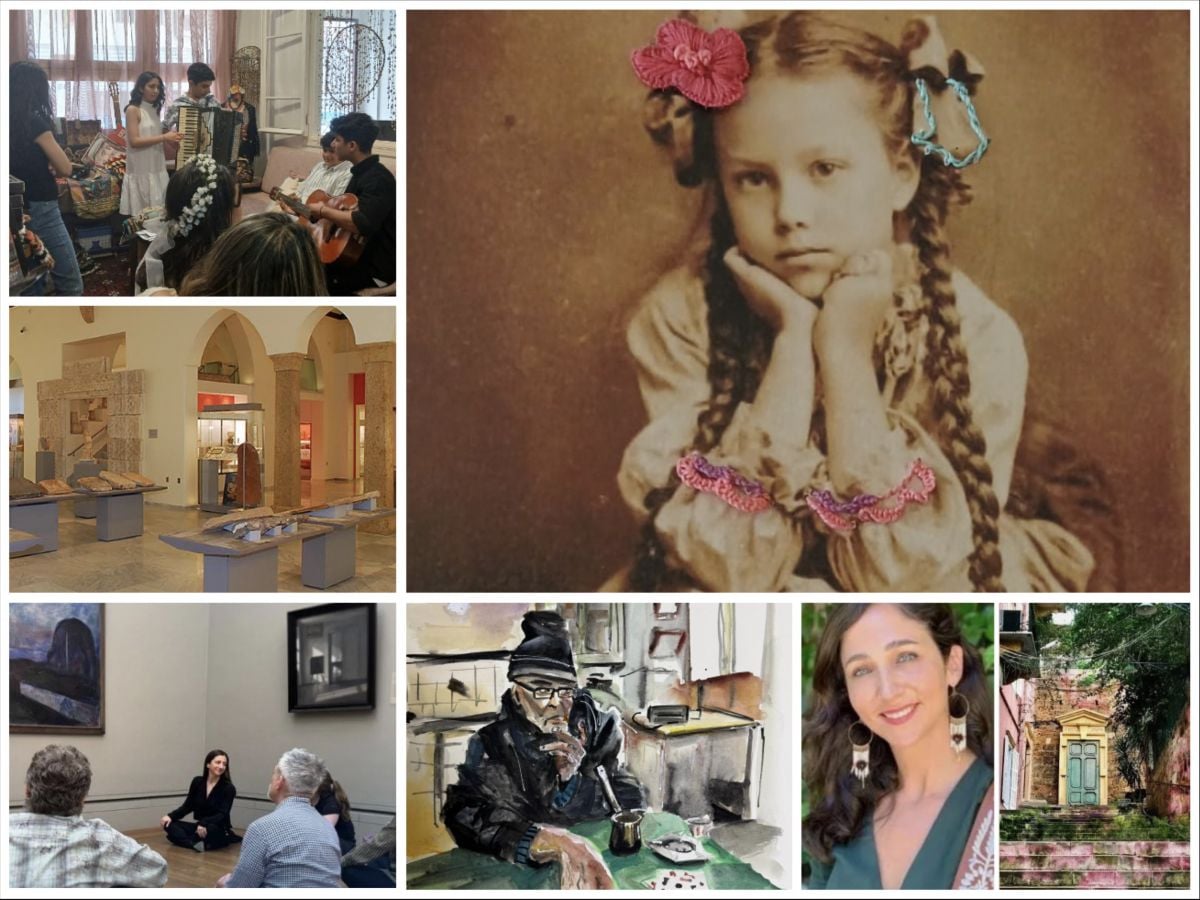
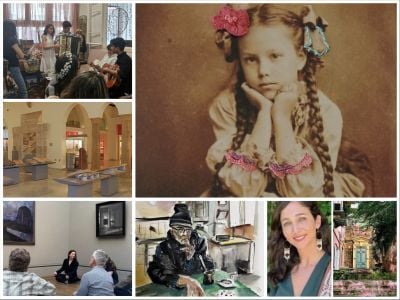
Collage of some of the venues, artists, and exhibitions participating in Beirut Art Days 2026. (Credit: Beirut Art Days)






For four days, from June 24 to 27, Beirut invites visitors to look up, open unfamiliar doors and rediscover the city through the eyes of its artists, artisans and storytellers.
Across the capital and beyond, exhibitions in heritage houses, artisan workshops, performances, concerts, screenings, guided tours and cultural gatherings will bring the city to life. More than 120 events, featuring around 40 artists, creators and institutions, are taking part in the new edition of Beirut Art Days, an initiative by Agenda Culturel with the support of the Ministry of Culture, the Delegation of the European Union to Lebanon, the Dalloul Art Foundation, the Loubna and Saadallah Khalil Foundation and Commercial Insurance.
The event offers a chance to experience Beirut from a different perspective: through those who bring it to life, imagine it, and share its story.
Here is the editorial team’s selection of eight highlights from this year’s program. To create your own itinerary, explore the full schedule and let curiosity lead the way.
A historical collection
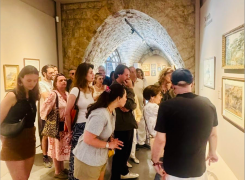
Housed in a traditional home in the heart of the charming village of Beit Shabab (Metn), Philippe Jabre’s museum-quality Orientalist collection opens its doors Thursday, June 25, at 11 a.m., for a guided tour led by curator Gaby Daher.
A must-see for lovers of classical painting and Lebanese history, the collection of more than 300 works, dating from the 17th to the 19th centuries, offers a visual journey through four centuries of Lebanese history and the wider Levant through landscapes, architectural views, street scenes, seascapes and portraits.
Alongside these older paintings, the collection also includes works dedicated to 20th-century Lebanon, including pieces by David Hockney, Andy Warhol and A. R. Penck, as well as a selection of tourism and film posters recalling the country’s golden age.
A rare glimpse of a Lebanon that once was — and the stories it continues to tell.
Experiencing art... mindfully
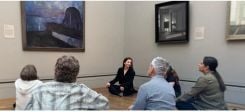
What if a museum visit could become a moment of reconnection with oneself? This unusual experience is offered on Wednesday, June 24, from 7 to 9 p.m., at the Holy Spirit University of Kaslik (USEK) Museum with "Art, Presence and Mindfulness," a unique meeting place for holistic wellness, meditation and artistic contemplation.
The session begins with 15 minutes of guided meditation led by Sandra Kouchakji Abou Farhat, holistic nutritionist and naturopath, focusing on grounding and sensory awareness. Participants are then invited to encounter a selected artwork from the museum’s collection through a more mindful lens. Slow down, utilize your senses, and prepare for an intimate encounter with art!
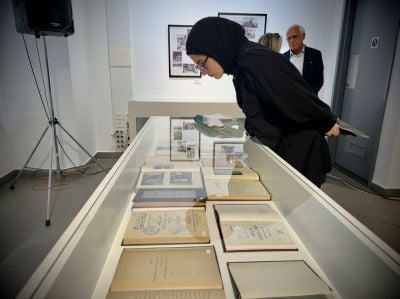
Following this moment of contemplation, Elsie el-Dick Bou Jaoude, art historian and director of the USEK Museum, offers a historical and artistic reading of the selected works, unveiling their techniques, symbols and cultural context.
Open to all, the event requires no prior knowledge of art history or mindfulness. Registration is free through the USEK Museum website.
Shared heritage
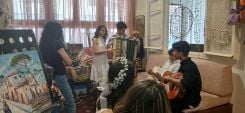
At Badguèr in Bourj Hammoud, Beirut Art Days offers more than an exhibition: it creates a space where Armenian heritage is experienced, practiced and shared.
From June 24 to 27, visitors are invited to move between painting, music, dance and craft, discovering Armenian culture not as a static tradition preserved behind glass, but as a living heritage that continues to evolve. Live demonstrations of kilim weaving, embroidery, crochet and shoemaking revive ancestral skills, while artists and sculptors create in front of visitors. Children can take part in drawing workshops, adults can learn traditional Armenian dances such as the Ichkhanats Bar, and musicians will fill the heritage house with Armenian melodies.
“Armenian culture encompasses all these aspects,” explains Arpie Mangassarian, who launched the initiative. “We want to bring this cultural heritage to life.”
In the intimate setting of Badguèr, culture is not simply displayed — it is shared.
Weaving memory
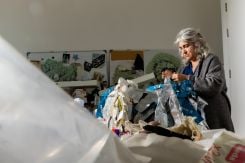
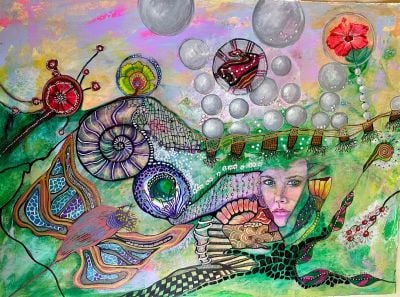
One of the highlights of Beirut Art Days, Dima Youssef Rbeiz’s first solo exhibition, “[In] Seam,” offers an intimate exploration of memory, material and human bonds.
Presented in a traditional Gemmayze house rather than a conventional gallery space, the exhibition brings together works created from reclaimed fabrics, found objects and collected fragments, carefully assembled over years. At its center is “Rainbow,” an eight-year project woven from textile remnants and personal stories. Through these everyday materials, visitors enter the artist’s world and discover how objects can hold memories of home, belonging and resilience.
“‘[In] Seam’ is where things are joined and held together,” Rbeiz says. “It’s subtle, easy to miss, and yet nothing would stay connected without it.” More than an exhibition, “[In] Seam” invites visitors to slow down and pay attention to the fragile threads that hold stories together.
Scent of Lebanon
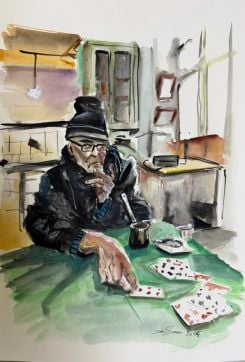
For those looking for a nostalgic journey through the country’s living heritage, “The Scent of Lebanon” by Darine Semaan offers a tribute to the people and traditions that have shaped Lebanon over generations.
Through 116 watercolors, the artist portrays artisans, farmers and keepers of traditional knowledge whose skills continue to preserve heritage. Inspired by old photographs and forgotten practices, the exhibition brings to life potters, soap makers and other guardians of trades passed down through time.
“You can smell the country through these people,” Semaan says, describing Lebanon’s scent as “earth, pine and zaatar.”
The exhibition also includes a book-signing session, extending the experience beyond the artworks and inviting visitors to rediscover a side of Lebanon that is often overlooked — not only through its landscapes and monuments, but through the hands, faces and stories of those who keep its heritage alive.
The exhibition runs until July 4.
Embroidering the archives
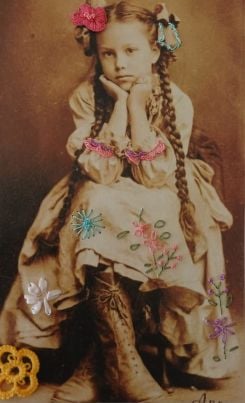
For one day, “Stitching Tomorrow,” a project created by Boukra for Beirut Art Days, transforms a historic house in Achrafieh into a space where memory, heritage and imagination meet.
At the heart of the project is embroiderer Nada Nakouzi, who reinterprets black-and-white photographs with colorful threads, breathing new life into old portraits, landscapes and family scenes.
“The idea is to add a story, a colorful story, to the old image,” explains Muriel Sarrouf, founder of Boukra.
Drawn from village archives, family collections and shared memories, these photographs become starting points for new narratives shaped by artists, visitors and Nakouzi’s craft.
The public can watch the embroidery process unfold, meet the artisan behind the project and even bring their own old photographs to be transformed. More than an exhibition, “Stitching Tomorrow” explores how heritage can be reimagined, recreated and carried forward in new forms.
If clay can speak
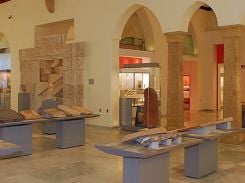
What stories can emerge from a piece of clay taken from Lebanese soil? This question lies at the heart of “Wild Clay: Ecologies of Transmission,” an exhibition created by the AUB Museum of Archaeology and the Beirut Museum of Art (BeMA).
In dialogue with archaeological ceramics, 12 artists and artisans — Ali Karout, Caro Loutfi, Christopher Ghoussoub, Khaled Daou, Rabih Daou, Maha Nasrallah, May Nabhan, Michele Assef Kamel, Mohammad Atallah, Moustafa Atallah, Thea Dagher and Yasmina Khalife — explore the memories carried by this ancient material.
Clay preserves more than form. It also holds traces of gestures, techniques and stories passed down through generations. Through their works, the participants reflect on what remains when traditions become fragile, access to land is reduced, and objects become separated from the communities that created them. A conversation between archaeology and contemporary practice, “Wild Clay” examines how the legacies of yesterday can shape those of tomorrow.
The exhibition runs from June 25 to July 30.
The poetry of everyday
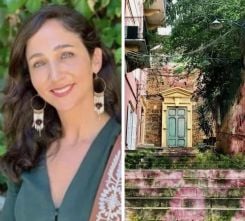
On June 24, from 4 to 8 p.m., photographer Ismat Mahmassani opens the doors of her showroom at Building Le 77, nestled between the Urban Supermarket and the Phoenicia Hotel in the heart of Beirut.
With “The Poetry of Seeing,” Mahmassani invites visitors into a world where ordinary moments become visual stories. A reflection in a window, a play of light, a flower or a building façade are transformed through her lens into images filled with emotion and quiet poetry.
Rather than simply documenting reality, her work seeks to reveal what often escapes the first glance — finding beauty and meaning in the everyday.
Presented as part of Beirut Art Days, the selection of photographs, alongside works in progress, offers insight into her creative process. It is also an opportunity to encounter the artworks in their physical form, across different formats and media, and to speak with the artist about the stories hidden behind each image.

 Evening recap: Netanyahu announces West Bank offensive; 7 killed in Jordan church shooting; tents burned in south Lebanon
 US strike on Iran this weekend? ‘Absolutely,’ says Barrack; ‘I have no idea,’ says Trump