


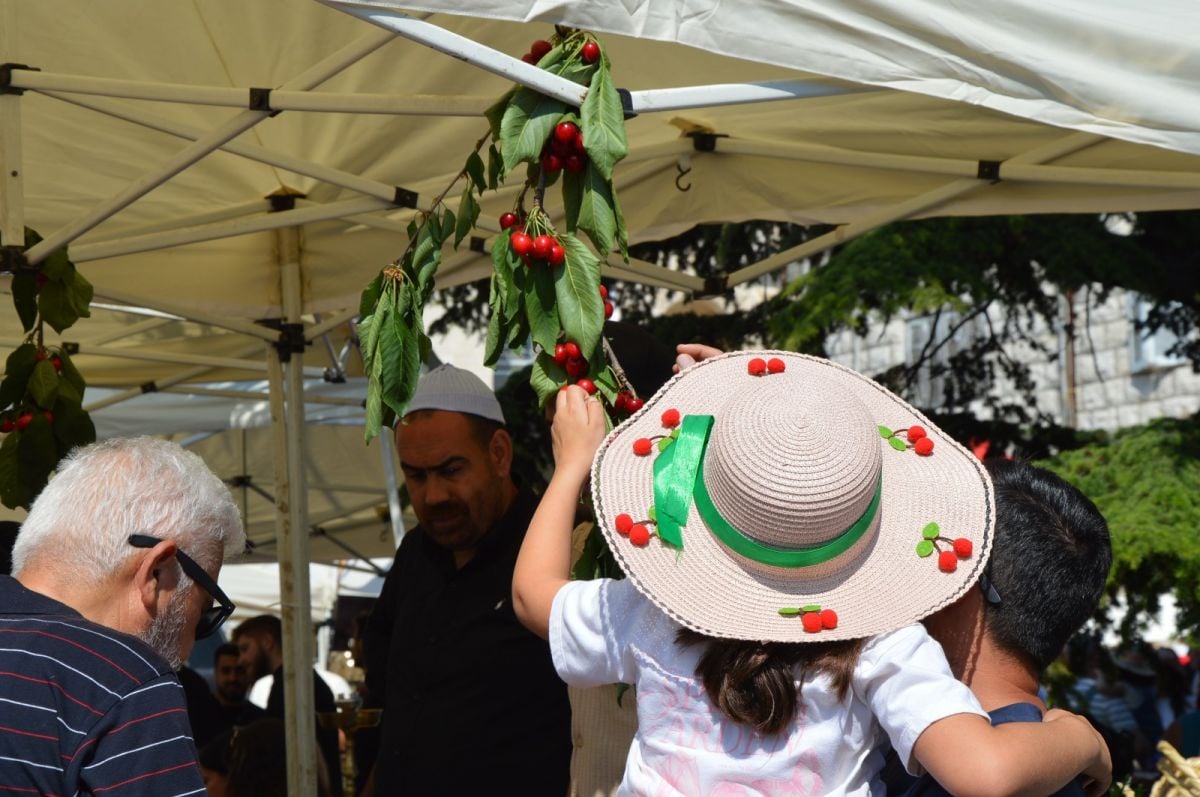
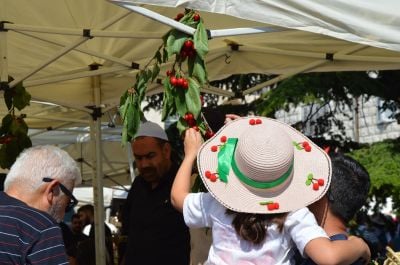
The cherry, queen of Hammana. (Credit: Élise Quéau-Boukhari/L’Orient-Le Jour)






Heading to Hammana, nestled in the mountains far from the bustle of the city, is a chance to slow down, change scenery and leave behind Beirut's traffic, noise and summer heat.
Many Lebanese and foreign visitors, some now regulars made the journey on Sunday, June 21, to join the festivities in the self-proclaimed “cherry capital.” Finding a parking space was an adventure in itself. Schools and public areas had been converted into parking lots, while shuttle buses brought visitors to the heart of the festival. Others preferred to complete the final stretch on foot.
In the old souks, families, groups of friends and curious first-time visitors filled every corner of the village. Smiles filled every corner, while market stalls overflowed with color.
The turnout reflected just how deeply the festival has become embedded in Lebanon's summer traditions, Hammana Mayor Amine Lebbos said. “It has become an essential destination for everyone coming from all corners of the country,” he told L'Orient Today. “Many Lebanese add it to their agenda every year.”
The rush for cherry picking
The festival's main attraction remains cherry picking, which took place on this unusually warm Sunday from 10 a.m. to 3 p.m. — or, more accurately, until all tickets were sold. By early afternoon, most time slots had already filled up.
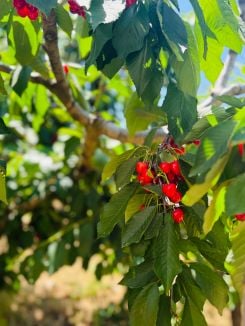
Buses transported visitors from the festival grounds to one of 12 participating orchards around Hammana. Each group was accompanied by guides who explained the proper way to pick cherries before allowing participants to wander among the trees. Aline came all the way from the southern city of Sour. “I’ve heard about it for a long time. This time, I decided to come. I’m coming back next week because my friends are returning to Lebanon, and they must not miss this experience,” she said.
At Jamil Garden, one of the participating orchards, visitors — children and adults — were spread out under heavily laden branches, picking the coveted fruit with varying degrees of ease. “We have been welcoming visitors for about ten years,” explained Roula Bou Khaled, whose family runs the orchard. “There's a dialogue between people and nature. Young children learn to respect nature and take care of it.”
Her husband, Ramzi Bou Khaled, described this project as a family initiative rooted in memory and agriculture. “We are creating a sort of attachment to the land. We teach our children to care for it. That is the main goal of our approach," he said.
The orchard itself illustrates how local farmers extend the cherry season beyond the harvest by turning it into several, often unexpected, products. Food lovers also discovered cherry barbecue sauce, vinegar, juice, and even a new line of skincare products made with this fruit. “We wanted to set ourselves apart,” Bou Khaled explained. “The cherry season is very short. These products allow us to keep the fruit alive throughout the year.”
Not far away, Scheherazade watched her grandchildren enthusiastically fill their baskets. “I come every year. And I bring my grandchildren with me. They look forward to it with the same excitement.” Ayman Gharzadeen, originally from Ras al-Metn, called the experience — his first time — “comforting,” commending both the organization and the village's hospitality.
A charming village transformed into a market
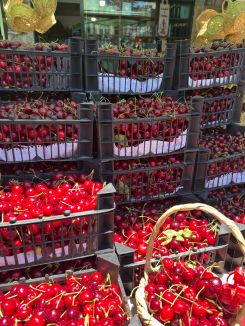
In the old souks, the festival turned Hammana into a giant open-air market. Nearly 200 exhibitors from all over Lebanon filled the streets with handicrafts, food products, handmade items, accessories, and local specialties. Laura al-Biry, the event manager, said supporting small businesses remains one of the festival's priorities. “Even if visitors don't buy right away, they discover the products and remember them later,” she said. This diversity was visible everywhere. A teenage boy about 15 years old, Rifaat, was proudly selling cherries picked from his father's land. “Our passion is cherries. We offer them at all the festivals,” he said. Among the exhibitors were artisans, food producers, and small business owners. Hanane Abdallah presented handmade crystal accessories promoting “positivity,” while Ahmad Ghalmoush, who offered sugar-free protein desserts, said he was impressed by the festival's “cheerful, happy, and grateful” atmosphere.
The other flavors of Hammana
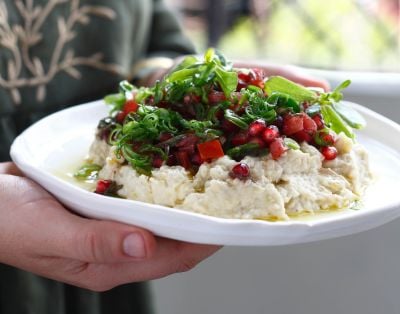
While cherries attracted visitors to Hammana, the food convinced more than one to extend their visit. At Sofret Hammana (Hammana's dinning table), local women served traditional dishes inspired by mountain cuisine and based on seasonal ingredients. Cherries were everywhere, often in surprising forms.
Keftas with cherry sauce, vine leaves stuffed with cherries, kebbeh flavored with cherries, and even cherry burgers drew long lines. “This is mountain cuisine,” said Lebbos. “The village women prepare traditional Hammana dishes. They have a special flavor.”
Among them was Hiba Kassab, from Tayebat, who prepared dishes alongside her mother and other local women.
Elsewhere, Jamal Nouiehed offered homemade products made without preservatives, artificial coloring, or additives. Visitors were able to taste everything from aricheh with cherry sauce to chicken with cherries and kebbeh garnished with this fruit that's become the symbol of Hammana.
At one of the most popular stands, visitors queued to try a fresh cherry lemonade. Karim, one of the family members running the stand, described the festival as a tradition deeply anchored in the village itself. “We, the children of Hammana, look forward to cherry season every year,” he confided.
Samer Abinader, who came from Beirut with his wife and child for his first visit to Hammana, said he was surprised by the scale of the festival and the variety of activities offered.
“We must encourage all the festivals in Lebanon,” he said, hailing the event's support of Lebanese crafts and traditional arts.
A festival that goes well beyond cherries
Throughout the afternoon, the village remained packed. Children moved from one activity space to another, or from show to show. Visitors strolled through the souks, arms loaded with bags of handicrafts, jars of mouneh, and boxes of cherries. Old friends randomly reunited in the crowded streets. Former classmates, neighbors, and colleagues ran into each other between stands.
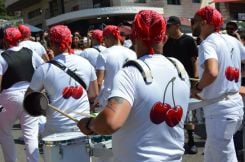
The parade brought fresh energy to the event at 3 p.m. Musicians carrying drums and brass instruments marched through the old market, joined by spectators as the procession went along. In no time, people began to dance in the streets, under banners decorated with cherries.
For Jackie Kamari, a municipal councilor and organizer, attendance exceeded expectations. “This year, I feel like there are even more people. People have come from Boston, Venezuela, the North, the South … from everywhere.”
As the sun began to sink behind the mountains, visitors were still queuing for one last tasting, a final purchase or a souvenir photograph. Some carried bags filled with cherries. Others still bore the stains of the day's harvest on their fingers as they exchanged stories from the orchards and promised to return soon.

 7 p.m. recap: Netanyahu seeks mastermind behind Flydubai incident; Washington sanctions 2 French nationals; Ben Gvir's 'I want to kill you' threat