






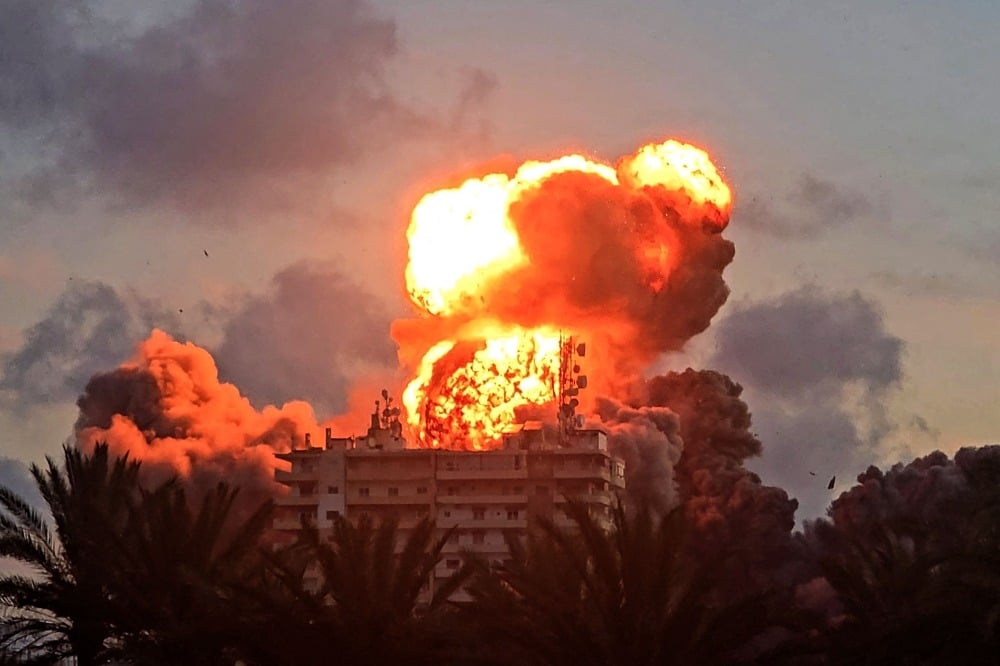
A fireball bursts from a building following an Israeli strike in Tyre, southern Lebanon, on May 28, 2026. Photo KAWANT HAJU / AFP






An initiative launched by dozens of people from Sour and Nabatieh, from various backgrounds, made headlines this week after taking the initiative on May 29 to publish petitions demanding that these cities, rich in history and heritage, be declared "open cities," in other words free of weapons, and spared from destructive strikes.
These texts sparked the anger of Hezbollah supporters and sympathizers — the party which has been engaged since March 2 on a front supporting Iran against Israel — who saw them as an indirect criticism of their military actions. Pressure was immediately exerted on these signatories, resulting in a few withdrawals, as confirmed by sources close to the petitioners.
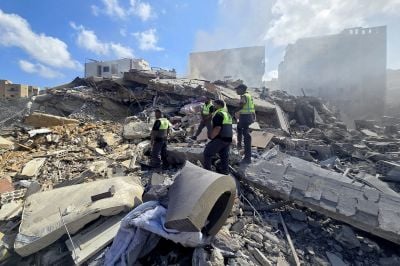
These initiatives come at a particularly grim moment, with both cities targets of fierce bombardments, and Israeli troops advancing, having confirmed Sunday the capture of the strategic Beaufort Castle overlooking the Nabatieh region. Foreign Minister Joe Rajji and Culture Minister Ghassan Salameh have already taken diplomatic steps to protect historical and heritage sites. Sour is home to UNESCO World Heritage-listed sites, while Nabatieh has already lost part of its historical heritage.
In the petition, signatories call for the city to be "declared an open city, free from any armed presence," asking that "all necessary efforts be made to achieve an effective cease-fire in Sour, Nabatieh and in all of southern Lebanon," and for humanitarian corridors to be guaranteed to ensure humanitarian and medical aid as well as rescue assistance. The petition calls for "the Lebanese government to intensify its diplomatic and political efforts to protect the historic city of Sour from ongoing attacks and destruction." The signatories also demand "the deployment of the Lebanese Army and security forces in the city and its surroundings to guarantee residents' safety, regional stability, and respect for state authority." The petition for Nabatieh is largely similar. The Sour appeal reportedly gathered about 150 signatures, and Nabatieh's more than 220.
Hezbollah supporters' anger
The publication and rapid dissemination of these two appeals on social media and in the press provoked anger among Hezbollah supporters, who accused the signatories of taking a stand against armed resistance (which the government has declared illegal since the start of this conflict, on March 2, it should be recalled). No direct reaction from the party itself has been reported.
A group known for its closeness to Hezbollah, called "Shabab Sour" (Youth of Sour), published a lengthy indictment on its Facebook page, saying it had "received with indignation" the publication of the appeals. "A slogan such as ‘Sour, a city without weapons’ offers no real protection to the city, but consciously or unconsciously aligns with enemy Zionist rhetoric, which seeks an excuse to continue its savage aggression," the post read. One social media user even went so far as to accuse the signatories of "having encouraged the Israelis to bombard the city even more," referring to Sunday’s destructive strikes.
But the virulent responses didn't stop there. According to anonymous testimony, pressure was brought to bear on the signatories to get some of them to withdraw. According to a source close to the organizers of the Sour appeal, there were indeed withdrawals, but only about five or six — a very small number compared to the 150 who signed the petition.
Abdallah Rizk, one of the initiators of the Nabatieh appeal, told our correspondent that he did not know how many had withdrawn, but the number of signatories is increasing. "The signatories are under great pressure to remove their signatures, whether from their family environment or from close circles," he said. In his view, the petition expresses local exasperation "against the ongoing destruction," and he wonders why "the war continues here while it has stopped in Iran."
"Efforts are underway to form a group of southern figures who would support these two appeals and their main message, namely to urge Lebanese authorities to undertake sweeping diplomatic action aiming to declare the two cities weapon-free," the activist added.
It is worth noting that despite the fierce criticism, these two petitions are receiving growing support from social media users, who have widely circulated the message over the past two days.

 8 p.m. recap: Israel again threatens Beirut’s south suburbs; 2 ships hit near Hormuz; Riyadh football matches canceled