












On Saturday night, the matter seemed settled. The United States and Iran were on the verge of agreeing to a memorandum of understanding — not a final deal — aimed at ending the war that has pitted them against each other since Feb. 28, 2026. Regional powers had been informed and, except for Israel, everyone was officially on board.
On Sunday morning, the outlines of the agreement were published in the press, confirming the impression from the previous evening: the framework agreement in question was largely favorable to Iran. In exchange for reopening the Strait of Hormuz, its main bargaining chip, the Islamic Republic would secure a 60-day extension of the cease-fire to reach a final agreement, an end to the U.S. blockade, the unfreezing of part of its assets, and a halt to fighting in Lebanon.
A few hours later, however, Donald Trump said he did not want to rush into a deal, suggesting that many issues remained unresolved. Is an agreement imminent, then? In reality, it depends more on the Iranian regime than on the American president.
Trump clearly wants to exit this war, limit losses, and, above all, reopen the Strait of Hormuz to avoid a major energy crisis. To do so without losing face, he needs a clear victory on the nuclear issue, meaning an Iranian commitment not to develop a bomb and the transfer of highly enriched uranium.
He must also take into account the interests of his Israeli ally, like giving it a free hand in Lebanon, but it is clear he does not intend to include Iran’s ballistic missile program or Tehran’s proxy militias in the negotiations.
The American president believes — despite reports from U.S. intelligence agencies suggesting otherwise, though those assessments should be nuanced — that Iran’s ballistic missile program was destroyed by his air campaign and that its militias have been significantly weakened and will continue to face pressure from Israel or Arab countries.
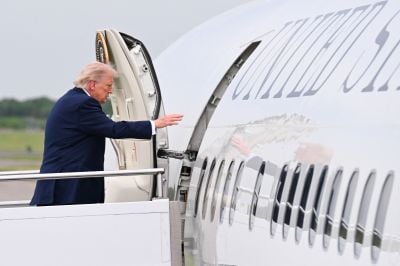
For him, an Iran permanently deprived of nuclear weapons and partially neutralized appears sufficient to declare victory, even if that falls far short of the war’s initial objectives.
For Iran, the equation is different. The regime believes it won this war by withstanding the American and Israeli militaries, exposing the vulnerability of Gulf countries, and disrupting the global economy by blocking the Strait of Hormuz. Tehran does not want a deal that resembles compromise, much less defeat. Instead, it wants an agreement that confirms its victory by reshaping the regional geopolitical order, while ensuring it will not be attacked again, without crossing its own red lines. Barring a major surprise, it is unlikely to prevail on every front. The question is whether it is prepared to settle for less.
The future of the memorandum of understanding, let alone any eventual final agreement — depends on this. In the short term, Tehran faces three key questions.
Will it agree to fully reopen the Strait of Hormuz before U.S. forces have withdrawn from the region and all of its frozen assets have been restored? On this issue, sequencing is likely to become a genuine tug-of-war between the two sides.
Next, is it ready to commit, in an annex accompanying the statement, to transfer its enriched uranium? Until now, that has been an Iranian red line. Tehran, for its part, demands recognition of its right to enrich uranium, but this American requirement appears non-negotiable. Reports in the U.S. press suggest Iran is prepared to make a major concession on this point, with a transfer to the IAEA reportedly under discussion, while sources in Iran present a very different picture.
Finally, will Tehran be satisfied with Lebanon merely being mentioned in the framework agreement — allowing it to claim it has not abandoned its allies — or will it be prepared to derail the deal until it secures guarantees that Israel will adhere to the cease-fire?
Is Iran ready to sacrifice a relatively advantageous agreement for Hezbollah’s sake? Benjamin Netanyahu claims to have received Trump’s green light for Israel’s “right” to “defend itself” in Lebanon, a phrase requiring little interpretation.
Every detail and every word of the memorandum will matter and will be closely scrutinized. But the most important factors may come afterward. Iran’s primary fear is a scenario in which a temporary and fragile agreement is used by its adversaries as an opportunity to prepare for the next war. It seems unlikely that Trump would restart the war once the World Cup is over, only weeks before the midterm elections. But can Iran secure a U.S. guarantee that Israel will also be bound by the agreement? That is far from certain.
The Iranian regime survived the war. The Revolutionary Guards consolidated its grip on power and demonstrated to the United States, Israel, Gulf countries, and its own population that not even a major war could break or overthrow it. It discovered that blocking the Strait of Hormuz can function almost as much as a deterrent as a nuclear weapon, and now seeks to impose a toll there to offset the damage caused by the war, which is unacceptable both to the United States and to the international community.
Under these conditions, despite massive human and material losses, Iran is likely to emerge more defiant and more convinced than ever that it should not give up anything, perhaps even becoming more aggressive on multiple fronts. The regime is likely already imagining what it could achieve — beginning with rebuilding its ballistic missile program and its militias — with the tens of billions of dollars that could flow into its coffers if sanctions are lifted as part of a final agreement.
But to obtain all of this, it will likely have to make essential concessions on the nuclear issue. Yet Tehran has always viewed such concessions as tantamount to admitting defeat and undermining the system itself. Has the war changed that calculation? Is the regime willing to pay the price for what it sees as victory, or, convinced that time remains on its side, will it once again ask for too much?