






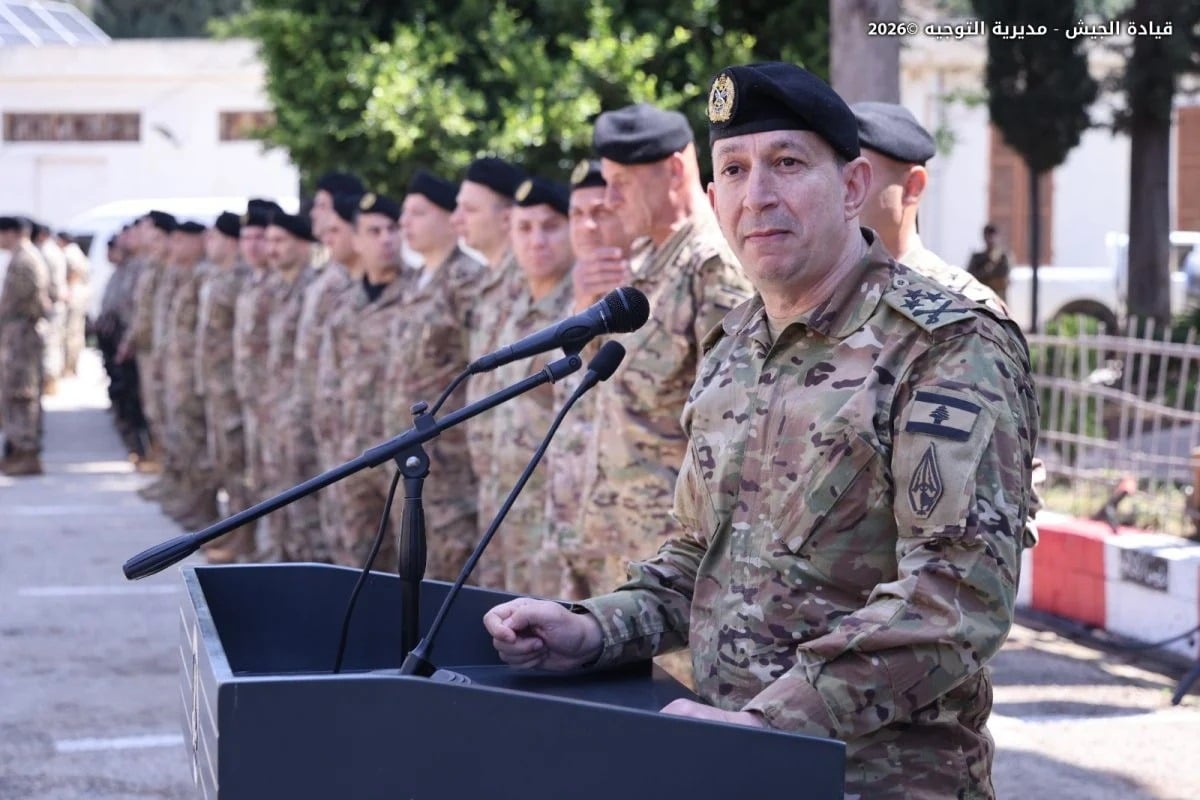
Lebanese Army Commander Rodolph Haykal in Tripoli on April 21, 2026. Photo taken from the Lebanese Army's X account.






BEIRUT — Army Commander Rodolph Haykal delivered a speech to mark the 26th anniversary of Israel’s withdrawal from southern Lebanon on May 25, 2000, ending an 18-year occupation, amid a current Israeli occupation of south Lebanon and pressure on the Lebanese Army to disarm Hezbollah.
In his address, Haykal said campaigns targeting the military “will not prevent it from carrying out its mission” and vowed the army would oppose any attempt to undermine “civil peace.” The Lebanese Army is facing criticism from anti-Hezbollah figures and U.S. officials who accuse it of not doing enough to disarm the group.
Despite Israel’s renewed war in southern Lebanon, where it is attempting to establish a "buffer zone" extending more than 600 square kilometers into Lebanese territory and continues demolishing villages and infrastructure, the Lebanese government again declared May 25 a public holiday this year.
Prime Minister Nawaf Salam said last week the commemoration was being observed: “in solidarity with the families of the martyrs, the wounded, the detainees and the displaced, as well as with our people in the South and frontline villages, and in support of their resilience.”
The army will not be diverted from its mission
Haykal used the occasion to denounce “smear campaigns, accusations of negligence, rumors of sectarianism and regionalism within the army, and false allegations” targeting the military institution.
According to him, such accusations serve “the enemies of Lebanon” and “will not divert the army from its mission.”
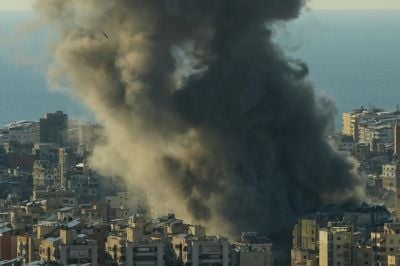
His remarks come as direct negotiations between Lebanon and Israel seek, from the Lebanese side, to secure an Israeli withdrawal from southern Lebanon. Israel has conditioned such a move on the effective disarmament of Hezbollah.
New direct talks expected on May 29 are set to focus on security and military issues, with Washington and Israel seeking to coordinate with the Lebanese Army on a plan to disarm Hezbollah.
The military launched a disarmament initiative after the November 2024 cease-fire and later said the area south of the Litani River had been almost entirely cleared of Hezbollah weapons. However, after the war resumed on March 2, a Hezbollah official said reinforcements had been sent to the area.
Haykal, meanwhile, said continued Israeli strikes — both during the cease-fire and after fighting resumed — had hindered efforts to dismantle Hezbollah's arsenal. Although President Joseph Aoun had called for security operations in Beirut and its southern suburbs to seize weapons, only limited measures were carried out on the ground.
Against that backdrop, and as Hezbollah has warned of possible civil unrest in the event of forced disarmament or an agreement with Israel, Haykal said that “civil peace and national unity are the most powerful weapons to protect Lebanon and its stability, thanks to the determination and firmness of the army.”
He described May 25, 2000, as “a bright moment in Lebanon’s history,” symbolizing “the Lebanese people’s attachment to their land, sovereignty and national dignity in the face of Israeli occupation.”
“Our message is clear: the army will be the bulwark against plots aimed at destabilizing the internal situation and civil peace,” Haykal said, adding that the military institution would remain “strong and united, thanks to the determination of its soldiers and the sacrifices of its martyrs and wounded, and the guardian of national unity.”
Recovering every inch of Lebanese territory
Addressing Israel’s occupation of Lebanese territory and the consequences of the fighting, Haykal said the army “is making every effort despite complex conditions and significant dangers” to limit the impact of the war, support residents, and continue carrying out its security missions.
Israeli attacks on Lebanon have killed over 3,089 people and wounded 9,397 since March 2, according to the Health Ministry.
The army commander also reiterated Lebanon’s goal of “recovering every inch of Lebanese territory.”
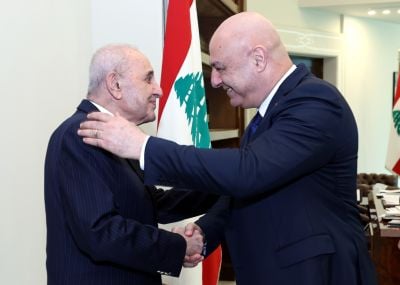
Haykal’s remarks came a day after Washington imposed sanctions on figures affiliated with the Amal Movement and Hezbollah, as well as, for the first time, two serving Lebanese security officials: Brig. Gen. Khattar Nassereddine, head of the National Security Department at General Security, and Col. Samir Hammoud, head of Lebanese Army intelligence in Beirut’s southern suburbs.
The United States accused them of providing intelligence support to Hezbollah. The U.S. Treasury said Hezbollah had “benefited from illicit support from Lebanese official security institutions, namely the Lebanese Armed Forces and the General Directorate of General Security.”
The sanctioned officials are accused of having “provided material, financial, technological or logistical support to Hezbollah, or supplied goods or services to the group or for its benefit.”