






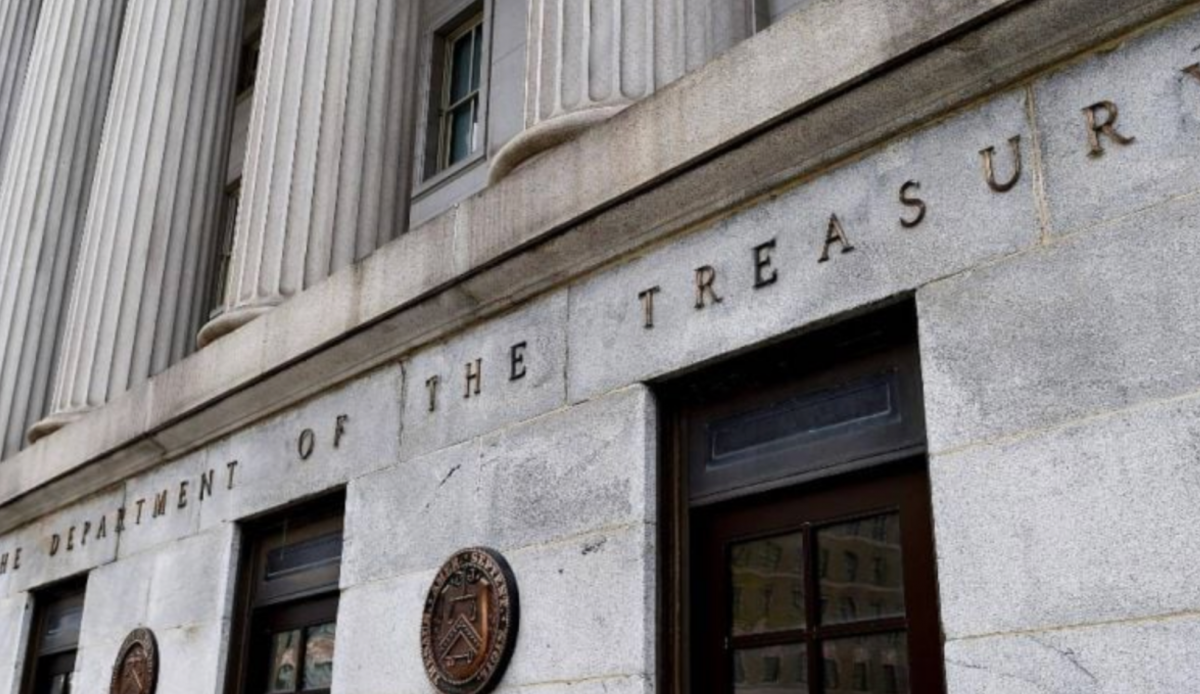
The facade of the U.S. Department of the Treasury in Washington. (credit: AFP)






BEIRUT — In a move marking an unprecedented level of U.S. pressure, the Treasury Department on Thursday announced sanctions against nine individuals accused of supporting Hezbollah, including Iran’s ambassador to Beirut. But the most significant development is elsewhere: for the first time, two serving Lebanese officers are directly targeted by Washington.
Those named are Brig. Gen. Khattar Nassereddine, head of the national security department at General Security, and Col. Samir Hammoud, head of the southern suburbs branch of the Lebanese Army’s intelligence directorate. The United States accuses them of having transmitted intelligence to Hezbollah. The group is also said to have “benefited from illicit support from official Lebanese security bodies, namely the Lebanese Armed Forces and the General Directorate of General Security,” according to the Treasury. The officials are sanctioned for having “provided material, financial, technological or logistical support to Hezbollah, or supplied goods or services to or in support of the group.”
It is a red line Washington had never crossed before. Beyond the individuals targeted, part of Lebanon’s security apparatus is now openly suspected of infiltration and collusion with Hezbollah.
The United States is a key partner of the Lebanese Army, providing military equipment and logistical support aimed at strengthening it as a pillar of internal stability. Each year, U.S. aid — which accounts for around 90% of total external support to the army — is debated in Congress, where some lawmakers have warned of possible “collusion” with Hezbollah.
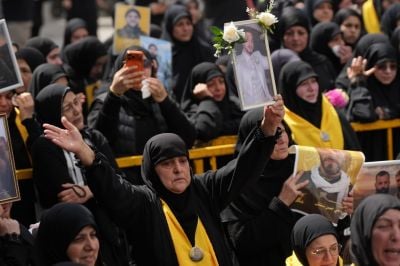
The administration has repeatedly criticized the Lebanese Army in recent months for not doing enough to disarm Hezbollah. This was one of the reasons behind the initial cancellation of several meetings in Washington involving army commander Gen. Rodolf Haykal in November 2025. In late April, Secretary of State Marco Rubio said the United States was preparing a framework to train “certain” units of the Lebanese Army to support efforts to disarm Hezbollah.
The sanctions come as, under Lebanese-Israeli negotiations, military delegations from both countries are set to meet at the Pentagon on May 29 for talks focused on the “security track.”
“This is only the beginning,” the U.S. State Department warned, adding that “anyone continuing to protect or cooperate with this terrorist organization, or to undermine Lebanon’s sovereignty, must understand they will be held accountable.” It added that “a stable, secure and independent Lebanon requires the full disarmament of Hezbollah and the restoration of the Lebanese state’s exclusive authority over security matters across the entire country.” The United States also said it remains ready to help Lebanon “chart a path toward a better, more peaceful and more prosperous future.”
Hezbollah, Amal officials and Iranian ambassador also targeted
Among those sanctioned are three Hezbollah MPs and officials — Hassan Fadlallah, Ibrahim Moussaoui and Hussein Hajj Hassan — as well as former minister and head of the party’s executive council Mohammad Fneich. Iran’s ambassador to Beirut, Mohammad Reza Chibani, along with two Amal Movement officials, Ahmad Assaad Baalbaki and Ali Ahmad Safaoui, are also targeted.
According to the Office of Foreign Assets Control (OFAC), these figures “advance Hezbollah’s agenda at the expense of the legitimate government and the Lebanese people, across all sects.”
Hezbollah has categorically rejected both disarmament and the direct negotiations with Israel launched by the Lebanese state last month in an effort to end the war in southern Lebanon.
Reacting immediately, Hezbollah said the sanctions amounted to a “clear attempt to intimidate our official security institutions and to subject the state to the conditions of American tutelage,” coming “on the eve of the meetings at the Pentagon.” It also denounced what it described as an “American attempt to intimidate the free Lebanese people in order to support the Zionist aggression against our country.”
For its part, the Amal Movement described the sanctions targeting two of its officials as “unacceptable and unjustified,” saying they primarily target “the Amal Movement and its political role, which is committed to national causes and to the protection of the state and its institutions.”
The Treasury also detailed the roles of several Hezbollah figures. Mohammad Fneich is accused of “reorganizing the group’s administrative and institutional structure” to maintain its armed presence in Lebanon. Hassan Fadlallah has been a Hezbollah MP since 2005 and is said to have helped found Al-Nour radio and held senior positions at Al-Manar TV, both sanctioned by Washington. Ibrahim Moussaoui heads the party’s media committee and also sits in Parliament. Hussein Hajj Hassan, a member since 1982 and MP since 1996, is described as a leading opponent of disarmament.
The Treasury also noted that the Iranian ambassador had been asked to leave Lebanon in March following Hezbollah’s entry into the regional war, a request that was not carried out.
“All property and interests in property of the designated persons located in the United States are frozen and must be reported to OFAC,” the statement concluded.

 7 p.m. recap: Saudi Arabia warns Houthis as Israeli strikes hit south Lebanon