






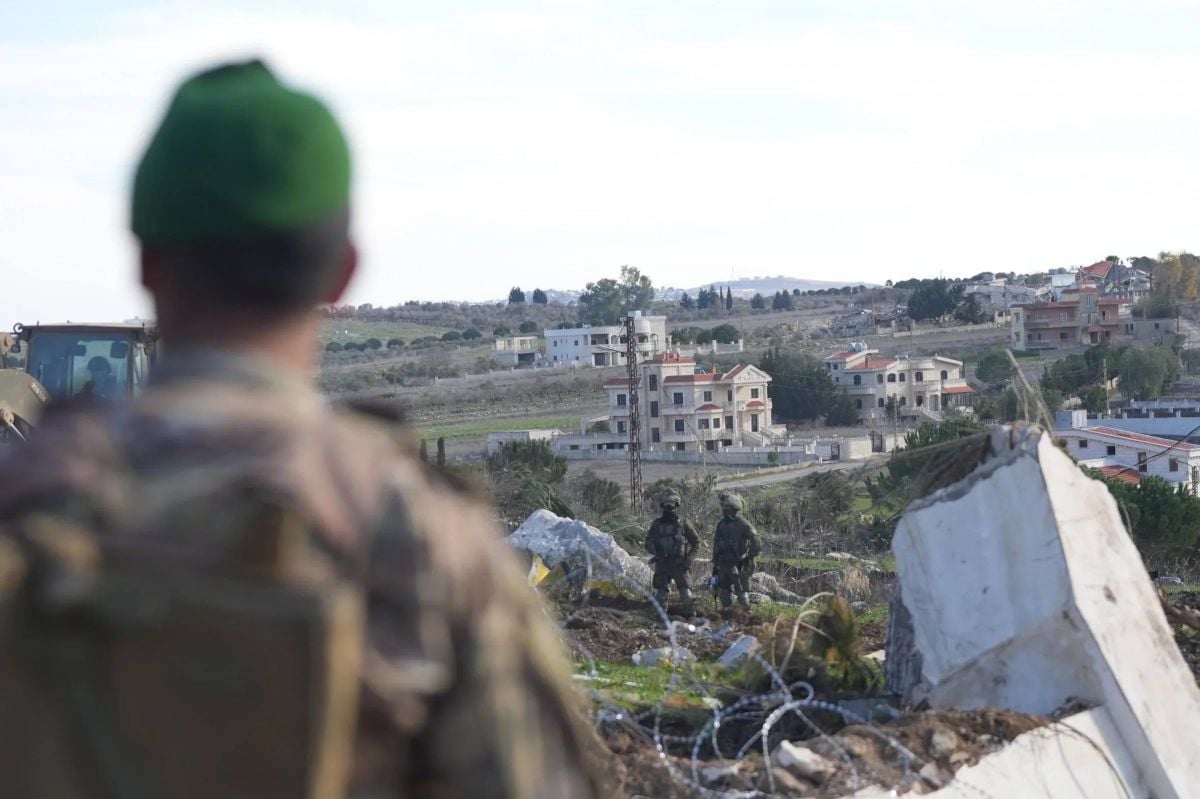
A Lebanese Army soldier behind barbed wire facing Israeli soldiers in Khiam, southern Lebanon. (Credit: Mohammad Yassine/L'Orient Today)






BEIRUT — The Lebanese Army and General Security reaffirmed Friday that their personnel are loyal exclusively to the state and its institutions after Washington imposed sanctions on several Lebanese political and security figures, including active-duty officers accused of providing support to Hezbollah.
The sanctions announced Thursday by the U.S. Treasury mark the first time serving Lebanese security officials have been targeted, increasing pressure on the Lebanese state amid ongoing regional tensions and stalled efforts to reach a broader settlement involving Iran, Israel, the United States, and Iran-backed groups, including Hezbollah.
Among those sanctioned were Brig. Gen. Khattar Nassereddine, head of the National Security Department at General Security, and Col. Samir Hammoud, head of the Lebanese Army intelligence directorate's Beirut southern suburbs branch. The United States accused them of providing intelligence and other forms of support to Hezbollah.
The Treasury Department said Hezbollah had benefited from “illicit support” from Lebanese state security institutions, including the Lebanese Army and General Security, and accused the officials of providing “material, financial, technological or logistical support” to the group.
In a statement, the Lebanese Army said its command had not been informed of the sanctions “through official communication channels,” adding that all officers and soldiers “carry out their national missions with professionalism, responsibility and discipline” in accordance with military directives.
The army also stressed that members of the armed forces remain committed to carrying out their duties “free from any other consideration or pressure.”
General Security also expressed “full confidence” in its officers and personnel and their adherence to laws and regulations, emphasizing that they act “with complete integrity and neutrality.”
The agency added that if it were proven that any employee had leaked information or violated regulations, they would face “fair legal and judicial accountability” in accordance with applicable laws.
The sanctions package also targeted Iran's ambassador to Lebanon, Mohammad Reza Shibani, as well as figures affiliated with Hezbollah and the Amal Movement.
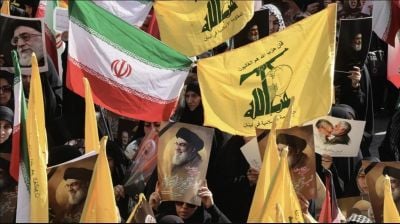
Hezbollah's parliamentary bloc condemned the measures targeting its MPs, saying they “fulfill their national duties in the service of citizens” and work to defend national sovereignty, reform institutions, and preserve civil peace.
The bloc also denounced the sanctions against Lebanese military and security officials as an attempt to intimidate state institutions and a violation of Lebanese sovereignty aimed at pressuring Beirut into accepting what it described as “projects of discord” promoted by Washington.
The bloc said the measures would not prevent its members from continuing their legislative work and called on the Lebanese state to protect its institutions from what it described as foreign interference.
Iran's Foreign Ministry condemned the sanctions on Shibani as “illegal and unjustifiable,” accusing Washington of disregarding international law, the U.N. Charter, and national sovereignty.
Tehran also described the move as a “shameful” attempt to undermine Lebanon's sovereignty and sow divisions within Lebanese society, while reaffirming Iran's commitment to maintaining close relations with Lebanon.
The sanctions follow earlier tensions between Beirut and Tehran. In late March, Lebanon's Foreign Ministry declared Shibani persona non grata and requested his departure, though the decision was ultimately not enforced. Iranian diplomatic sources later said the ambassador had remained in Beirut at the request of Parliament Speaker Nabih Berri and Hezbollah.
The Syrian Social Nationalist Party also criticized the sanctions on Friday, calling the targeting of Lebanese Army and General Security officers a “blatant attack” on Lebanon's sovereignty and its military and security institutions.
In a statement issued Friday evening, a group identifying itself as the “Committee of Friends of the longest-serving prisoner in Zionist jails, Yahya Skaff” — a Lebanese national detained in Israel for more than 20 years — described as “suspicious” the timing of sanctions imposed yesterday by the U.S. administration, targeting notably four Hezbollah officials, individuals close to Parliament Speaker Nabih Berri, as well as an officer of the Lebanese army and another from General Security.
The committee also said the sanctions — which also targeted Iran’s ambassador to Lebanon — “constitute a blatant violation of Lebanese sovereignty and an unprecedented interference in the internal affairs of our country in order to impose its dictates,” particularly by exerting pressure on the army and security services.
It called on “all Lebanese to unite to thwart the objectives of U.S. pressure aimed at subjugating” Lebanon, arguing that the measures are part of “a series of pressures exerted on the army and its command in order to alter their national doctrine.”

 7 p.m. recap: Saudi Arabia warns Houthis as Israeli strikes hit south Lebanon