







Prime Minister Nawaf Salam speaks during a press event at the Elysee Presidential Palace in Paris, France, April 21, 2026. (Credit: Ludovic Marin/Reuters)






BEIRUT — Hours before a second round of direct talks with Israel in Washington on Thursday, Prime Minister Nawaf Salam said he is “convinced” the United States has "leverage over Israel" on a cease-fire and a withdrawal from southern Lebanon.
“We are entering these negotiations convened by the U.S. convinced that the U.S. is the party that can have leverage over Israel," Salam told The Washington Post on Wednesday after meeting French President Emmanuel Macron in Paris. “Their role was critical in reaching the ceasefire, and we hope they will continue exercising their leverage over Israel.”
Salam said Lebanon will not sign any agreement that does not include a full Israeli withdrawal. “We cannot live with a so-called buffer zone,” he said, “an Israeli presence where Lebanese displaced people are not allowed to return, where destroyed villages and towns cannot be rebuilt.”
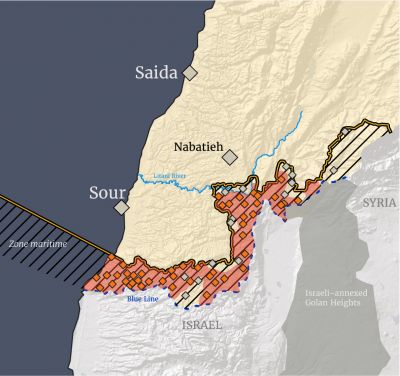
The prime minister also called for extending the fragile U.S.-brokered cease-fire, which is set to expire at the end of the week. Responding to domestic criticism about engaging directly with Israel while Lebanon is under fire, Salam said the diplomacy is not “a concession to anyone.”
Salam and President Joseph Aoun support direct negotiations with Israel, which Hezbollah dubbed a “concession.” Aoun said Wednesday that Beirut will seek to extend the 10-day truce, in effect since April 17. Lebanon is pushing for a two-month extension.
Lebanon has set several conditions for the Washington talks, including a halt to Israeli attacks and targeted killings, a full Israeli withdrawal from occupied areas, and the abandonment of the “buffer zone,” the release of prisoners held by Israel, and the full demarcation of land and maritime borders.
'A state cannot have two armies'
Asked about Hezbollah’s weapons, Salam said only a Lebanese-led process can address the issue. He added that Lebanon did not initiate the March 2 war, which followed a Hezbollah attack on Israel after the killing of Iran’s supreme leader by a joint U.S.-Israeli strike.
Faced with Israeli criticism that his government hasn’t done enough to disarm Hezbollah, Salam said it made “bold decisions” and showed progress by confiscating weapons and outlawing Hezbollah military operations.
He said a state monopoly over arms is a “Lebanese interest,” regardless of Israeli demands, because “it’s high time to recognize that a state cannot have two armies.”
“Disarmament is a process; it’s not something that’s going to happen overnight. But what’s more important is that we have shown seriousness,” he added. He said the government would not be “intimidated” by Hezbollah.
Salam said Lebanon is seeking support from partners, including the United States and France, to strengthen the army through equipment and training, as well as to provide funds for an “unprecedented humanitarian tragedy” and for huge reconstruction needs.
Israeli attacks and threats have displaced over one million people and destroyed entire villages and neighborhoods.
Salam said France would have a big role in bolstering the army and rallying aid for devastated villages. Lebanon, he said, needs to “mobilize all our friends.”

 8 p.m. recap: Israel again threatens Beirut’s south suburbs; 2 ships hit near Hormuz; Riyadh football matches canceled