


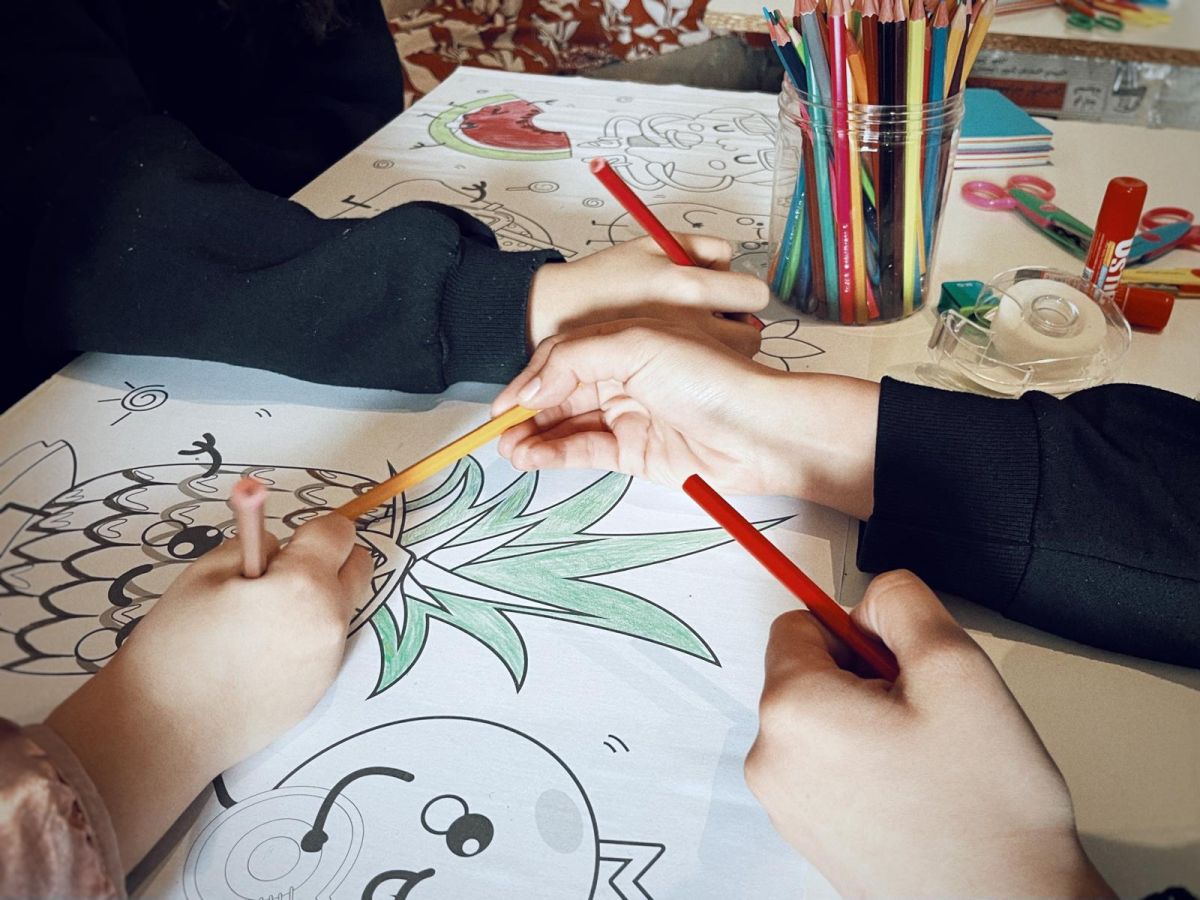
Crayons, colors, and activities: at Beit Beirut, the youngest recreate a space of their own. (Credit: Rayanne Tawil/L’Orient-Le Jour)






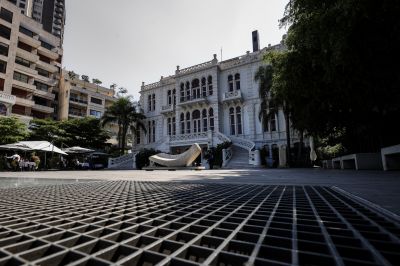
On the ground floor of Beit Beirut, in the Sodeco area, exhibition labels have disappeared, replaced by board games.
Children move from room to room, linger over a drawing table, and go from one workshop to another as parents watch from a distance. Once devoted to the memory of conflict, the space now invites people in differently: survival stories are answered with chess boards, and heavy silences give way to children's footsteps.
The number of visitors varies. The day before, about 50 people had come and gone. Today, the atmosphere is more subdued, voices lower. There is talk of nighttime strikes, and of the roar of planes overhead in the morning. Fatigue is everywhere, almost palpable.
That is precisely why the doors remain open.
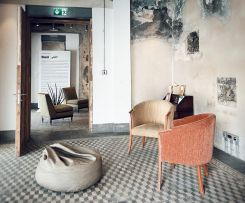
Reopening, but shifting the perspective
"One of the aims of Hkeeli (a cultural and educational initiative launched at Beit Beirut to foster dialogue around memory, creation and society), is to make everyone feel at home here," explains Delphine Darmency, Franco-Lebanese journalist and co-director of the project.
From the earliest days of the war, the team rejected the idea of closing. That would have been too contradictory to the very nature of the space. "Beit Beirut is a place for speaking out, for meeting, for dialogue. Closing it simply made no sense."
But reopening couldn’t just mean business as usual. The building itself holds memories of conflict that, in the present, can feel too overwhelming. "It can be tough. Who would come to see war on display while living through it?" Hence the decision: shift the perspective, lighten the approach. From the outset, the intention was to reopen in a new way.
The first week involved simple, almost minimalist offerings — games, drawings, film screenings — activities that place no demands on already stretched visitors. "It’s for everyone, with no distinction." Little by little, the space offers more structured formats: guided tours, discussion spaces, psychological support. But carefully. "We need specialists, so as not to risk worsening what is already fragile."
A space to experience, with no instructions
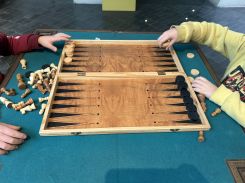
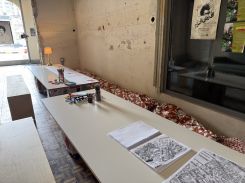
There’s no predetermined path here. In one room, children explore materials and print textures. In another, a group learns the rules of a game. In the center, chess and backgammon boards stay open, as if in mid-play. "We don’t want anything too academic," says Rana Karout, the museum supervisor and facilitator. "But it’s also about maintaining a cultural standard."
That’s where the balance lies: keeping an open, fluid space where people can move freely. "No one tells you what to do."
For her, that’s essential. "Beirut remains a cultural home — but one you live in, not a place viewed from afar. Culture must remain accessible."
Her workshops emphasize experimentation: printing, mixing, trying things out. The result doesn’t matter. "You shouldn’t fear making mistakes."
Because the goal isn’t production, but a pause. "To offer a moment away from war. To keep creating, despite everything."
Breathing, despite everything
In one room, Fida Malak, a committee member, is about to start her session. "I ask them to breathe, to move their fingers — on days when you can barely feel your body." She offers stories to the youngest, discussions to the older ones, always rooted in everyday life: sibling relationships, small conflicts, daily actions. "It’s about reminding them of some kind of normalcy. So they don’t feel like they’ve lost it."
A bit further on, a woman watches her two children play chess. Displaced from the South, she has returned for the second time.
"It was good. I liked it," she says simply. In shelters, space shrinks, is divided, becomes fragile. Here, even briefly, it opens up. "It makes you feel like not everything is closed."
A place becoming itself
The initiative is still evolving. "This first week was a test phase," says Delphine Darmency. Working with nearby shelters and schools, the team tweaks, observes, adjusts. In just a few days, nearly 160 children have participated.
Possibilities are taking shape: games about Beirut’s memory, setups combining learning and play, items to take home. "We are neither a school nor a simple recreation space. We remain a museum."
Other projects are emerging. Manal Hamdoun, a Hkeeli collaborator, is developing a program to give displaced children a routine — a place to come, settle in, do homework. "They need points of reference, structured time. Something concrete."
For now, the space is half-filled. Some rooms are hard to populate, some activities start slowly. Fatigue, the weather, restless nights all have an impact. "It’s mainly mental," notes Rana. "Children don’t know how to study anymore, or even how to dance. The parents are exhausted."
And yet, something endures.
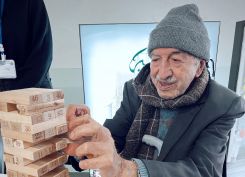
In one room, a child presses paint onto a sheet. In another, cards slip from hand to hand. At the center, the chess game continues undisturbed — as if, for a moment, time had drawn in around the board.
The program of activities can be found on the Instagram page of Hkeeli-Beit Beirut.

 7 p.m. recap: 1 person killed near border with Lebanon; 200 kilos of explosives carried by mules; Riyadh shuts its airspace