



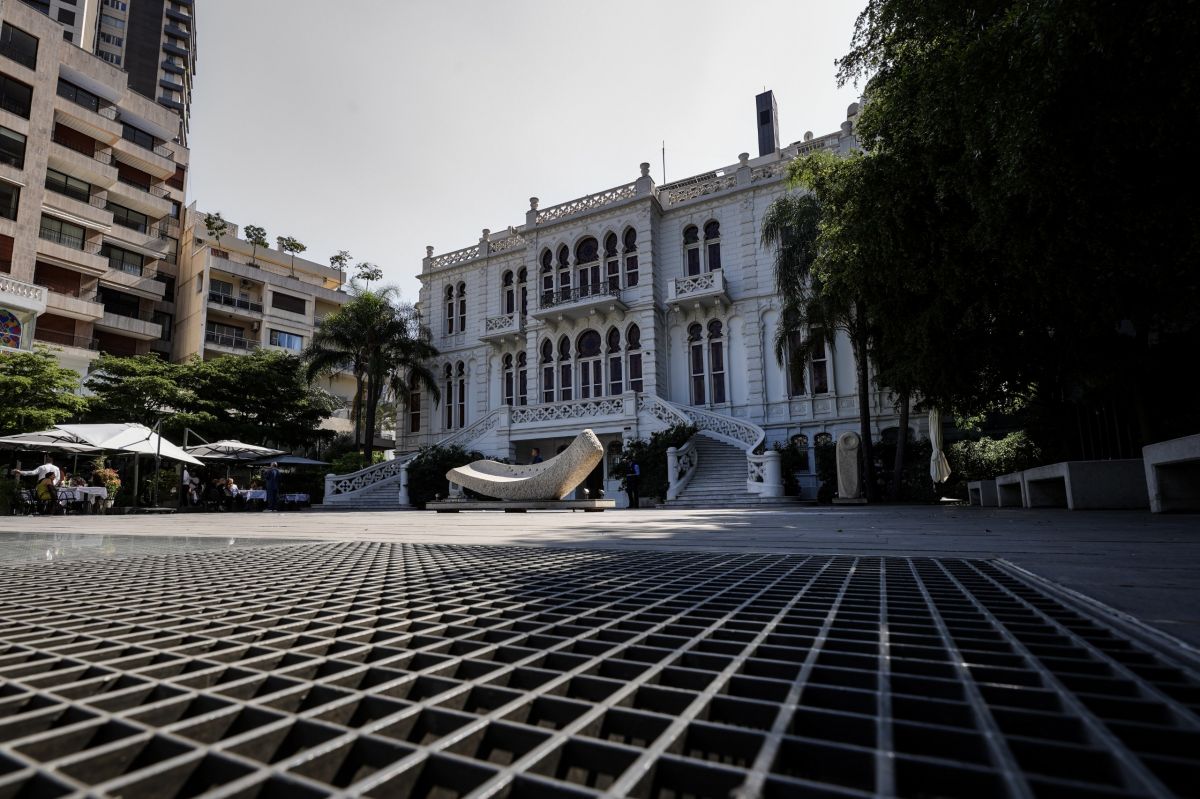
In Beirut, the façade of the Sursock Museum, a cultural symbol now caught in the debate over priorities during a time of crisis. (Credit: Mohammad Yassine/L'Orient-Le Jour)






The controversy was sparked by a text. A few lines posted online, quickly taken down, that were enough to raise a larger question: what should a cultural institution do when everything else is collapsing around it?
In its initial version — not approved by the museum’s management according to the latter — the Sursock Museum's statement linked its call for donations to a country once again plunged into war, mentioning the massive displacement of people while appealing for funding to secure its collections.
In Beirut, where schools, sidewalks and public spaces are now sheltering displaced families, this framing was seen by some as out of touch.
When asked by L’Orient-Le Jour about the episode, the museum's director, Karina al-Helou, admitted it was a mistake both in process and timing: "The text was withdrawn because it was not authorized in either form or substance. The campaign was not validated: right now, we need to show solidarity with displaced people and amid the humanitarian crisis. We sincerely regret it."

But the underlying question remains: why, in such a context, should funds be raised for a museum? On this point, the director emphasized the ongoing fragile financial situation, which predated the current war: "The museum has been continuously fundraising since 2020, in a context of extreme vulnerability. The funds in question were solely for essential conservation costs (energy, maintenance, staff), which are particularly critical during wartime. This does not conflict with humanitarian aid, with which we are fully in solidarity." In this way, she rejects the idea of a competition between heritage and social urgency — whereas critics saw an implicit hierarchy.
On social media, the debate quickly moved beyond the museum itself to become a true reflection of deeper tensions.
On one side, there was immediate outrage, fueled by images of the displaced and a sense of injustice: several users called for funds to be redirected to people, some even denouncing an "indecency" or a "moral blindness" in the face of the crisis.
‘Culture is not a luxury’
On the other side, there was an equally strong defense of cultural institutions, accusing critics of giving in to a simplistic opposition. "Attacking a museum trying to protect its collections during wartime is not just ignorant, it's dangerous," read several comments. "Culture is not a luxury. It's identity, memory and history." This defense draws on Lebanon's recent history, where artworks have often had to be moved, hidden or restored after conflicts.
Between these two sides, the debate has become tense: some refuse to create a hierarchy, while others feel the hierarchy imposes itself.
Among the most widely shared criticisms was a letter from photographer Mohammad Siblini, which crystallized the unease. In it, he denounces "polite hypocrisy" and a cultural discourse "detached from reality," pointedly asking, "What are you protecting exactly?" — while at the same time, more ambiguously, acknowledging the importance of the institution itself.
Faced with this polarization, the museum is trying to redefine its role, not only as a guardian of objects, but as an actor in the present, on its own scale.
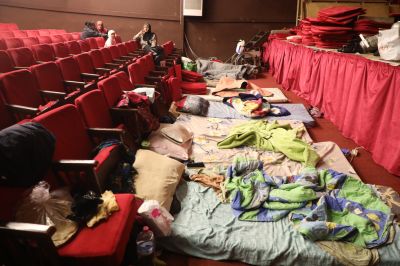
Karina al-Helou highlighted initiatives aimed at society, especially younger people. Launched in 2025 in public schools, the Soksok project uses an educational book created by the museum, combining stories, activities and teaching tools to introduce children to art and heritage. "In light of the current situation, this project is being adapted to be implemented in shelters (...) It aims to offer a space for expression and a moment of respite amid extreme violence," she said. In a country where childhood is directly exposed to war, the initiative seeks to be both cultural and psychosocial.
The director also noted that some recent exhibitions have attempted to establish the museum as a forum for critical reflection on the country's history. An exhibition dedicated to Abdel Hamid Baalbaki was an example: through paintings rooted in rural landscapes, popular figures and social tensions, it showcased "a body of work that documents social transformations and the country's fault lines." Beyond the retrospective, the exhibition could be seen as an attempt to reposition the museum: not just as a place for conservation, but as a space able to connect artistic memory with the political and territorial realities of Lebanon — specifically the south, the artist's home region and now at the heart of violence.
And to conclude, the director asserted the museum's full participation in Lebanese society: "The museum acts both to preserve a common heritage and to remain present, on its scale, with society. The Sursock Museum is part of this country, with its fragility, resilience and mourning."
By calling for an end to the controversy — "We no longer want controversy in these difficult times; now is the time for solidarity. This is not a time for fundraising or social division. We regret that text" — the institution is trying to ease a situation that has surpassed it.
But beyond the Sursock case, a broader question remains: how can culture survive when humanitarian emergencies are so overwhelming? And above all, how can we talk about it without seeming to turn away from this reality?


 7 p.m. recap: 1 person killed near border with Lebanon; 200 kilos of explosives carried by mules; Riyadh shuts its airspace