







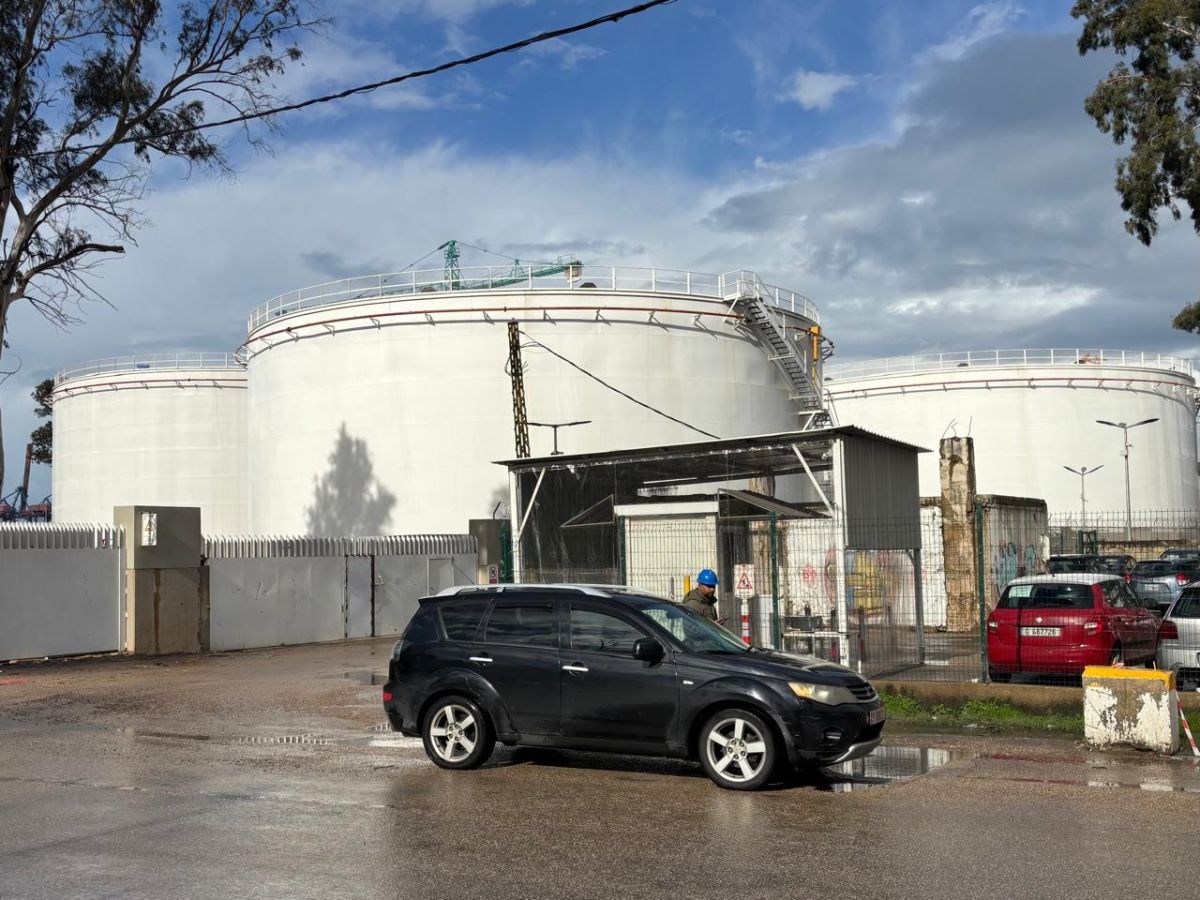
Fuel storage tanks near the port area of Beirut, Jan. 13, 2026. (Credit: Philippe HAGE BOUTROS/L'Orient-Le Jour)






Fuel prices in Lebanon have continued to rise more than two weeks after the resumption, on March 2, of the war between Israel and Hezbollah in the wake of a broader regional conflict sparked by Tel Aviv and Washington against Tehran.
According to the latest pricing schedule published by the Ministry of Energy and Water, gasoline prices have increased by more than 25% since the beginning of the month, while diesel has soared by over 50%. Domestic gas has risen by nearly 29% over the same period.
Here are the new rates:
– 20 liters of 95-octane gasoline: 2,289,000 Lebanese Lira or $25.57 (that’s +73,000 LL or +$0.81 since last Friday).
– 20 liters of 98-octane gasoline: 2,330,000 LL or $26 (+73,000 LL; +$0.81).
– 20 liters of diesel (for vehicles): 2,122,000 LL or $23.7 (+71,000 LL, +$0.80).
– Kiloliter of fuel oil (used to supply private power generators, priced in dollars): $1099.39 (+$39.6).
– Standard gas cylinder: 1,803,000 LL or $20.1 (+58,000 LL or $0.65).
The exchange rate in Lebanon is currently 89,500 LL to the dollar.
These increases reflect, with a delay, those seen on the global crude oil and natural gas markets, which are likely to rise further given recent developments on the ground. After Israeli strikes on Iranian hydrocarbon production facilities – which, according to American and Israeli officials cited by Axios, were approved by the United States despite denials from the White House – Iran retaliated by targeting infrastructure in Gulf countries, notably in Qatar.
On Thursday morning, the nearest-dated Brent futures contracts were trading above $115, one of the biggest spikes since 2022, and around $97 for U.S. WTI. Metric ton diesel was trading at nearly $1,400, about $200 shy of the 2022 peak.
No subsidies planned
Diesel is rising more than gasoline not only because it is widely used to generate electricity, for transportation, and by the armed forces, but especially because its supply is more limited – mainly because of refining capacity and geopolitical tensions, according to Maroun Chammas, president of the Association of Fuel Importers in Lebanon. “One of the consequences of the war,” he explained, “is that, with disruptions in production and supply of Qatari gas, Europe, which no longer imports Russian gas due to U.S. sanctions, is now forced to consume more diesel. This further pushes prices up.” However, he noted that the increase now seems to be slowing compared to its pace at the beginning of the war.
The rise in diesel prices in Lebanon is likely to take a heavy toll on household expenses by the end of the month, since this fuel is used by private generator owners and ministry-set tariffs are dependent on its price.
A source at the Energy and Water Ministry told L'Orient-Le Jour that the country is obliged to follow global prices to avoid any fuel shortages, and clarified that there are no plans for subsidies on electricity or fuel. The source assured that the country continues to be regularly supplied with fuel, and even Electricité du Liban, which claimed it would soon run out in the early days of the war, has just received a new shipment of fuel for the Zahrani and Deir Ammar power plants in recent days.

 8 p.m. recap: Israel again threatens Beirut’s south suburbs; 2 ships hit near Hormuz; Riyadh football matches canceled