



A part of the facilities of the immense South Pars/North Dome gas field, the largest known gas reserve in the world. This facility was hit by an Israeli strike, Iranian state television announced on Wednesday, March 18. (Credit: AFP)






This marks a new development in the war with Iran, one that could have far-reaching consequences.
Following a strike on Iranian facilities in the vast South Pars/North Dome gas field – attributed by Iran to Israel and the United States on Wednesday morning – and amid Iranian threats of retaliation in the Gulf, Qatar announced in the evening that an Iranian attack had targeted the country's main gas installation.
Meanwhile, the Saudi Ministry of Defense stated on its X account that it had "intercepted and destroyed five drones that attempted to approach one of the energy facilities in the Eastern region."
"Qatar expresses its strong condemnation and denunciation of the brutal Iranian attack against the Ras Laffan industrial zone," said the Ministry of Foreign Affairs in a statement, decrying "a dangerous escalation, a blatant violation of (its) sovereignty and a direct threat to (its) national security."
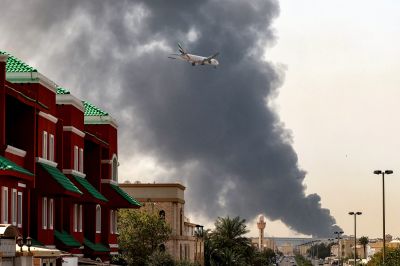
After the attack, Qatar’s Ministry of Interior said civil defense was "handling a fire in the Ras Laffan area" after an "Iranian" attack that caused "considerable" damage, according to a statement from state energy company Qatar Energy. Shortly after, civil defense authorities clarified that the fire was "under control." The Ras Laffan complex had been evacuated earlier in the day.
On Wednesday morning, Iranian state TV announced that a U.S.-Israeli strike had hit Iranian facilities in the South Pars/North Dome gas field – the world’s largest known gas reserve, which Iran shares with Qatar. The field is located in the port city of Kangan.
Iranian threats
In response, the Iran warned it would target energy infrastructure in its Gulf neighbors. "We are considering striking the fuel, energy, and gas infrastructure" of countries from which attacks were launched, declared the Khatam Al-Anbiya joint command center in a statement, as Tehran accused Gulf states of allowing U.S. forces to use their territory for attacks. State TV published a list of potential targets, including oil and gas facilities in Saudi Arabia, Qatar and the United Arab Emirates.
Iran’s president reiterated the threats in the evening , warning of the risk of "uncontrollable consequences." Iranian parliament speaker Mohammad Bagher Ghalibaf added in a separate message, posted on X, that "an eye-for-an-eye logic is now in effect and a new level of confrontation has begun."
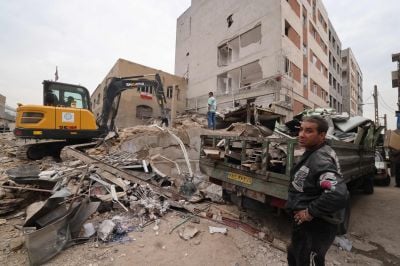
Late in the evening, the Revolutionary Guards threatened the U.S. and Israel with destruction of energy infrastructure. "We warn you once again that you made a grave mistake in attacking the energy infrastructure of the Islamic Republic, and that the response to this attack is underway," they said. "If this happens again, attacks against your energy infrastructure and that of your allies will not cease until there is total destruction, and our retaliation will be much harsher than tonight’s attacks," according to a statement carried by the Iranian Irib and Fars news agencies.
The South Pars/North Dome gas field supplies about 70 percent of the natural gas consumed in Iran, which began exploiting in the late 1990s. Israel had already struck Iranian installations at this site during the twelve-day war in June 2025.
Oil prices climb
Markets reacted swiftly to the development, with oil prices rising again on Wednesday after news of the strike. Brent crude, the international oil benchmark, was up 4.38 percent at $107.95 just past 13:20 GMT, shortly after surging over 5 percent. Its U.S. counterpart, West Texas Intermediate, gained 1.87 percent to $98.01.
Doha and Abu Dhabi condemn the strike
Before the attack on the Ras Laffan complex, Doha had condemned the attacks on Iranian facilities. "Israel's targeting of facilities linked to the Iranian South Pars gas field, which forms part of the Qatari field, is a dangerous and irresponsible step in the context of the current military escalation in the region," Foreign Ministry spokesperson Majed al-Ansari wrote on X. "Targeting energy infrastructure represents a threat to global energy security, to the people of the region and to its environment," he added. In the evening, Qatar declared Iranian military and security attachés persona non grata.
Abu Dhabi also condemned the attack, calling it "a dangerous escalation." "Targeting energy infrastructure represents a direct threat to global energy security ... It also carries serious environmental consequences and exposes civilians, maritime safety, as well as vital civil and industrial infrastructure to direct risks," the Ministry of Foreign Affairs said in a statement.
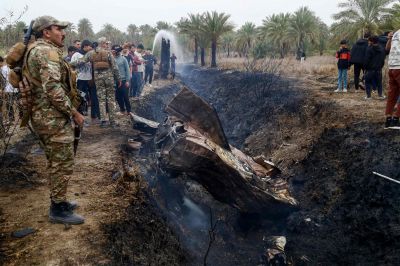
In the afternoon, Iraq's Ministry of Electricity said that Iran had halted all its gas supplies to Iraq.
In the night of March 7, four oil depots and a logistics site were struck by Israel in Tehran and its surroundings, causing major fires. That was the first reported attack on Iranian energy infrastructure since the start of the war. "Those are Israeli strikes on fuel depots," Energy Minister Chris Wright said at the time on CNN, asserting that "the United States is not targeting any energy infrastructure" in Iran. "We have no plans to target the Iranian oil industry, their gas industry or any part of their energy sector," the official assured.
 2 Israeli soldiers injured in 'operational accident,' as army continues attacks in the South