

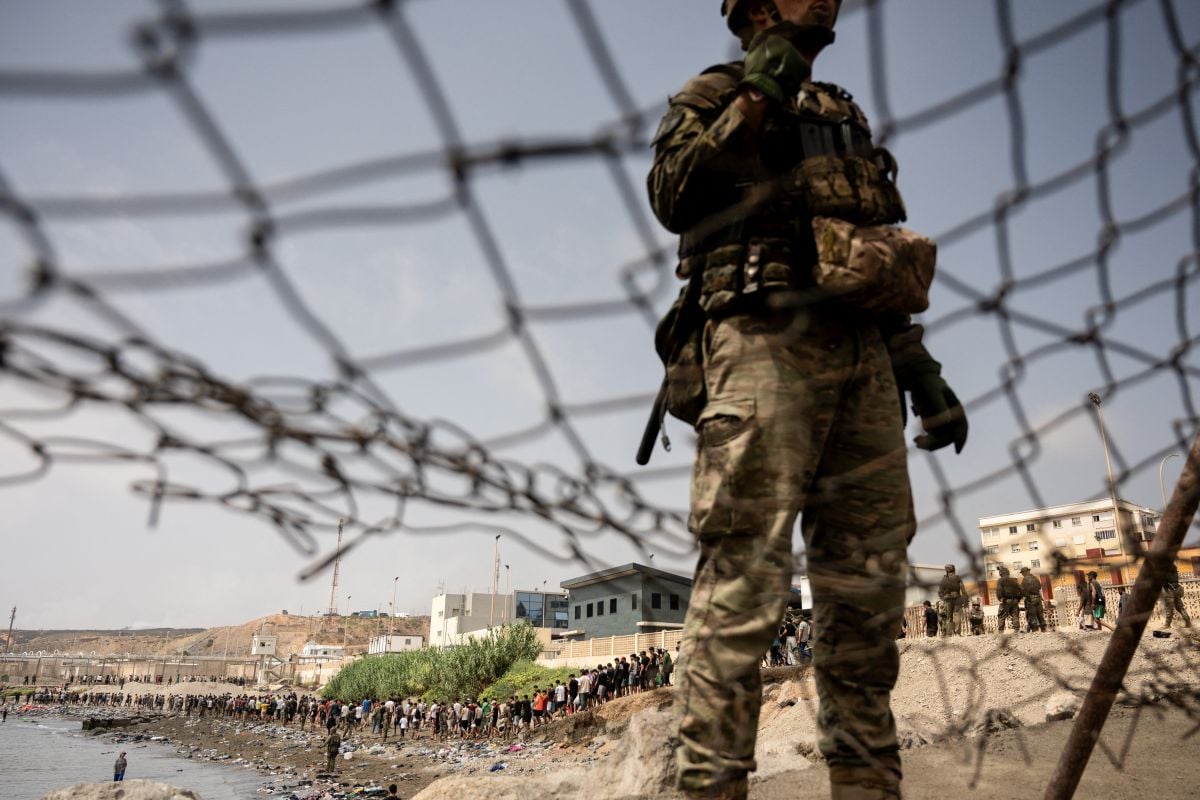
Migrants cross back to Morocco after they crossed the border to enter Spain's north Africa's Ceuta enclave on July 31, 2026. (Credit: Jorge Guerrero/AFP)






European countries held an emergency video conference on Tuesday, Aug. 4, after more than 60,000 people surged into the Spanish enclave of Cetua last Thursday, expressing increasing concerns about a new migration crisis. France and Portugal have announced tighter border controls, while Italian Prime Minister Giorgia Meloni, quickly joined by Finland and Denmark, called for the closure of the Schengen area with the country. The reaction came despite the fact that Ceuta is located on the African continent, across the Mediterranean from mainland Spain, and nearly all the migrants have since been returned to the neighboring Moroccan city of Fnideq. In the news Spain, Morocco try to halt deadly rush on Spanish enclave after tens of thousands cross in a day Still, the episode reignited divisions among European countries and fueled...
European countries held an emergency video conference on Tuesday, Aug. 4, after more than 60,000 people surged into the Spanish enclave of Cetua last Thursday, expressing increasing concerns about a new migration crisis. France and Portugal have announced tighter border controls, while Italian Prime Minister Giorgia Meloni, quickly joined by Finland and Denmark, called for the closure of the Schengen area with the country. The reaction came despite the fact that Ceuta is located on the African continent, across the Mediterranean from mainland Spain, and nearly all the migrants have since been returned to the neighboring Moroccan city of Fnideq. In the news Spain, Morocco try to halt deadly rush on Spanish enclave after tens of thousands cross in a day Still, the episode reignited divisions among European countries and fueled...

 7 p.m. recap: 1 person killed near border with Lebanon; 200 kilos of explosives carried by mules; Riyadh shuts its airspace