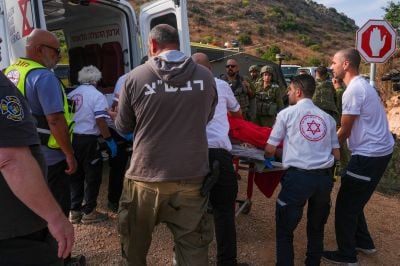



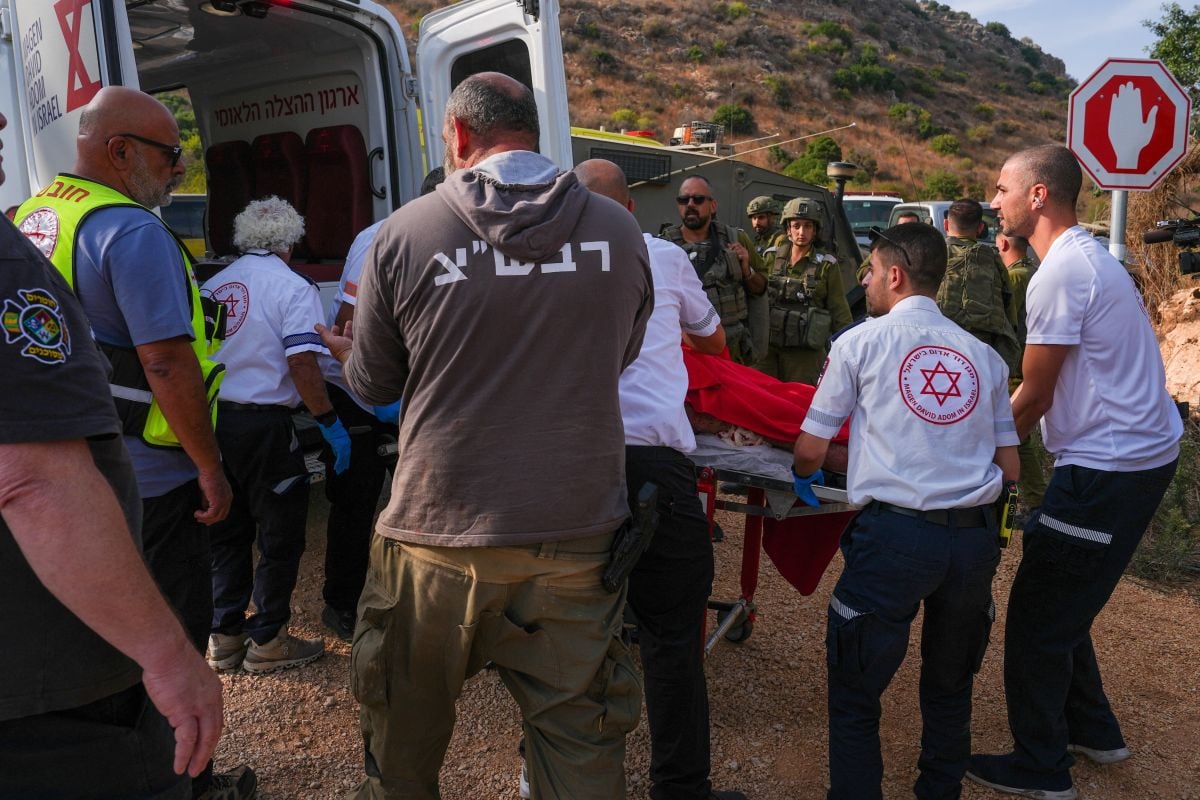
Israeli paramedics place a person on a stretcher in an ambulance after an explosion near Kiryat Shmona, in northern Israel, on Oct. 12, 2026. (Credit: Ayal Margolin/Reuters)






Today's top story
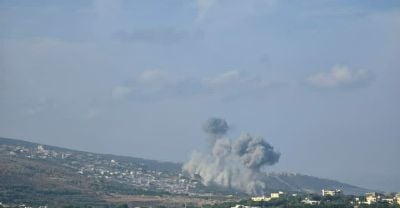
A high school student was killed and about 20 people injured Monday in the explosion of an unexploded ordnance during a school trip near Neot-Mordechai in northern Israel, across from Mais al-Jabal in southern Lebanon. The toll was confirmed by Israeli Defense Minister Israel Katz, who announced that an investigation has been opened. According to initial reports from the Israeli police, the victims, students and teachers from a religious high school, were struck by the detonation of an unexploded projectile. The army deployed soldiers and helicopters to evacuate the injured and is working to determine whether the excursion had the necessary authorizations. The type of ordnance and its origin have not yet been established.
Why it matters
The explosion that occurred in northern Israel is a reminder that, even far from the fighting, the war continues to claim lives. In southern Lebanon, three people have been killed in two days. On Monday, Edgard Jillo, an Internal Security Forces (ISF) officer and farmer, was killed by a landmine explosion while inspecting his land in Ain Ibl. The previous day, a retired soldier was killed by artillery fire near Yater, and another man died in an ordnance explosion in Froun. "Residents of the South have the right to live safely in their villages, to go to their land, and to harvest their olives without fearing for their lives," Prime Minister Nawaf Salam reiterated Monday, condemning the ongoing threat of Israeli strikes and explosive remnants of war. On both sides of the border, residents remain exposed to the dangers left behind by the clashes, as Israeli military operations continue in southern Lebanon despite the framework agreement signed on June 26 under U.S. auspices.
What to watch
The Iranian Revolutionary Guards claim responsibility for a strike on a supertanker in the Strait of Hormuz. According to Tehran, the ship caught fire after attempting to pass through this strategic corridor without authorization. Since the start of the war, Iran asserts its control over the strait, through which about one-fifth of the world’s hydrocarbons used to transit before the conflict. The United States, for its part, is enforcing a naval blockade on Iranian ports and escorting tankers in the area, where tensions remain high.
Saudi Arabia extends suspension of operations at Riyadh airport after new Houthi attacks. Saudi Arabia has announced that it is extending the suspension of operations at King Khalid International Airport in Riyadh, which has been targeted in recent days by a series of attacks claimed by Yemen's Houthi rebels. No date has been set for the resumption of operations, while several airlines, including Gulf Air and Etihad, have canceled flights to and from the Saudi capital. The Lebanese national carrier, Middle East Airlines (MEA), has announced changes to its flight schedule. On Sunday, an attack on the airport left at least one dead and eleven injured, according to Saudi authorities. The Houthis have also claimed strikes on energy infrastructure and other airports in the kingdom, including Dammam, calling on travelers and airlines to avoid Saudi airports except those in Mecca and Medina. Saudi Energy Minister Abdulaziz bin Salman acknowledged Monday that these attacks are testing the kingdom's infrastructure and resilience, promising a "firm response" and noting that energy security cannot be taken for granted.
Elsewhere in the news
- The EU prepares a new security mission in Lebanon. On Monday, the foreign ministers of the 27 EU member states approved the creation of a European mission separate from UNIFIL, with an initial three-year mandate. Comprising around 150 personnel, it aims to strengthen the Lebanese Army and Internal Security Forces, particularly in border control, intelligence, and the fight against smuggling. EU foreign policy chief Kaja Kallas hopes for ground deployment within two months. The initiative comes as the UNIFIL mandate is set to expire on Dec. 31, 2026, fueling concerns about a potential security vacuum in southern Lebanon.
- Mules used to smuggle 200 kilos of explosives across the Syrian-Lebanese border. The Lebanese Army announced it had seized about 200 kilos of explosive material in the Qasr-Hermel area, in northern Bekaa. The explosives, hidden in bags carried by mules, were to be smuggled in from Syria. The smugglers fled back across the border, and coordination is underway to identify those involved. According to a security source cited by L’Orient-Le Jour, this seizure is separate from the several hundred kilos of explosives discovered on Oct. 5 in Dahr al-Baidar, in a vehicle traveling from Bekaa to Beirut—a case in which two Hezbollah-linked suspects are to be questioned again by the courts.
- Electricity: Hasbani urges Salam to act before "the point of no return." In a letter to Prime Minister Nawaf Salam, MP Ghassan Hasbani said, "this is the week of decisions and could be the point of no return," urging the government to immediately enact measures to avert an electrical, economic and social crisis. He noted that the government has laid the foundation for sustainable sector reform by forming a regulatory authority, enforcing the 2002 law, and appointing a new board to Électricité du Liban (EDL). However, the global energy crisis and funding difficulties for fuel purchases are reducing supply hours, while rising fuel and generator prices are weighing on households. Hasbani recommends three urgent measures: finance fuel purchases this month by settling part of the public institutions' arrears and those related to power exemptions in the South; adopt variable pricing starting in early 2027; and open extra credit lines to clear arrears until the new pricing comes into force. On Friday evening, Energy Minister Joe Saddi, who had suspended his participation in Cabinet meetings to protest the government's handling of the electricity file, held a news conference. He said the quickest way to fund EDL's fuel purchases, which have doubled in cost since the war between the United States and Iran began, would be to recover bills unpaid by public institutions and other entities. These arrears amount to several hundred million dollars, while just about $50 million has been settled this year.
- In Moscow, Rajji seeks a Russian role in support of Lebanese sovereignty. Lebanese Foreign Minister Joe Rajji was received in Moscow by his Russian counterpart Sergei Lavrov to discuss bilateral relations and the situation in Lebanon and the region. Lavrov reiterated Russia's support for Lebanon's sovereignty and territorial integrity, expressing readiness to help against "Israeli aggression." Rajji, for his part, emphasized the need for an Israeli withdrawal and an end to strikes, while highlighting the difficulty of the situation — on one hand Israel's refusal to withdraw, on the other Hezbollah's refusal to lay down its arms. He reaffirmed the state’s determination to assert sovereignty over all territory and give state institutions the monopoly on weapons, calling on Moscow to play a positive role in Lebanon's stability. This request comes as Russia maintains close ties with Iran and Hezbollah, which opposes direct talks with Israel under U.S. auspices.