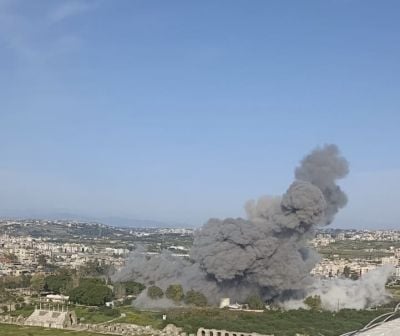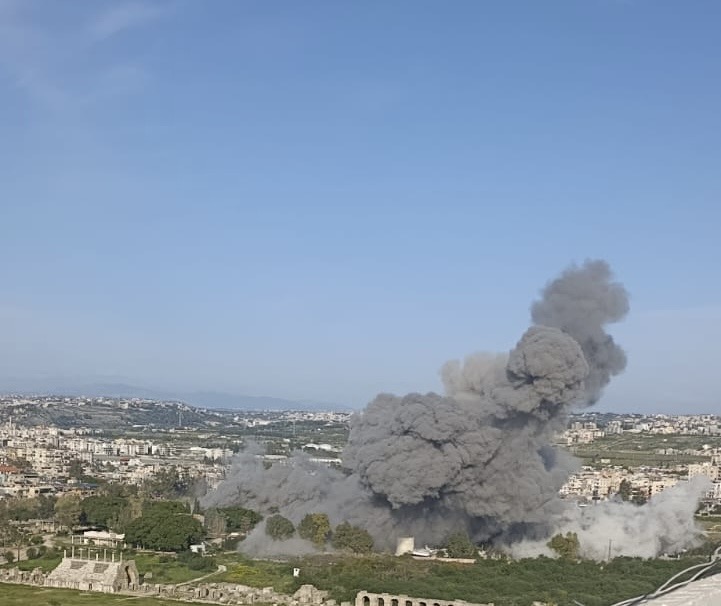
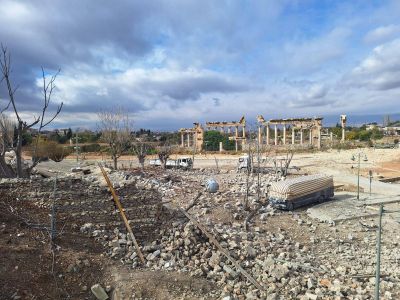
Israeli strikes near the archaeological site of Tyre, a UNESCO World Heritage site. The shockwave damaged modern infrastructure located near the ancient ruins. Photo provided by Mountasser Abdallah.






An Israeli strike hit the outskirts of the archaeological site of Sour, a Phoenician landmark listed as a UNESCO World Heritage site, on Friday around 4 p.m.
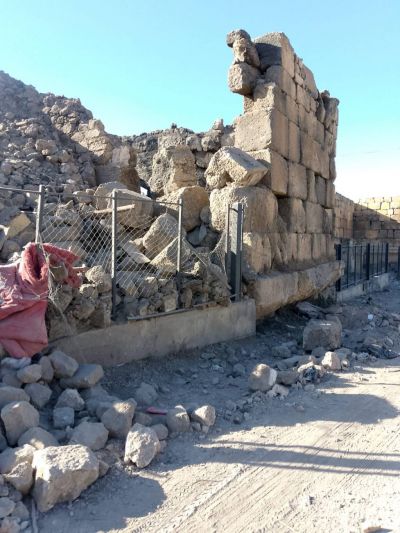
While the ancient ruins appear to have been spared, the blast damaged the site’s modern infrastructure. Jad Tabet, architect and advisor to the Lebanese culture minister, confirmed to L’Orient-Le Jour that “the future museum in the area, which is still empty, sustained damages: the windows were shattered and some were literally blown out by the blast.”
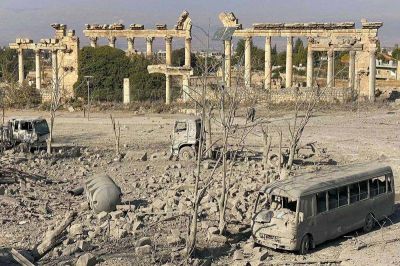
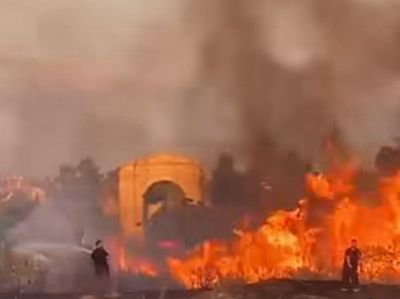
The attack also sparked a brush fire at the center of the historic perimeter. “The blaze was quickly brought under control by emergency services, preventing it from spreading to the key neighborhoods of Buss and Mina,” Tabet said. These areas house treasures from the Roman and Byzantine periods, including the hippodrome, necropolis, baths and the famous triumphal way. In response to this direct threat to Lebanon’s heritage, Tabet filed an official complaint to UNESCO.
Amid escalating regional tensions, Lebanon has sought to draw attention to another, less visible but equally critical front: the preservation of its historical memory. Against this backdrop, Culture Minister Ghassan Salameh reached out to UNESCO to warn of the risks the war poses to the nation’s key cultural sites, including Sour and Baalbeck, two major archaeological complexes of the ancient Mediterranean. Those two areas are now at the center of Israel's military attacks.
During a phone call with UNESCO Director-General Khaled al-Enany in Paris, Salameh urged the organization to intervene with the states involved, reminding them of their international obligations to protect cultural property during conflicts. On behalf of the Lebanese government, he called on neighboring and warring states to take all necessary measures to safeguard Lebanon’s cultural assets and to refrain from any action likely to damage them.
The appeal includes the National Museum of Beirut and all Lebanese archaeological and historic sites, particularly those listed as World Heritage sites or afforded enhanced protection under the 1954 Hague Convention. Salameh emphasized that protection should extend not only to the monuments themselves but also to their immediate surroundings, which should not be exposed to military operations.
Following this exchange, Lebanon’s permanent delegation to UNESCO continued lobbying the organization’s secretariat and relevant bodies to secure support.
“We are working to strengthen coordination with UNESCO services to activate the organization’s emergency mechanisms and adapt the Lebanon support action plan already established by the Executive Board in October 2024,” Hind Darwich, ambassador and Lebanon’s permanent delegate to UNESCO since September 2025, told L’Orient-Le Jour. She said the mobilization is being coordinated closely with Lebanese authorities, including the Lebanese National Commission for UNESCO and relevant ministries, as well as UNESCO’s regional office in Beirut.
Special attention is being paid to protecting cultural heritage. “Our efforts especially aim to strengthen protective measures around the 34 Lebanese cultural sites which, as decided by the UNESCO committee for the protection of cultural property in case of armed conflict in November 2024, already benefit from enhanced protection,” Darwich said. Measures under consideration include placing the international emblem indicating protected status. The diplomat also noted that expanding this protection to additional sites in Rashaya, Tripoli, Hermel, Beirut and other regions is under review.
In the same spirit, a rapid rehabilitation project for a depot in Jbeil is also underway to shelter threatened cultural objects. “UNESCO has instructed its regional office in Beirut to provide emergency aid to facilitate the evacuation of patrimonial objects from risk areas to safer locations,” Darwich said, noting that the organization has earmarked financial support for this effort.
The mobilization also concerns other areas under UNESCO’s mandate. Programs are being coordinated to support cultural institutions and the educational system, both heavily affected by the situation. Among the contemplated initiatives is the opening of several public libraries for displaced youth, with plans to host cultural and educational activities.
The mobilization extends to other UNESCO-mandated areas. Programs are being coordinated to support cultural institutions and the educational system, both heavily affected by the war. Among the planned initiatives is the opening of public libraries for displaced youth, offering cultural and educational activities.
In response to Salameh, al-Enany assured that UNESCO is "closely monitoring" the situation in Lebanon and that relevant mechanisms have been mobilized to provide support. Lebanon’s permanent delegation to UNESCO remains committed to coordinating rapid responses to protect the country’s heritage, cultural institutions and education system.
'Destroying Sour means erasing history'
Beyond diplomatic efforts, appeals are growing in cultural and heritage circles.
In a letter to U.S. President Donald Trump, Maha al-Khalil Chalabi, secretary-general of the International Association for the Safeguarding of Sour, said the situation for Lebanese heritage is "serious and urgent," warning specifically of risks to the ancient city of Sour. She urged the U.S. president to use his influence to ensure the withdrawal of Israeli troops and preserve Lebanon’s integrity and cultural heritage.
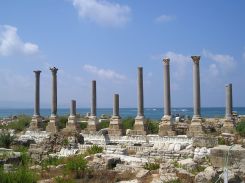
The civil society is equally alarmed. Activist and author Pascale Choueiri Saad highlighted Sour’s historical significance as one of the Mediterranean’s oldest continuously inhabited cities and a major center of the Phoenician world. “Destroying such a city does not just mean damaging a place,” she wrote. “It is erasing entire chapters of human history.”
The precedent of 2024
These initiatives build on diplomatic efforts launched in fall 2024, following the first Israeli strikes near several historical sites. On Oct. 21, the UNESCO Executive Board unanimously adopted a resolution tabled by the Lebanese delegation calling on member states to support the country in three areas: protecting journalists, supporting education and safeguarding archaeological sites. A special fund was created for states to contribute financially.
Beirut also secured an extraordinary session of the committee responsible for protecting cultural property in the event of armed conflict, held Nov. 18 at UNESCO headquarters in Paris. Lebanon presented a file listing 34 threatened sites, including Baalbeck, Sour and Anjar, to obtain enhanced protection under the 1954 Hague Convention and its 1999 protocol.
Lebanese diplomacy simultaneously sought UNESCO’s support on other fronts, including condemning the killings of journalists under the International Program for the Development of Communication and assisting the education system, which had been gravely affected by the war. At the time, roughly 1.5 million students were displaced, and more than 700 schools had been converted into shelters.
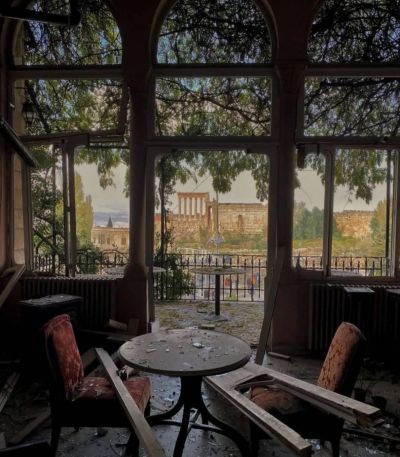
Civil society mobilization was also visible. When strikes neared the Baalbeck's Roman Temples in 2024, the Baalbeck International Festival issued an open letter to UNESCO emphasizing the importance of protecting the site. The initiative, led by festival president Nayla de Freige, quickly gained support from the National Heritage Foundation, the Bar Association, and around 100 lawmakers. Simultaneously, contacts were established in Paris with Lebanon’s UNESCO ambassador, Moustapha Adib, who pushed for the extraordinary session on cultural property protection in case of armed conflict.
Meanwhile, the Ministry of Culture and the Directorate General of Antiquities, led by Sarkis Khoury, prepared files for the 34 threatened sites. An international appeal gathered nearly 300 heritage experts — including museum curators, researchers, academics, authors and artists — to support the effort.
These collective efforts led to UNESCO granting enhanced protection to the 34 Lebanese sites, a decision welcomed by heritage defenders.
“In 2024, the state was absent, the international community was ignoring us, the Baalbeck Festival rose to help defend our ambassador at UNESCO to protect Baalbeck. Today, things are different—we have a very committed culture minister who responded immediately, and an ambassador to UNESCO who will surely mobilize to protect our sites. We can count on them and remain their foot soldiers if needed,” de Freige said.
As the war rages, these efforts reflect a persistent concern: war may not only redraw present borders but also erase the material traces of Lebanon’s historic past.
This article was originally published in French in L'Orient-Le Jour.