






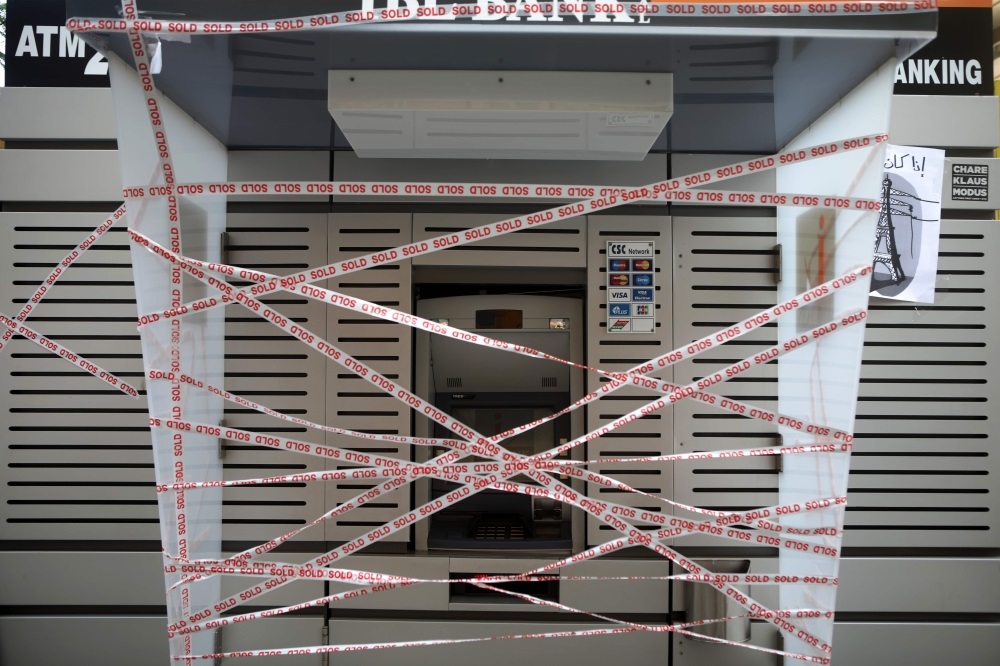
An out of service ATM, on Nov. 11, 2019 in Beirut, amid the crisis. (Credit: Patrick Baz/ AFP)






If Parliament adopts the financial gap law without amendments, Lebanon’s banking sector would be reduced to a handful of institutions. This is the “doomsday scenario” outlined in a confidential study prepared by the consulting group Ankura, which concluded that only six banks would be capable of remaining solvent. The document, reviewed by L’Orient-Le Jour, comes as negotiations over the terms of the banking restructuring are held indirectly through advisors, between the banks and their regulator — Ankura, a firm of experts, which was tasked by the Association of Banks in Lebanon (ABL) with holding discussions with the central bank or its adviser, Rothschild Bank. This setup, requested by Governor Karim Souhaid, says a lot about the pervasive climate of mistrust surrounding the matter.At the core of the study is a set of quantified...
If Parliament adopts the financial gap law without amendments, Lebanon’s banking sector would be reduced to a handful of institutions. This is the “doomsday scenario” outlined in a confidential study prepared by the consulting group Ankura, which concluded that only six banks would be capable of remaining solvent. The document, reviewed by L’Orient-Le Jour, comes as negotiations over the terms of the banking restructuring are held indirectly through advisors, between the banks and their regulator — Ankura, a firm of experts, which was tasked by the Association of Banks in Lebanon (ABL) with holding discussions with the central bank or its adviser, Rothschild Bank. This setup, requested by Governor Karim Souhaid, says a lot about the pervasive climate of mistrust surrounding the matter.At the core of the study is a set of...
Quand une banque ne peut plus payer ses obligations, ce sont normalement toujours ls actionaires qui supportent la premiere tranche des pertes, par decuction/ elomination de leurs actions. A moins que la loi bancaire n'ait change, les membres du conseil sont ensuite personnellement reponsables de combler le trou.
20 February 2026 19:37