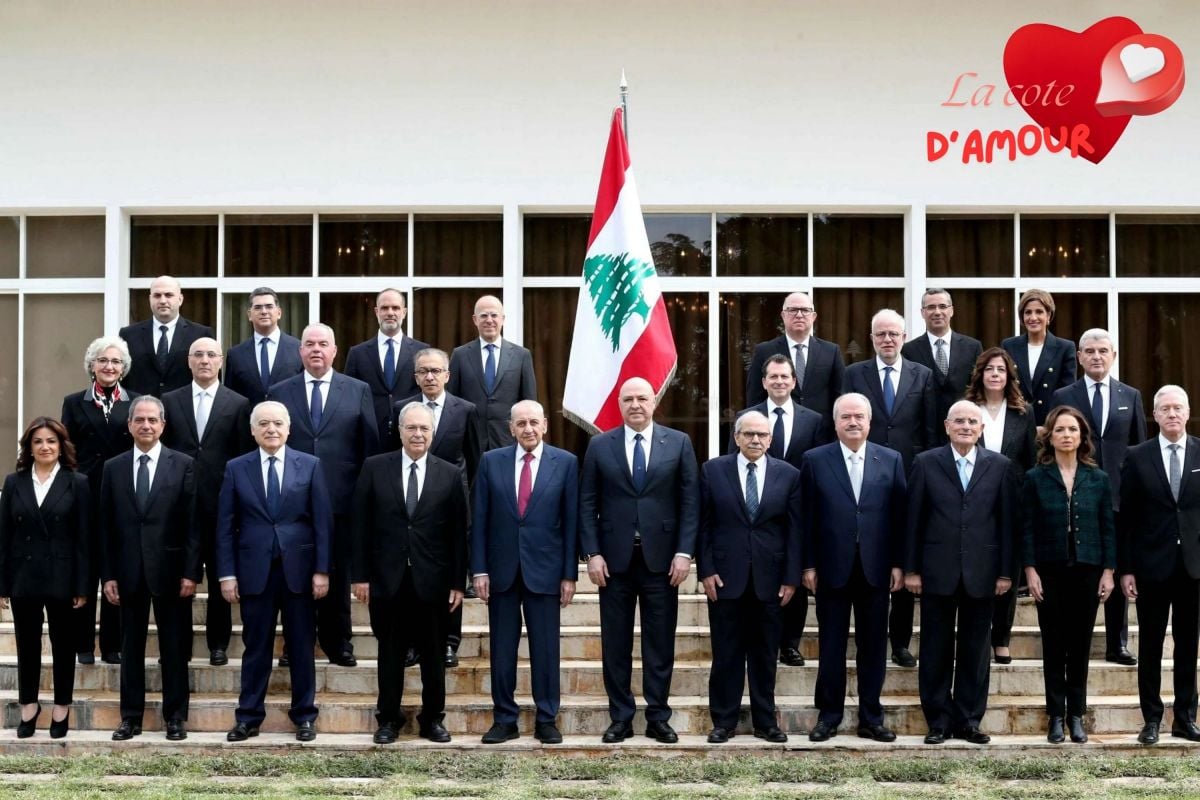
The members of the government surrounding the head of state Joseph Aoun and the Speaker of Parliament Nabih Berri. (Credit: AFP/Montage L'OLJ)






In Lebanon, saying something positive about a minister is sometimes done in a hushed voice, almost like a confession. Wanting to invite them to dinner, to listen to them speak without rolling one's eyes, or simply feeling that they still deserve a bit more time is small civic miracle in and of itself. It is at this level — of impressions, reflexes and sometimes contradictions — that we have chosen to look at Prime Minister Nawaf Salam’s government, one year after its formation.
No complicated charts or technocratic reports here. Just an unapologetic popularity ranking, shaped by feelings, offhand remarks, and the impression ministers leave once the TV is turned off or the newspaper is set aside.

Once the survey was launched, we let the Lebanese do what they do best: judge, nuance and comment. With goodwill, certainly — but also at times with finely honed irony and, all too often, a strong sense of party affiliation. The idea was not to measure policy outcomes, but to capture a mood or a general impression.
So we asked simple, almost familiar questions: who seems most likable, who you would have dinner with, who seems to be hard at work, who is surprising, who can still talk without making us tune out, who seems credible when saying they’ll 'take care of it,' and, ultimately, who deserves a bit more time.
The first observation, no great surprise: three names stand out clearly.
Adel Nassar, justice minister; Joe Rajji, foreign affairs minister; and Fayez Rasamny, minister of public works, come up everywhere. Sympathy, perceived intelligence, credibility, a desire to listen to them — and even to keep them around a while longer.
Nassar is met with near-unanimous approval. He is described as "brilliant, honest, and likable," "the most serious, the most just, and the least arrogant." Respondents speak of a minister who "proves himself," "delivers on promises," and is "getting a critical ministry back on track."
When it comes to sheer likability, Rajji is among the favorites. He is praised as "pragmatic and super honest," who "calls things as they are" and "isn’t afraid to speak his mind." In a country full of cautious rhetoric and convoluted speeches, this directness creates an almost affectionate connection. Apparently, being foreign minister and speaking plainly leaves an impression.
The question about dinner deserves a closer look. There wasn't a runaway winner, but rather an almost full table. Nassar leads by a slight margin, closely followed by Salam and Rajji, with Culture Minister Ghassan Salameh just behind. Four personalities, four styles, almost neck and neck. One can easily picture it: an efficient, well-run dinner with Nassar; a sober, reassuring evening with Salam; a lively, unfiltered table with Rajji; and Salameh contributing thoughtful conversation, carefully chosen references, and a rare ability to talk at length without boring anyone.
Another key takeaway: tangible achievements matter more than grand promises.
The case of Rasamny, minister of public works and transport, is emblematic. He is among the ministers considered the hardest working and most credible. Comments highlight "real action," "non-clientelist measures," and "small but tangible improvements despite a lack of funding." Nothing spectacular, but sufficient enough to be noticed. Unsurprisingly, on the platform L'Orient Today — where the survey was conducted in English — Rasamny emerged as the winner across all categories. Repaired roads, it seems, speak for themselves.
Similarly, Yassine Jaber, finance minister, is clearly respected. Not much warmth or enthusiasm, but clear recognition of his work. "Experience, diplomacy, effectiveness," respondents summarize. "He knows what he’s doing." In finance, affection is optional; mastery of the files is essential.
Salam, a ‘statesman’
The position of Prime Minister Salam is more nuanced. He may not be the most mentioned, but he is almost always present. He is described as "the most educated and responsible," a "statesman" driven by public service. Results may be slow in coming, but many add—almost indulgently—the sentiment that time is needed. Salam inspires sympathy, but represents reasoned patience more than raw emotion.
One question in particular was especially telling: who could speak for five more minutes without making you roll your eyes?
The responses leave no ambiguity. Nassar, Rajji and Salameh dominate. Culture Minister Salameh is described as "serious, charismatic, honest," "the one who speaks with the most clarity." A reader even specifies, "I am a secular citizen, and he places freedom of conscience and reason at the heart of his commitments."
Other ministers feature more discreetly, yet revealingly.
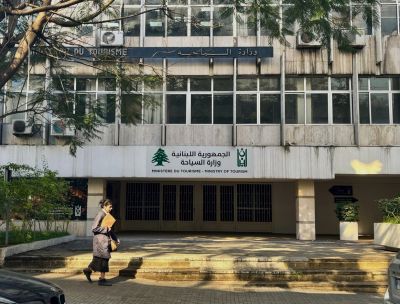
Laura al-Khazen Lahoud, tourism minister, is often cited for her warmth and accessibility. A low-key but appreciated presence, she is someone respondents say they would be happy to invite to dinner. Not yet a groundswell of enthusiasm, rather a sense of good-natured curiosity.
Health Minister Rakan Nasreddine is in a category of his own. Not especially highly ranked, but often mentioned with a note of affection. He's "known for his sense of humor," some respondents said. Others point to his hard work. Still others express disappointment with the government but a clear wish: for the health minister's return. As if, amid disillusion, a human attachment still remains.
The open-ended comments complete the picture. They oscillate between lucidity and fatigue, but without generalized anger. "A good team, but they need to be given the means," one person noted. "Institutions should endure, not individuals," another wrote. Some are severe, others more patient. But one idea recurs: this government is made up of "good people," "educated," "qualified." A modest but genuine victory for meritocracy.
At its core, this approval does not suggest that everything is going well. It points to something simpler, and perhaps more valuable: this government is neither idolized nor rejected. It is being watched. Calmly. Sometimes with a wry smile. And a notebook always at hand.