






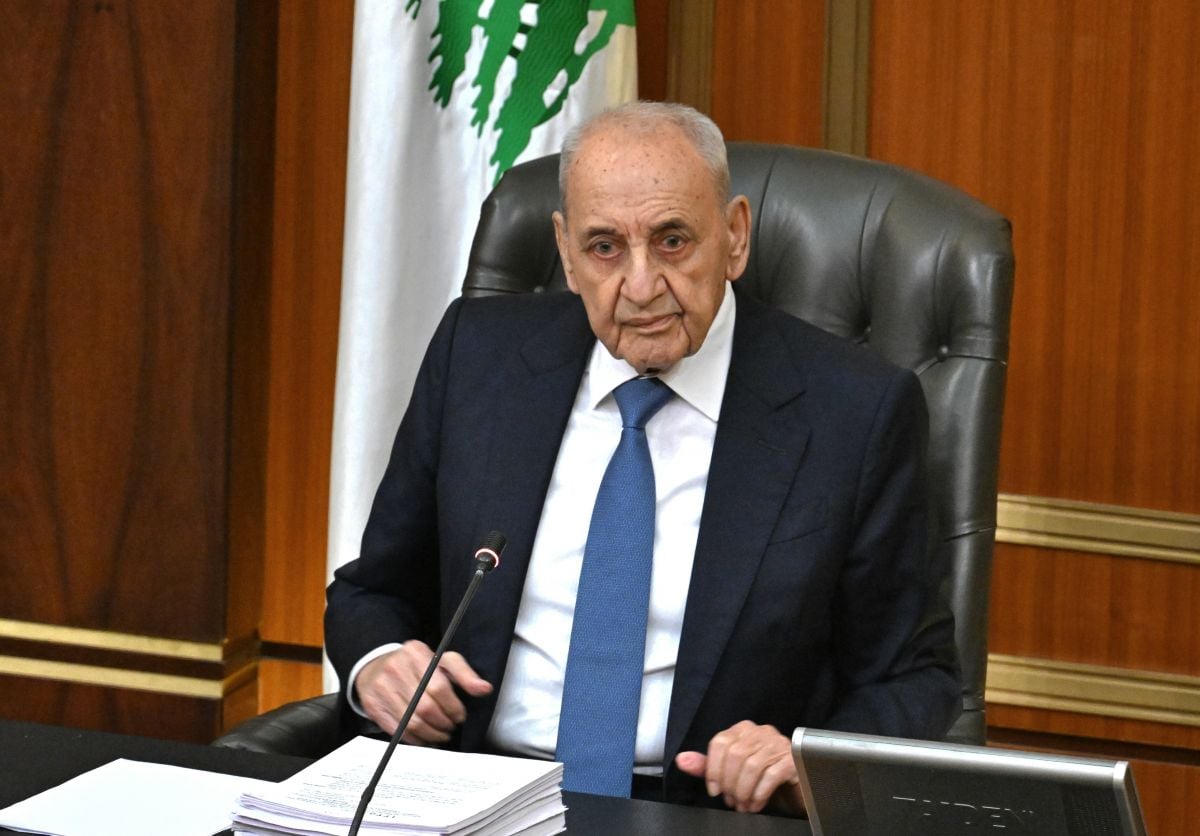
Parliament Speaker Nabih Berri in the chamber on Dec. 17, 2025. (Credit: Hassan Ibrahim/Lebanese Parliament)






Unwavering in his intention to hold the legislative elections in May under current law, Parliament Speaker Nabih Berri nonetheless sought to absolve himself of any intention to extend the term of Lebanese MPs or to cancel the poll.
The head of Parliament thus placed the blame for delays on certain parties accused of "rejecting" a compromise on the modalities for expatriate voting, as well as on the government, which only has "a few measures" to take to ensure the elections go smoothly, in an interview with ASAS Media.
"The political decision to hold the elections is far more important than some of the formalities set out in the law," Berri stated, as if to dispel the specter of sanctions.
His interview was published just days after a bill was introduced in the U.S. House of Representatives that would impose sanctions on those who undermine "the integrity of the electoral process in Lebanon."
In his statements, the speaker of Parliament declared firmly that "the parliamentary elections will be held on the scheduled date, next May, and in accordance with the electoral law."
"I will not call any session to amend the existing legislation," he added, while the vote is officially set for May 10 for resident Lebanese, and a week earlier for expatriates, of whom 152,000 are registered to vote.
The issue of non-resident voting continues to divide the chamber.
Led by the Lebanese Forces (LF), parties favoring an amendment to the electoral law argue expatriates should be able to vote for all 128 MPs, as in the last two elections, rather than the six additional seats reserved for the diaspora under the 2017 electoral law.
'Formalities do not prevent' parliamentary elections
“We are heading toward elections on the scheduled date and in accordance with the existing law. I will not call any session to amend the law. All that’s left is to implement it. That’s the only solution in my view. The elections will take place in May,” Berri stated.
He also said that he had previously proposed scrapping the six diaspora seats in exchange for expatriates voting on Lebanese territory, which would have justified a limited technical postponement of the vote to facilitate their arrival in the country.
However, he said the idea had been "rejected by those who had earlier supported it."
“I have now withdrawn this proposal,” he emphasized.
Berri’s stance was published after several figures from the anti-Hezbollah camp, who had initially opposed a postponement and wanted expatriates to vote for all 128 parliamentarians, now seem to favor a delay.
Kataeb party leader Samy Gemayel, for example, sought a postponement on Wednesday as long as Hezbollah is not disarmed, while Adib Abdel Massih, an anti-Hezbollah MP from Koura, submitted a draft law on Monday to extend the current legislature by a year.
Another source from the anti-Amal-Hezbollah alliance camp cited a desire to postpone the election due to the risk of a new regional war between Iran and the United States, after which an Iranian defeat — or an accord that weakens its regional influence — would likely affect the parliamentary election results for the Amal Movement and Hezbollah.
Regarding the government’s role in coordinating the election, Berri stressed that "the law doesn’t impose any particular burden on it."
He said, “There are only a few measures within the scope of two ministers — of interior and foreign affairs — and not the whole government,” as both the executive and parliamentary branches continue to shift responsibility for ruling on voting modalities for diaspora Lebanese.
"In every country in the world, formalities don’t prevent a vote from being held, even if there are irregularities. The magnetic voter card, for example, the inability to amend Article 84 [which stipulates this voting method in the 2017 electoral law] will not prevent the elections from taking place or proceeding."
He continued to emphasize that "the political decision to organize the elections is far more important than certain formalities provided for by law."

 8 p.m. recap: Israel again threatens Beirut’s south suburbs; 2 ships hit near Hormuz; Riyadh football matches canceled